
Gainesville Coffee: What the Alligator Knows, Google Doesn't

Updated: Oct 6
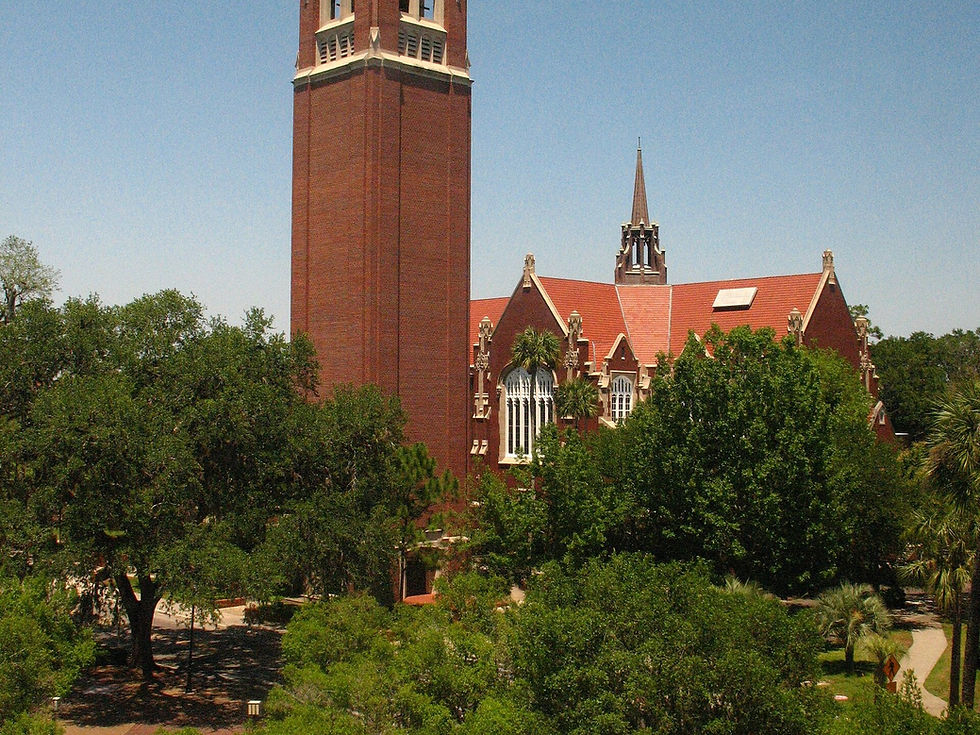
The Independent Florida Alligator is the University of Florida's student newspaper, financially and editorially independent of the university itself since the early 1970s. It functions as a real, genuine local coffee authority in this city, and it is worth understanding exactly how.
In September 2025, the paper published a feature naming five Gainesville cafes worth visiting, and that single piece of student journalism has ended up carrying more specific, useful coffee knowledge than most business directories in the city. This piece walks through what the Alligator actually said, where else that same conversation is happening, and why none of it fully replaces a cafe telling its own story.
It also helps to understand exactly why a publication like this carries the influence it does in a city like Gainesville. A newspaper that has spent more than five decades covering the same university and the same surrounding city develops a kind of institutional memory and community trust that a newer publication or a paid directory listing simply cannot replicate overnight.
A student newspaper with real independence
The Alligator has operated independently of the University of Florida since the early 1970s, meaning it is not a university public relations arm but a genuine student run news organization with editorial freedom. That independence gives its coverage real credibility, closer to a local newspaper writing about its community than a campus bulletin promoting university approved businesses.
That distinction matters for a college town coffee scene, because it means a mention in the Alligator carries the weight of an actual editorial decision, not a paid placement or an official partnership. When the paper decides five cafes are worth visiting, that decision reflects real reporting rather than marketing.
That editorial independence is not just a technicality worth mentioning once. It shapes the entire tone of the paper's coverage, since a genuinely independent student newsroom has no institutional incentive to favor one local business over another, or to avoid criticizing a business simply because it advertises with the university or caters events on campus. A recommendation from a source like that carries a kind of credibility that a sponsored post or a paid placement never could.
What the September 2025 feature actually said
The Alligator's piece named five Gainesville cafes worth visiting, presented explicitly in no particular order: a multi state chain cafe, a ten location local coffee operation, an independent cafe near campus, a plant based cafe and ice cream shop, and Wyatt's Coffee downtown. That mix is worth noting, since it blends chains, larger local operations, and true independents into a single roundup rather than separating them by size or ownership.
Presenting the list without ranking is itself an honest editorial choice. It means the paper was recommending a range of good options rather than declaring a single winner, which reflects how a real, lived in college town coffee culture works, with different shops serving different needs and different parts of the day.
It is also worth thinking about what the mix of businesses named in that roundup says about the paper's own editorial approach. Including a multi state chain alongside smaller independents and a plant based specialty cafe suggests the writers were genuinely recommending places they liked personally, rather than filtering the list down to only the most independently owned or the most photogenic options. That kind of honest, unfiltered recommendation is exactly what gives a roundup like this its credibility with readers.
Where else this conversation is happening
Beyond the Alligator, the same day's organic search results for Gainesville coffee also surfaced a local online community discussion thread specific to the Gainesville area. That kind of grassroots, ongoing conversation is a different kind of authority than a single published article, built up over time by residents and students trading real recommendations with each other.
Together, the student newspaper and the online community represent a active, ongoing local conversation about coffee in Gainesville. Neither one is run by a coffee shop, a marketing agency, or a business directory. Both are simply people who live in or near this city talking honestly about where they like to drink coffee.
That grassroots conversation also tends to surface details a formal publication might never mention, like which specific seat by an outlet is easiest to claim during finals week, or which cafe's staff remembers a regular's usual order. Those small, specific details are exactly the kind of texture that makes word of mouth recommendations feel more trustworthy than a generic star rating ever could.
Why word of mouth still isn't the whole story
Word of mouth and student press coverage are real, and they should be taken seriously as a form of local authority. They are not the same thing as a coffee shop owning a clear, citable, structured story on its own website. A student newspaper mention lives on the newspaper's site, under the newspaper's control, and it will eventually be replaced by newer coverage as the news cycle moves on.
A cafe's own homepage is the one place where that story can live permanently, updated whenever the business wants, and structured in a way a search engine or an AI answer can read and cite going forward. Across Gainesville, few specialty cafe homepages do that work as clearly as the Alligator's own coverage does.
It is also worth being fair about what a cafe's own homepage can do that word of mouth simply cannot. A homepage can be updated the moment a new seasonal drink launches, the moment hours change for a holiday, or the moment a shop wants to correct an outdated detail circulating elsewhere online. A student newspaper article or a community thread has no such flexibility once it has already been published, which is exactly why relying on outside coverage alone leaves a shop without any real control over its own current story.
How this compares to other kinds of local authority
Most cities have some version of a trusted local voice, whether that is a newspaper, a visitors bureau, or a well known local blog. What makes Gainesville's version distinctive is how much of that authority sits with student run institutions and grassroots online communities rather than official tourism or government sources, which is exactly what a University of Florida college town would be expected to produce.
That distinction is worth appreciating rather than dismissing. A student newspaper covering coffee shops with genuine editorial independence, and a community discussion thread built on real, ongoing local conversation, both represent a healthier and more organic kind of local authority than a purely promotional visitors guide would.
It is also worth noting how this pattern compares to cities without a strong student newspaper tradition. In places lacking that kind of institution, local coffee coverage often falls entirely to paid directories, tourism boards, or scattered personal blogs, none of which carry quite the same combination of independence and consistency a decades old student newsroom can offer. Gainesville is fortunate to have a source this credible already covering its coffee scene, even if most cafes are not yet taking full advantage of it.
What a coffee shop can learn from being covered well
When the Alligator names a cafe favorably, that coverage typically highlights something specific: a particular drink, a particular atmosphere, or a particular reason a student chose that spot over another. Those specific details are worth paying attention to, since they often point directly at what a shop's own website should be saying more clearly and more often.
A shop that pays attention to how it gets described in earned coverage like this has a genuine head start on writing its own homepage content, since the reasons people already give for liking a place are often the exact reasons that belong on that place's own site.
It is also worth thinking about how a shop might practically capture and reuse specific language from earned coverage like this. If the Alligator praised a particular drink or a particular seating area, a shop could reasonably echo that same specific detail on its own homepage, turning someone else's compliment into the shop's own clearly stated selling point, without needing to invent new marketing language from scratch.
A short history of student journalism shaping local business
College towns have long had a particular relationship between student newspapers and local businesses, where a favorable mention can meaningfully shift foot traffic in a way few other local media outlets can match. That dynamic is not unique to Gainesville, but it is especially pronounced here given the size and engagement of the University of Florida student population relative to the city itself.
Understanding that history helps explain why a single September 2025 roundup carries so much weight in Gainesville's coffee search landscape today, more than a year later. A student newspaper mention in a college town does not fade the way a similar mention might in a larger, more media saturated city.
That combination of a strong story and a strong website is exactly the kind of setup that lets a business benefit fully from a favorable mention whenever one arrives, rather than watching that goodwill dissipate once the original article scrolls out of view.
The full range of cafes named in that one roundup
The Alligator's September 2025 roundup named five specific cafes: a multi state chain cafe, a locally based coffee operation with roughly ten locations including an airstream trailer setup, an independent cafe near campus, a plant based cafe and ice cream shop, and Wyatt's Coffee downtown. That mix spans a wide range of business sizes and models, from a small independent bar to a much larger local chain.
Including that range in a single roundup, without ranking any of them above another, reflects an honest editorial choice about what makes a cafe worth visiting in a college town. It is not simply a list of the most independent or the most authentic options. It is a list of places students and staff at the paper recommend, size and ownership structure aside.
That healthiest approach also protects a business against the natural unpredictability of earned coverage. A student newspaper cannot promise to write about the same cafe again next year, and a community discussion thread's tone can shift unpredictably over time. A shop's own website is the one part of this whole picture that a business owner can fully control and keep accurate indefinitely, regardless of what outside coverage does or does not continue to say.
The limits of relying on any single source
Even a well respected student newspaper is still just one publication, and its coverage naturally reflects the interests and experiences of its own writers and student readership at a particular moment in time. A cafe that leans entirely on hoping for another favorable mention is placing its visibility in someone else's hands rather than building something more durable and self controlled.
The healthiest approach treats earned coverage like the Alligator's as a genuine bonus layered on top of a strong, independently built website, rather than as a substitute for one. A shop with both a good website and good earned coverage is in a far stronger position than a shop relying on either one alone.
Related Reading
More from this Hillcane city series, plus the pages on the site that sit next to the work.
Frequently Asked Questions
What is the Independent Florida Alligator?
The Independent Florida Alligator is the University of Florida's student newspaper. It has operated independently of the university, both financially and editorially, since the early 1970s, giving its coverage real journalistic credibility rather than functioning as a university public relations outlet.
What did the Alligator say about Gainesville coffee shops?
In September 2025, the Alligator published a feature naming five Gainesville cafes worth visiting, presented in no particular order. The list included a mix of chain, larger local, and independent coffee businesses, reflecting a range of good options rather than a single top pick.
Did the Alligator rank the coffee shops it named?
No. The Alligator's feature explicitly stated the five cafes were presented in no particular order, meaning it was a recommended roundup rather than a numbered ranking of best to worst.
Is the Alligator affiliated with the University of Florida?
The Alligator covers University of Florida news and student life, but it has operated as a financially and editorially independent publication since the early 1970s, meaning it is not run or controlled by the university itself.
Where else do people talk about Gainesville coffee online?
Beyond student journalism, an active local online community discussion thread specific to the Gainesville area also surfaces in organic search results for local coffee questions, functioning as an ongoing, grassroots source of recommendations from residents and students.
Is a mention in the Alligator the same as strong Google search visibility for a coffee shop?
Not exactly. A mention in the Alligator is a real, earned piece of local credibility that helps a shop's organic search presence, but it is not the same as the shop's own website ranking well or being clearly structured for search engines and AI answers to cite directly.
Why does student word of mouth matter so much in Gainesville's coffee scene?
Gainesville is a University of Florida college town, and students frequently rely on recommendations from each other, campus adjacent publications, and online communities before checking a business's own website. That pattern makes student press and online discussion influential in shaping where people choose to get coffee.
Does a coffee shop control what a student newspaper or online community says about it?
No. Both sources reflect independent editorial or personal opinions rather than content a business writes or approves itself. A shop can earn positive mentions through good coffee and good service, but it cannot directly control or update that coverage the way it can its own website.
What is the difference between earned media and a shop's own website content?
Earned media, like a newspaper feature or a community discussion thread, is coverage written by someone other than the business, reflecting independent opinion. A shop's own website content is something the business controls directly, and it is the one place a coffee shop can permanently and clearly tell its own story in a way search engines can consistently find.
Should a Gainesville coffee shop rely on student press and word of mouth instead of its own website?
No. Word of mouth and student press coverage are valuable and worth appreciating, but they are not a substitute for a clear, well structured website. A shop benefits most from having both: real earned mentions circulating locally, and its own site clearly telling that same story in a way search engines and AI answers can consistently find.
How is Gainesville's local authority different from a typical visitors bureau?
Much of Gainesville's most trusted coffee coverage comes from student run journalism and grassroots online community discussion rather than an official tourism or government source, reflecting the city's identity as a University of Florida college town more than a typical destination marketing operation would.
Can a coffee shop learn anything useful from how it gets described in earned coverage?
Yes. Coverage from a source like the Alligator often highlights specific reasons a customer chose a particular cafe, and those same specific details are often exactly what belongs more prominently on that cafe's own website to help both customers and search engines understand its appeal.
Work with Hillcane
A student newspaper and an online forum both understand Gainesville coffee better than most business directories. Neither one replaces a shop's own story.
Earned word of mouth deserves a website that backs it up. Reach Hillcane at hillcane.co/contact or call (256) 384-2449 to build that story.
Reach out at hillcane.co or (256) 384-2449.


Comments