A Cafe Homepage Title Should Say What and Where

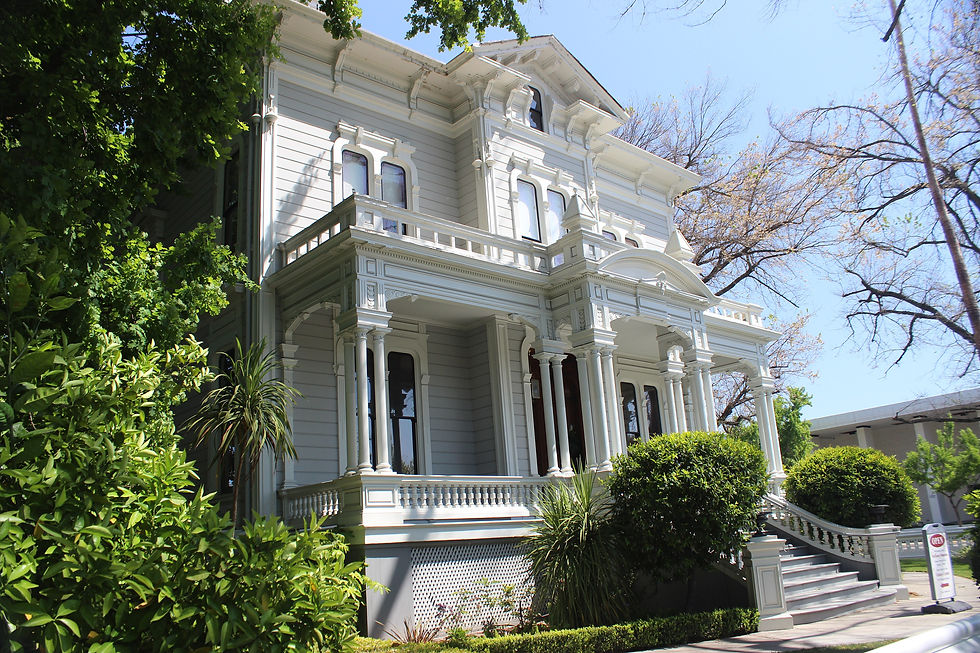
Photo: Miguel Hermoso Cuesta, CC BY-SA 4.0, via Wikimedia Commons
The single most overlooked line on a small coffee shop's website is also the shortest one. It is the browser tab title, the bit of text a search engine and an AI answer both read before anything else on the page. On a lot of small cafe sites built through simple website builders, that line ends up saying almost nothing at all, just a generic word repeated where a real description should be.
I want to walk through why that matters and what a good title actually looks like, using Modesto as the backdrop. Modesto's independent coffee is spread across four corridors, McHenry Avenue, East Orangeburg, Coffee Road and downtown J Street, and in a city laid out like that, the where in a title does real work. This is not about any one shop's mistake. It is about a pattern that shows up across small business websites everywhere, and it is genuinely easy to fix once you see it clearly.
I write about this specific detail more than almost anything else, because it is the rare fix that costs nothing, takes minutes, and touches something search engines and AI systems actually read constantly. Most website advice asks an owner to spend money or hire someone. This one just asks them to open a settings panel they have probably never clicked before.
Why Even a Small Coffee Shop Needs This
A small coffee shop does not need an elaborate website. It needs a working one that says what it is and where it is, clearly enough for both a human visitor and a search engine to understand instantly. That is a much lower bar than most owners assume, and it is worth saying plainly before getting into the specific fix this post is built around.
Most small cafe owners built their site once, early on, using whatever builder was easiest at the time, and have not opened the technical settings since. That is completely normal. Running a coffee shop is a full time job on its own, and a website's backend settings are rarely the most urgent thing on a given morning. The problem is simply that a handful of those settings, the title tag chief among them, keep doing quiet work in the background every single day, whether anyone checks on them or not.
The One Line Search Reads First
Every webpage has a title tag, the text that shows up in a browser tab, in a search result's blue link, and often in the exact words an AI answer quotes back when it summarizes a page. It is one of the very first things a search engine or an AI system reads about a page, before it ever gets to the photos, the menu, or the story on the page itself.
That makes the title tag disproportionately important relative to how little most small business owners think about it. A shop might spend hours picking the right photo for its homepage banner and thirty seconds, if that, thinking about what its title tag says. The photo matters for a human visitor already on the page. The title tag matters for whether that visitor, or an AI system summarizing the web, ever finds the page in the first place.
This imbalance is understandable. A photo is visible the second a page loads, so it feels urgent to get right. A title tag lives quietly in the browser tab and in code most owners never look at directly, so it is easy to assume it does not matter much. The opposite is closer to true. Search engines and AI systems read the title tag before they ever process a single image on the page.
Website builders aimed at small businesses often default to a placeholder here, a generic word like Home, meant to be swapped out during setup. A lot of small cafe sites simply never get around to swapping it. That is an easy, understandable gap to fall into when you are running a coffee shop, not a marketing department. It is also a genuinely costly one to leave unfixed.
What a Title That Just Says Home Actually Costs
Picture what a search engine sees when a cafe's homepage title reads only as a generic placeholder word, with no shop name and no city attached. It sees a page that gives it almost nothing to work with. No indication of what kind of business this is. No city or street to match against a local search. No reason to rank this page for coffee shop Modesto, or for a search that names a specific street, over any other page on the internet.
An AI answer summarizing search results works the same way, often more literally. If a title tag says nothing specific, an AI system pulling together a quick answer about coffee shops on a given corridor has nothing distinctive to quote or reference from that page. It will simply move on to a page that does say something specific, even if that other page belongs to a directory listing rather than the shop itself.
This is the real cost of a placeholder title, not a dramatic penalty or a hidden Google punishment, just a quiet, ongoing pattern of getting passed over in favor of pages that say what they are. A cafe with a great room and great coffee can still lose out to a directory listing simply because its own title tag gives search nothing to work with.
What a Title Should Say Instead
The fix is not complicated, and it does not require a redesign or a developer. A good cafe title tag says three things in a short, natural phrase: who the business is, what it is, and where it is. Something in the shape of Your Shop Name, Coffee Bar on Your Street, Modesto CA does far more work than a bare placeholder word ever could, and it still fits comfortably in a browser tab.
That kind of title gives a search engine an immediate, unambiguous match for anyone searching coffee shop Modesto, or coffee near a specific street, or coffee shop near me while standing on that corridor. It gives an AI answer something concrete to quote. And it costs nothing beyond a few minutes spent in a website builder's settings panel, changing one line of text that most visitors will never consciously notice but that search systems read constantly.
A title does not need to be clever. It does not need a tagline or a slogan. It needs to be accurate and specific, naming the business type and the location plainly, the same way you would answer if a stranger asked what is that place and where is it exactly.
The Street Page a Title Tag Points To
A strong title tag works best when it is backed up by a real page behind it, one with the actual address, current hours, and a short story about the shop itself. This is where a shop owned street page earns its keep. Modesto shows why. McHenry Avenue, East Orangeburg Avenue and Coffee Road are long commercial roads, and several of the city's independent cafes sit in numbered suites along them, where a visitor needs the exact suite, not just a street name, to find the door.
A street page built around one specific address does something a generic homepage often cannot. It gives search engines and AI answers a single, clear document matching a specific location, rather than a general homepage trying to speak to every visitor at once regardless of which corridor they are standing on.
Think about what belongs on a page like that. The full address, suite number included. Real, current hours. A short paragraph about what a visit feels like. Maybe a line about a signature drink or a seasonal offering, when the shop is ready to confirm one publicly. None of it needs to be elaborate. It needs to be accurate, specific, and current.
It is worth adding one more thing a good street page can carry that a title tag alone cannot. A short frequently asked questions section, addressing the exact things a first time visitor wonders, whether there is seating, whether the space works for a laptop afternoon, what the parking situation looks like on that stretch of road, answers the follow up question search and AI answers ask right after they have found the place. That kind of content belongs on the same page as the address and hours, not scattered across social posts that scroll away within days.
A Pattern, Not a Verdict on Any One Shop
I want to be clear that this is a pattern worth understanding generally, not a verdict on any single Modesto cafe. Plenty of small business websites across plenty of industries carry a leftover placeholder title from whatever builder they started with, simply because nobody ever circled back to fix it once the site went live. That is a completely normal, fixable gap, not a sign of a poorly run business.
Modesto is a good example of why this pattern matters in a city of its size. It has 218,614 people on the 2023 ACS five year estimate and a coffee scene spread across four corridors that are a drive apart. A search engine or an AI answer trying to match a drinker to the right room in a city laid out like that leans hard on the one line that says what a page is and where it sits. A title tag that says what and where does exactly that job.
None of this requires pointing fingers at any particular shop's current setup. It requires simply understanding the pattern well enough to check your own site for it, because it is an easy thing to miss and an easy thing to fix once you know to look.
What the Chains Already Do
It is worth looking at how a national chain handles this in the same city, because the contrast is instructive without pointing at anyone local. Dutch Bros lists five Modesto stands on its own city page, at 1524 McHenry Ave, 901 N. Carpenter Rd., 1424 Herndon Ave, 3739 McHenry Ave and 3303 Yosemite Blvd. Each of those five stands has its own page at its own web address, and each page title says the same three things: coffee shop, Modesto, and the brand name.
That is not an accident. A chain with a marketing department knows the title is the line search reads first, so it writes one for every location and puts the city in it. The result is five clearly labeled pages, each tied to one Modesto street address, that a search engine can match to a local coffee search without guessing.
An independent shop does not need a marketing department to match that. It needs one line in a settings panel that says its name, what it is and where it is, and ideally one page that carries its own street address and hours. That is the same structure the chain uses, applied to a single room, and it takes an afternoon rather than a budget.
Fixing It Takes Minutes, Not a Redesign
Most website builders used by small cafes, whether Square Online, Squarespace, Wix, WordPress or something else, let you edit the page title directly from a settings panel, without touching any design element at all. It is usually a single text field, sometimes labeled SEO title or page title, tucked into a settings menu most owners never open after initial setup.
That means fixing this does not require a new website, a new logo, or a new anything. It requires opening that settings panel once, replacing a placeholder word with a short, specific phrase naming the business, what it is and its location, and saving the change. For a shop on a long commercial road in a spread out city like Modesto, where the exact address matters for anyone trying to find the right door among many storefronts, that small change is one of the highest value few minutes a small business owner can spend on their own site.
It is worth doing today rather than filing away as someday work. Every day a title tag says only a placeholder word is another day search engines and AI answers have nothing specific to work with, quietly passing that page over in favor of one that says what it is and where it sits.
If you run a small cafe anywhere, on McHenry Avenue or J Street or any street in any city, open your own site right now and look at the browser tab. If it says only a generic placeholder word, you have just found a five minute fix that will keep working quietly in the background for as long as your shop's website stays live.
Related Reading
More from this Hillcane city series, plus the pages on the site that sit next to the work.
Dutch Bros Has Five Modesto Stands Beside 47 Listed Independents
Kingdom Coffee Is Volunteer Run and Gives Its Profit to Humanitarian Aid
Modesto Coffee Is McHenry, Orangeburg, Coffee Road and J Street
Penny University Has a Room on J Street and a Stand at the Farmers Market
The State of Specialty Coffee Visibility in North America (2026)
Google Business Profile for Coffee Shops: The Complete 2026 Checklist
Frequently Asked Questions
What should a cafe homepage title say?
A good cafe homepage title names who the business is, what it is and where it is, in the shape of Your Shop Name, Coffee Bar on Your Street, Modesto CA. It should be accurate rather than clever. In a city like Modesto, where independent coffee is spread across McHenry Avenue, East Orangeburg, Coffee Road and J Street, the street is often the most useful word in it.
Why does a title that says only Home cost a cafe?
The title tag is the first line a search engine and an AI answer read about a page. A placeholder like Home gives them no business type and no location, so for a search like coffee shop Modesto the page tends to lose out to pages that say what they are. Those include Yelp and Tripadvisor lists and the joe.coffee directory, which all put Modesto in the title.
What belongs on a street page?
A strong street page carries the full address with the suite number, current hours, and a short description of what a visit to that location feels like, plus a few answers to first visit questions like seating and parking. In Modesto, where several independent cafes sit in numbered suites on long roads like McHenry Avenue and East Orangeburg, the suite number alone can save a visitor a missed turn.
Where can a cafe post daily updates and still keep hours on its site?
Social channels like Instagram and Facebook are a natural place for daily specials and quick photos, while the shop's own website should carry the lasting basics: address, suite number, hours and a short description of the room. Social posts scroll away within days. A street page stays put, and it is the page a search engine or AI answer can quote for a search like coffee shop Modesto.
Is fixing a placeholder title tag a big technical project?
No. Square Online, Squarespace, Wix and WordPress all let an owner edit the page title from a settings panel without touching the design. It is usually one text field, often labeled SEO title or page title. Writing a line that names the shop, the business type and the street and city, such as a McHenry Avenue or J Street address in Modesto, takes a few minutes.
Does a placeholder title mean a cafe made a mistake?
Not really. Website builders like Square Online, Squarespace and Wix often start a new page with a placeholder such as Home, meant to be replaced during setup, and it is easy to miss once the site goes live and the shop gets busy. It is a common, fixable pattern among small businesses in Modesto and everywhere else, not a sign of poor management.
How do chain coffee brands handle page titles in Modesto?
Dutch Bros gives each of its five Modesto stands its own page: 1524 McHenry Ave, 901 N. Carpenter Rd., 1424 Herndon Ave, 3739 McHenry Ave and 3303 Yosemite Blvd. Each page title names a coffee shop, Modesto and the brand. That is the what and where structure this post recommends, and an independent cafe can match it with one edited title and one street page.
Does an AI answer read a title tag the same way a search engine does?
Yes, often more literally. An AI answer summarizing results for a search like coffee shop Modesto tends to quote whatever specific text it can find, and the page title is one of the first lines it sees. A placeholder title gives it nothing distinctive to use, so it leans on pages that name a business type and a city, like directory lists and review site roundups.
Should a title tag include a slogan or tagline?
No. A title tag works best when it is plainly accurate, naming the shop, the business type and the location the way you would answer a stranger who asked what a place is and where it is. A slogan can live on the page itself. In a city of 218,614 people like Modesto, the street and city do more for a local search than a tagline can.
How quickly does fixing a title tag help a small cafe?
No one can promise a timeline or a ranking outcome, because that depends on the site, the competition and how often search engines revisit the page. What changes right away is the text itself: once saved, the title names the shop, what it is and where it is, such as a street in Modesto, CA, and every later crawl and AI summary reads that line instead of Home.
Work with Hillcane
A cafe homepage's title tag is the one line search engines and AI answers read first. Too many small cafe sites waste it on a single leftover placeholder word.
If your Modesto cafe's homepage title and street pages need a real rewrite, reach Hillcane at hillcane.co/contact or call (256) 384-2449.
Comments