Experience Olympia and Roast Local Already Walk 4th Ave. Shop Street Pages Are the Next Layer.

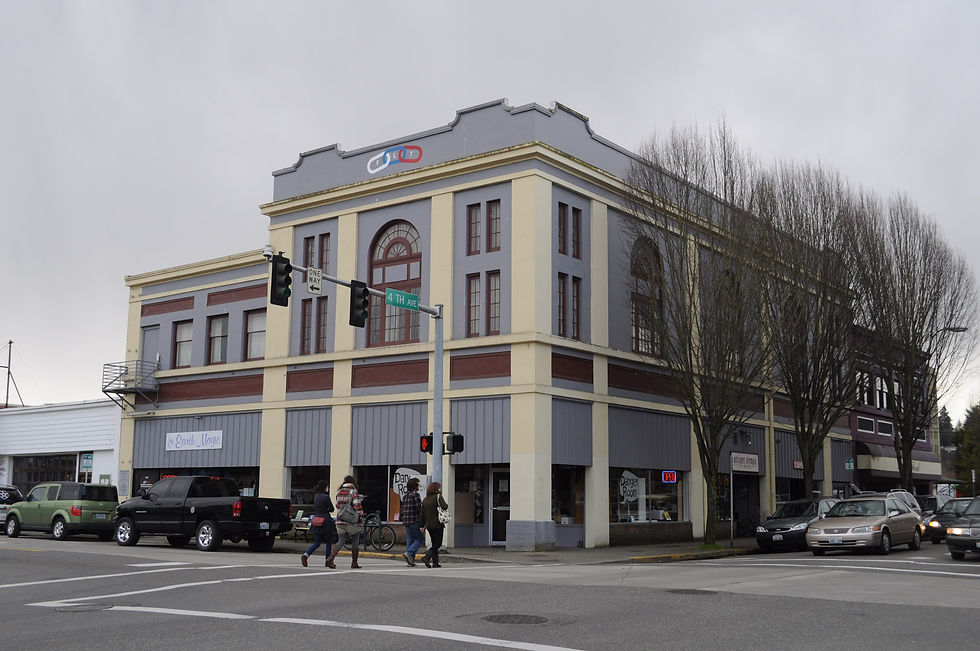
Photo: Joe Mabel, CC BY-SA 3.0, via Wikimedia Commons
Experience Olympia, the visitor bureau for Olympia and the surrounding South Sound, already runs a dedicated coffee and donuts page naming cafes across Olympia, Tumwater, Lacey, and Yelm. Roast Local, a guide to independent roasters, published its Olympia roundup with an April 2026 update. Between the two of them, plus Google Maps, a drinker searching for coffee in Olympia is not short on general coverage. The capital district's cafes already get walked, named, and pointed to.
That changes the shape of the conversation that follows. This is not a post about coverage Olympia's coffee scene is missing. It already has real, credible outside recognition from more than one direction. The question worth asking instead is what comes next, once that recognition already exists.
What that coverage cannot do, by its nature, is give any one shop a lasting, owned home online. A visitor site page and a roundup map are built to answer a broad question for a broad audience, and they do that well. A shop's own street level page is a different kind of asset entirely, one that belongs to the business, outlives any single roundup's publish date, and can say things a general directory never will. That is the layer worth building next, on top of coverage that is already strong, not instead of it.
What the Visitor Site Already Covers
Experience Olympia's coffee and donuts page is a real, maintained piece of the city's own tourism infrastructure, not a private blog or a one off list. It names cafes across four different cities in the South Sound area, Olympia, Tumwater, Lacey, and Yelm, and organizes them as partner cards a visitor can browse before deciding where to stop. This is genuinely useful coverage, and it is coverage a shop earns by being a real, established part of the local food and drink scene.
A partner card format like this also rewards a shop for simply being active and reachable, keeping hours current and being responsive when the visitor site's own team reaches out to confirm details. It is a lower lift form of visibility than a full feature story, but a genuinely useful one, especially for a newer shop still building its outside recognition beyond its own immediate neighborhood.
That same visitor site also published a longer piece called the South Sound Coffee Trail, walking readers through coffee stops across the county with addresses and a sense of place for each. It is the kind of piece that takes real research to put together, and it already exists, already ranks, and already sends interested readers toward Olympia's coffee scene.
None of this is content a shop had to write. It is coverage that came from Olympia's own tourism organization choosing to highlight its coffee scene as a draw for visitors, which is exactly the kind of civic recognition that makes a coffee scene feel like a genuine destination rather than an afterthought.
It is worth pausing on what it means for a tourism organization to invest in a page like this in the first place. A visitor site does not have to cover coffee at all. Choosing to build and maintain a dedicated coffee and donuts page, plus a longer trail feature, says the organization sees Olympia's coffee scene as a genuine draw worth promoting to visitors, not a minor afterthought tacked onto a longer list of restaurants.
That kind of civic recognition also tends to compound over time. A visitor who reads Experience Olympia's coffee page before a trip and then actually visits a shop mentioned there is more likely to talk about that visit afterward, whether that is a review, a social post, or just a recommendation to a friend planning their own trip. The visitor site's coverage becomes a small multiplier on top of whatever a shop is already doing well.
What Roast Local Adds on Top
Roast Local approaches Olympia's coffee scene from a different angle entirely, not as a visitor's day trip guide but as a guide built specifically around independent roasters. Its Olympia roundup, titled Best Independent Coffee Roasters in Olympia, WA (2026) and updated in April 2026, gives Olympia its own dedicated entry in a piece built to help coffee minded readers across the wider region find serious roasting operations worth seeking out.
That kind of roundup carries real weight with a specific, engaged audience, the reader who plans a stop around the coffee itself, not just around whichever cafe happens to be closest. For a city of 55,583 people in the 2023 American Community Survey, having a dedicated page in a roaster guide is a meaningful signal about the depth of the local scene.
Between the visitor site's broad citywide coverage and a roaster focused roundup like Roast Local's, Olympia's coffee scene is being described from two different angles, one aimed at visitors deciding where to stop, one aimed at coffee enthusiasts deciding who to seek out. That is a healthy amount of outside coverage for a city this size to already have.
A byline and an update date on a piece like Roast Local's April 2026 roundup also matter more than they might seem. A dated, actively maintained roundup carries more weight with both readers and search engines than an old, stale list that never gets revisited. Roast Local's willingness to keep its Olympia coverage current is itself a sign that the region's roasting scene, Olympia included, is active enough to keep earning fresh attention year over year.
What a Shop Owned Page Adds That a Roundup Cannot
Here is where the next layer comes in. A visitor site page and a roundup map are both, by design, snapshots, built around a publish date and a broad audience. Neither one is built to be a shop's permanent home online, the place a drinker or an AI answer goes to find that shop's actual address, hours, and story in full, updated whenever the shop itself decides to update it.
A shop's own street level page can do things a roundup entry never will. It can go deep on exactly one address, in exactly one neighborhood, with exactly the level of detail an owner actually wants known, hours that change with the seasons, a founding story told the way the founders tell it, the specific corner of the city the shop calls home. A partner card on a visitor site page simply is not built to carry that much.
This is also where lasting search value comes from. A roundup piece eventually gets updated, replaced, or buried under a newer version next year. A shop's own page, built well and maintained, keeps working for that shop specifically, on that shop's own terms, long after any single roundup's publish date has passed.
Think about how each layer answers a slightly different version of the same question. A visitor site answers where should I get coffee in Olympia broadly. A roundup answers which Olympia roasters are worth seeking out specifically. A shop's own page answers a much more specific set of questions entirely, what is this shop's actual story, what should I expect when I walk in, what is the address and what are the hours today. None of those questions substitute for each other, and a shop only fully answers the last set by building the page itself.
Why This Is Additive, Not a Correction
It is worth being clear that none of this is a criticism of Experience Olympia, Roast Local, or any of the coverage already out there. Both are doing real, useful work, and both have already given Olympia's coffee scene a level of outside recognition plenty of cities never get. This post is not arguing that coverage is missing or broken. It is arguing that a shop's own page is a different kind of asset, one worth building alongside that coverage, not as a replacement for it.
Think of it as layers stacking on top of each other. The city's visitor site names a shop as part of a broader Olympia coffee scene. A regional roundup names the same shop as part of a broader roaster community. A shop's own page names itself, on its own terms, with the specific street level detail neither of those other layers was ever built to carry. All three layers working together describe a fuller, more accurate picture than any one of them alone.
A drinker who finds a shop through Experience Olympia's coffee and donuts page, then clicks through to that shop's own site to check hours or read its story, is exactly the path this layering is meant to support. The visitor site did the discovery work. The shop's own page does the rest.
It is worth remembering that this layered path is also how a lot of word of mouth works today. A friend tells a friend about a visitor site's coffee page, that second friend checks the shop's own site before deciding to go, and a shop's own page becomes the final, deciding piece of information in a chain that started somewhere else entirely. Every layer in that chain matters, and none of them can be skipped without losing something along the way.
This same layering logic applies to how AI powered search increasingly works, too. An AI answer summarizing coffee options in Olympia is often pulling from multiple sources at once, a visitor site here, a roundup there, a shop's own page where one exists. A shop with a clear, complete owned page gives that AI answer more accurate, specific material to draw from than a shop that only exists through someone else's summary of it.
Building the Next Layer
For an Olympia coffee shop owner, the practical question is not whether Experience Olympia or Roast Local are doing their jobs well. They clearly are. The question is whether your own shop has a page that does justice to your specific address, your specific street, and your specific story, the kind of page that keeps working long after this year's roundup gets replaced by next year's.
That is the layer Hillcane focuses on building with independent coffee shops, not competing with a visitor site or a roundup, but giving a shop its own lasting, owned home that complements the coverage already out there. A shop with strong outside coverage and a strong owned page is in a good position, visible from multiple directions at once.
If your Olympia shop already has real coverage from Experience Olympia or a roundup like Roast Local and you want an owned page that builds on that foundation, reach out to Hillcane at hillcane.co/contact or call (256) 384-2449.
There is no need to treat this as an either or choice, either lean on the coverage you already have or build your own page from scratch. The strongest position for any Olympia coffee shop is having both working together, real outside recognition from a visitor site and a roundup, plus a strong owned page that gives every drinker who finds you a complete, accurate picture the moment they arrive.
Related Reading
More from this Hillcane city series, plus the pages on the site that sit next to the work.
Find Your Cafe on Cooper Point Road: Suite Numbers and Parking on the Westside
Olympia Coffee Search Is Mostly Independents, Plus One Regional Chain
Olympia's Coffee Streets, From 4th Avenue to Cooper Point and Union
A Downtown Olympia Coffee Walk: 4th Avenue, Washington and Columbia
Olympia, Lacey and Tumwater Are Three Cities, Not One Coffee Map
The State of Specialty Coffee Visibility in North America (2026)
Google Business Profile for Coffee Shops: The Complete 2026 Checklist
Frequently Asked Questions
Which public sources already cover Olympia's coffee scene?
Three do most of the work. Experience Olympia, the visitor bureau for Olympia and the South Sound, runs a Top Coffee Shops in Olympia page with 24 partner cards. Roast Local keeps an Olympia roundup of independent roasters updated in April 2026. Google Maps fills in the rest, with local independents holding most of the cards a drinker sees first for coffee shop in Olympia WA.
What does a shop owned street page add on top of that coverage?
It answers the narrow questions a roundup skips: the exact address on 4th Avenue or Cooper Point Road, today's hours, where to park and what the room is like. A visitor bureau card or a roundup entry is written once for a broad audience, while a cafe's own page can be updated the same day its hours or menu change and stays in place after next year's roundup replaces this one.
What is Roast Local's Olympia roundup?
Roast Local publishes a page titled Best Independent Coffee Roasters in Olympia, WA (2026), bylined and updated in April 2026. It is written for coffee focused readers who plan a stop around the coffee itself rather than convenience. For a capital city of 55,583 residents in the 2023 American Community Survey, a dedicated page in a roaster guide is a sign of a deep local scene.
Does Experience Olympia's coffee page only cover Olympia proper?
No. The page, titled Top Coffee Shops in Olympia, describes spots in Olympia, Tumwater, Lacey and Yelm, and in September 2026 it carried 24 partner cards mixing cafes, bakeries, donut shops and espresso stands. That regional scope suits a visitor planning a day in the South Sound, but it blurs which cafes sit inside Olympia city limits and which sit in Lacey or Tumwater.
Is this post saying the visitor bureau or Roast Local are missing something?
No. Both are useful and both already give Olympia more outside coverage than many cities its size receive. The argument is additive: a visitor bureau card and a roundup entry describe a scene, while a cafe's own page describes one room on one street in full. The strongest position for a shop is to have all three layers working together and pointing to the same facts.
Why does a roundup eventually stop being enough on its own?
Roundups are dated. Roast Local's Olympia page carries an April 2026 update, and a Reddit thread about Olympia specialty coffee that still appears in search is about four years old. Every roundup gets replaced or buried by a newer one. A cafe's own page, kept current on the cafe's own schedule, keeps describing that specific room accurately after any single list ages out.
What is the South Sound Coffee Trail?
It is a longer feature from Experience Olympia titled South Sound Coffee Trail: Your Route to Roasters. It walks readers through coffee stops across the county, with addresses and a sense of place for each, and it reaches beyond Olympia into neighboring cities such as Lacey. It complements the shorter partner cards on the bureau's main coffee page with more narrative detail for trip planners.
Does a shop need a strong Google Maps presence before building its own page?
No, the two work together rather than in order. A business profile helps a cafe get found by someone nearby looking at the map, while an owned page gives that same cafe a lasting place for its full address, hours and story. In Olympia, where local independents already fill most Maps cards, an owned page is the natural next step for a shop.
Who reads a roaster guide compared with a visitor bureau page?
Experience Olympia is built for visitors deciding where to stop during a trip to the capital, so its coffee page mixes cafes, bakeries and espresso stands across four cities. Roast Local is built for coffee focused readers seeking out independent roasters specifically. ThurstonTalk's January 31, 2023 guide to coffee in the downtown historic district serves a third audience: locals exploring their own city.
How can Hillcane help an Olympia coffee shop build this next layer?
Hillcane builds owned street pages for independent coffee shops that complement coverage from sources like Experience Olympia, Roast Local and local press rather than compete with it. Each page carries one room's address, hours, neighborhood and story in plain language that drinkers and AI answers can both read. Reach out at hillcane.co/contact or call (256) 384-2449 to talk it through.
Work with Hillcane
Experience Olympia and Roast Local already cover the capital's coffee scene well. A shop's own street level page is the next layer on top of that, not a fix for something broken.
If your Olympia coffee shop wants an owned page that builds on the coverage the visitor bureau and roaster guides already give the city, reach Hillcane at hillcane.co/contact or call (256) 384-2449.


Comments