
Greenville Has One of the Best Coffee Scenes in the Southeast. Here Is the Real Map.

Updated: 10 hours ago

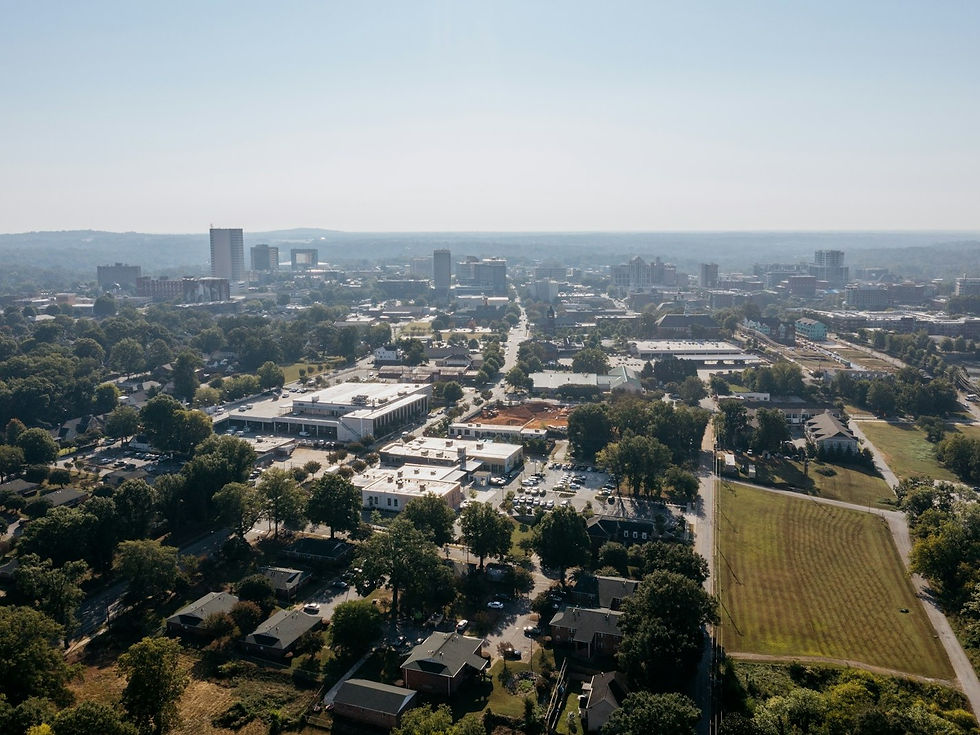
Ask someone to describe Greenville's coffee scene in one sentence and most people reach for downtown, for the Falls Park walk, for the handful of cafes clustered along Main Street. It is an easy answer, and an understandable one, since that walk is genuinely photogenic and it is where most visitors spend their first afternoon in the city. It is also only one piece of a scene that is honestly one of the strongest in the entire Southeast footprint this research covers, and treating it as the whole picture does a disservice to everything happening a few minutes away in either direction.
Picture two different people searching for coffee in this metro on the same morning. One is standing at Falls Park, phone in hand, deciding where to walk next. The other is a few miles away in the Village of West Greenville, wandering between galleries at Poe West, looking for a place to sit down between stops. A single citywide best coffee list is trying to answer both of those searches with the same six names, which means it is doing a mediocre job for both of them instead of a genuinely useful job for either.
Greenville's city population sits at 71,755, with Travelers Rest recorded separately as its own companion place at 8,137, a number worth keeping distinct rather than summed into one bigger figure. Local estimates put the specialty coffee scene at roughly twenty two independent shops spread across five real clusters, a genuinely dense number for a metro this size. This is a walk through that real geography, pocket by pocket, rather than a single ranked list that treats the whole metro as one interchangeable search.
It is worth being honest about why the single downtown answer is so tempting in the first place. Falls Park on the Reedy is a genuinely striking piece of public space, the kind of landmark a visitor photographs and shares before they have spent an hour in the city, and every travel roundup covering Greenville leans on it for exactly that reason. That is not a criticism of the park or of downtown. It is simply a reminder that a photogenic centerpiece tends to absorb more than its fair share of a city's search identity, leaving everything a few minutes away in any direction to compete for whatever attention is left over.
Five real pockets make up the map this post actually walks through: the downtown Falls Park corridor, the Village of West Greenville around Poe West, Hampton Station, the Swamp Rabbit Trail corridor running north toward Travelers Rest, and Travelers Rest itself as its own genuine destination. None of these five is a subset of another. Each has its own regulars, its own foot traffic pattern, and its own reason a search engine should treat it as a distinct place rather than folding it into one citywide guess.
Downtown and the Falls Park Walk
Downtown Greenville anchors the scene, and it does so along a genuinely walkable stretch running from Coffee Street to North Main, with Falls Park on the Reedy sitting right in the middle of it. Coffee Underground has held its spot at the corner of Coffee and Main since 1995, a name that has become part of the neighborhood's identity in its own right. Three decades of continuous operation on the same corner means this shop is not simply a coffee stop for most downtown regulars. It is a landmark, the kind of place people give directions by rather than the other way around.
A short walk up North Main brings you to newer names in the same walkable pocket, part of what makes downtown feel like a real coffee corridor rather than a single destination shop. That density matters more than it might first appear. A visitor who tries one downtown cafe and is not quite satisfied has three or four more options within a five minute walk, which means downtown Greenville functions less like a single business competing for attention and more like a genuine district competing collectively against every other kind of morning stop, from a home coffee maker to a gas station cup.
Coffee Underground's three decades at Coffee and Main also say something specific about what kind of loyalty a downtown Greenville shop can build once it earns a real reputation. Thirty years of continuous operation on one corner means multiple generations of the same downtown families have grown up treating that address as the answer to where do we get coffee, an answer that predates most of the newer shops that have since opened along the same corridor. That kind of tenure is not something a new cafe can manufacture quickly, but it is exactly the kind of specific, dated fact that a page built around this neighborhood can put to work, rather than leaving it as a nice but unused piece of local trivia.
What this means in practice for any downtown shop is that a generic homepage describing a great cup of coffee is not actually competing against other coffee shops most of the time. It is competing against a park bench view, a river walk, a bridge photo, all the other reasons someone is already downtown that morning. A page that ties the coffee stop directly into that walk, naming Falls Park, the bridge, the actual route someone takes past a shop's own door, does real work that a generic description never will.
The Village of West Greenville and Poe West
West of downtown, the Village of West Greenville carries its own arts district identity, anchored by Poe West, a converted industrial space that now houses Unlocked Coffee Roasters. Owners Andres Camargo and Rocio Salazar have been roasting since 2018, building a genuine in house roasting operation alongside their cafe and wholesale business. This is not a satellite location of a downtown brand extending its reach. It is a shop built from the ground up around this specific neighborhood's creative, industrial character.
This pocket feels distinctly different from downtown, more studio and gallery than storefront row, and it draws a crowd that comes specifically for that creative district energy. Someone walking through Poe West on a Saturday afternoon is moving between art openings and studio visits, not strolling a riverside path. The pace is slower, the browsing is more deliberate, and the coffee stop fits into that rhythm rather than serving as the main event the way it might along the Falls Park walk.
For a shop like Unlocked, this distinction is not just atmospheric trivia. It changes what a searcher is actually looking for when they type coffee near Poe West or coffee in West Greenville into a search bar. They are not asking the same question as someone standing at Falls Park. They are asking about a specific creative neighborhood, and a page that only ever talks about coffee in general, without ever mentioning the galleries, the studios, or the industrial character of the space itself, is answering a question nobody actually asked.
It also matters that Unlocked roasts in house rather than simply pulling shots from beans sourced elsewhere. Andres Camargo and Rocio Salazar building a genuine roasting operation alongside the cafe and wholesale side of the business since 2018 gives West Greenville something Falls Park's downtown corridor does not have in quite the same form: a shop where the product itself is made on site, in the same converted industrial building that houses the galleries and studios around it. That is a real, specific detail worth naming plainly, since it ties the roasting operation directly to the same industrial character that draws people to Poe West in the first place, rather than treating the coffee as incidental to the neighborhood it sits in.
Hampton Station
Hampton Station is its own real pocket as well, home to Due South Coffee Roasters, a shop with its own roasting identity built around specialty sourcing. Like West Greenville, Hampton Station has a character distinct from the downtown walk, a reminder that Greenville's coffee identity is not concentrated in one neighborhood but genuinely spread across several real ones, each worth visiting for its own reasons.
The practical implication here is the same one that shows up across every pocket in this cluster. A shop rooted in a specific district, with its own foot traffic patterns and its own regulars, gains very little from a website written as though it could be describing any coffee shop in any city. The specificity of the neighborhood is exactly the thing that makes a search engine, and a real human reader, trust that this is a genuine local business rather than a generic template filled in with a Greenville address.
Due South's specialty sourcing identity is worth pairing with that same point. A shop that builds its brand around where its beans actually come from is already doing the hard, specific work that this whole map is arguing for at the sourcing level. The same instinct, being specific rather than generic, simply has not yet been extended to the neighborhood level on most of these homepages, even though the sourcing story and the neighborhood story are really two versions of the same underlying idea: specificity is what makes a business believable, whether the subject is a bean's origin or a street's identity.
The Swamp Rabbit Trail Into Travelers Rest
Running north out of the city, the Swamp Rabbit Trail forms a real spine connecting Greenville to Travelers Rest, and Leopard Forest Coffee Company has anchored that corridor since 2004, twenty years of serving cyclists and walkers who map their route along the trail before they ever leave the house. That kind of planning ahead search behavior is genuinely different from someone standing downtown deciding where to walk next. A trail rider has already committed to a route, and they are looking for the specific stop along that route, not a general list of good coffee somewhere in the metro.
Travelers Rest, despite sharing a name with this broader cluster, functions as its own genuine coffee market, worth treating as a distinct destination rather than a Greenville suburb. It has its own downtown, its own population figure, and its own reasons someone would specifically seek it out rather than simply pass through. Folding it into a citywide Greenville search does real damage to how well either town gets represented online.
Methodical Coffee, the Market's Ceiling Case
It would be dishonest to map this scene without naming Methodical Coffee directly. Founded in Greenville in 2014, Methodical has grown into a genuinely well covered, professionalized brand with locations across the metro, including a presence as far as Columbia. It plays the same role in this market that Little Waves plays in Durham, a real, earned ceiling case that shows what a specialty coffee brand can become with the right foundation in place.
What makes Methodical worth naming here is not that other shops should try to become Methodical. It is that the brand demonstrates, concretely and visibly, what is possible when a shop invests in unique pages for each of its locations, in real structured data, and in a genuine content habit sustained over years rather than months. That is a useful reference point for any independent shop in this cluster trying to picture what a fully built out version of their own online presence could eventually look like.
The rest of this cluster is not about competing with that ceiling. It is about the genuinely excellent independent shops working underneath it, each with a real identity and a real neighborhood, each deserving the same kind of dedicated attention Methodical has already built for its own locations. None of them need Methodical's scale to apply the same underlying principle at whatever size actually fits their business.
Why One List Cannot Hold All of This
A single best coffee in Greenville search currently flattens all of this into one list, treating a downtown walk, an arts district, a roasting corridor, and a trail town as though they were the same search with the same answer. They are not. Someone searching for coffee near Falls Park, someone exploring West Greenville's galleries, and someone biking the Swamp Rabbit Trail toward Travelers Rest are asking three genuinely different questions, and each deserves a page built for exactly that context.
This is the practical, actionable version of what this whole map is arguing. A citywide list is not wrong, exactly. It is simply too broad to be genuinely useful to any one searcher, which is why third party guides tend to win that particular search while the shops themselves, the businesses that actually know these neighborhoods intimately, remain harder to find for the specific searches that matter most to them.
What This Means for a Shop Deciding Where to Start
For an owner reading this and wondering where to begin, the answer is almost always the same: start with the neighborhood you are already in, not the citywide competition you imagine yourself facing. A downtown shop does not need to out rank Methodical citywide to win. It needs to own the specific searches tied to its own corner of downtown, its own walk, its own regulars.
That is a smaller, more achievable target than it might first sound, and it is exactly the kind of project a single independent shop can realistically finish, rather than an endless competition against every other cafe in a metro this dense.
Related Reading
More from this Hillcane city series, plus the pages on the site that sit next to the work.
We Searched Coffee Shop Marketing in Greenville SC. Here Is What Came Up.
Downtown Greenville's Coffee Walk Is Better Than Its Search Results
Travelers Rest and the Swamp Rabbit Trail Are Their Own Coffee Market
The Chains Are Already Here. Caribou Just Joined Them in Greenville
Inside Methodical's Manufactory Tour, and What More Shops Could Learn From It in Greenville
What Greenville Actually Offers a Small Business Owner Looking for Marketing Help
Your Google Business Profile Matters More When Falls Park Is Full of Visitors in Greenville
A 4.9 Star Rating Doesn't Mean Much If Your Website Doesn't Exist in Greenville
The Swamp Rabbit Trail Is a Customer Acquisition Engine Most Shops Aren't Using Online
Frequently Asked Questions
Is there a single best coffee shop in Greenville?
No single shop owns this whole scene. Downtown, the Village of West Greenville, Hampton Station, and the Travelers Rest corridor each carry their own distinct character, shaped by different foot traffic patterns, different regulars, and different reasons someone visits in the first place. A single citywide list flattens those real differences. That approach works for a quick tourist glance, but it falls short for anyone trying to understand what actually makes each pocket worth visiting on its own terms. The density here is genuine, with roughly twenty two independent shops spread across five real clusters.
How many independent coffee shops does Greenville have?
Local estimates put the number at roughly twenty two independent shops spread across five real clusters. That figure is approximate rather than an exact street level count, and it reflects ongoing research rather than a fixed, permanently accurate census. What matters more than the precise number is the underlying pattern. This is a genuinely dense scene, not a handful of shops competing for the same small audience. Greenville's city population sits at 71,755, with Travelers Rest recorded separately at 8,137, giving you a sense of the metro's actual footprint.
What makes the Village of West Greenville different from downtown?
West Greenville carries its own arts district identity centered around Poe West, a converted industrial space that now houses Unlocked Coffee Roasters. Owners Andres Camargo and Rocio Salazar have been roasting there since 2018. The pocket feels genuinely distinct from the walkable storefront corridor downtown. The pace is slower, the crowd is there for gallery visits and studio openings rather than riverside strolls, and a coffee shop in this neighborhood is answering a different search intent than one sitting a few blocks from Falls Park.
Is Travelers Rest part of Greenville's coffee scene or its own market?
Travelers Rest shares this broader cluster's name but functions as its own genuine coffee market. It has its own downtown, its own population figure recorded separately at 8,137, and its own regulars who would never describe themselves as simply visiting a Greenville suburb. The Swamp Rabbit Trail connects the two towns physically, but Travelers Rest has its own coffee identity distinct enough in character and search behavior to deserve treatment as its own destination. Leopard Forest Coffee Company has anchored that corridor since 2004, serving cyclists and walkers along the trail.
What is Methodical Coffee's role in this scene?
Methodical Coffee, founded in Greenville in 2014, has grown into the market's professionalized ceiling case. It operates multiple locations across the metro, including a presence as far as Columbia, and it plays a similar role to what Little Waves plays in the Durham coffee scene. The brand demonstrates what a fully built out coffee business can look like with unique pages for each location, real structured data, and a genuine content habit sustained over years. That makes it worth studying as a reference point, not as a competitor every independent shop needs to try to outdo directly.
How long has Leopard Forest Coffee been open?
Leopard Forest Coffee Company has anchored the Travelers Rest corridor along the Swamp Rabbit Trail since 2004, making it one of the market's longest tenured independent roasters. Two decades of continuous operation on the same corridor is genuine, earned proof that trail foot traffic converts into loyal, repeat customers. That pattern is worth taking seriously for any shop near the same trail. A trail rider has already committed to a route before leaving the house, and they are looking for the specific stop along that route, not a general list of good coffee somewhere in the metro.
What is Hampton Station known for in the coffee scene?
Hampton Station is home to Due South Coffee Roasters, a shop with its own specialty roasting identity built around careful sourcing. Like the other neighborhoods in this cluster, it has its own foot traffic patterns and its own regulars, distinct enough from downtown or West Greenville to deserve its own specific online presence rather than a shared citywide description. The practical implication is the same one that shows up across every pocket here. A shop rooted in a specific district gains very little from a website written as though it could be describing any coffee shop in any city.
Why does neighborhood specificity matter for a Greenville coffee shop's website?
A page built around a specific pocket, like West Greenville or the Swamp Rabbit Trail, gives both search engines and real visitors far more useful, specific information than a general citywide page trying to speak to every neighborhood at once. It also signals genuine local authenticity in a way a generic template cannot, since it demonstrates the shop actually understands and is rooted in the exact place it claims to serve. Coffee Underground has held its spot at the corner of Coffee and Main since 1995, thirty years of continuous operation that makes it a landmark people give directions by.
Does the Swamp Rabbit Trail actually bring coffee customers to Travelers Rest?
Yes, Leopard Forest Coffee's twenty year run on the Poinsett Corridor along the trail is real evidence that cyclists and walkers using the trail convert into regular coffee customers. That kind of planning ahead search behavior is genuinely different from a spontaneous coffee decision. A trail rider has already committed to a route, and they are looking for the specific stop along that route. It rewards a shop with a page that specifically names the trail and its own proximity to it, rather than a generic description that could apply to any coffee shop anywhere.
How can Hillcane help a Greenville coffee shop with this kind of neighborhood mapping?
Hillcane can build the specific pages that answer the exact searches real customers are running in each Greenville pocket, whether that is downtown, West Greenville, Hampton Station, or Travelers Rest. Each page is written with the specificity and local detail that a citywide page simply cannot provide. The focus is on the neighborhood you are already in, not the citywide competition you imagine yourself facing. Reach out at hillcane.co/contact or call (256) 384-2449 to talk through what that would look like for your own shop's neighborhood.
Work with Hillcane
Greenville is not one coffee town. It is a downtown walk, an arts district, a roasting corridor, and a trail town, and each deserves its own map.
If your Greenville area coffee shop needs a page built for its real neighborhood, reach Hillcane at hillcane.co/contact or call (256) 384-2449.
Reach out at hillcane.co or (256) 384-2449.


Comments