
The Historic District Serves Two Very Different Customers at Once in St. Augustine

Updated: 10 hours ago

Stand behind the counter of any specialty coffee shop in the Historic District for a single morning and watch the pattern emerge. A stranger walks in, phone still open to a Maps listing, orders something off the menu board while glancing around the room for the first time. Twenty minutes later, someone walks in, does not glance at the menu at all, and says their usual order before the barista even finishes saying good morning. Both are real customers. Both matter. And they are, in almost every meaningful way, two completely different audiences to serve.
Every specialty coffee business in St. Augustine's Historic District is quietly serving two very different kinds of customers at the same time, often without fully separating the two in how it presents itself online. Understanding that split is the actual starting point for almost any marketing decision an owner here makes, and it is worth walking through carefully rather than treating it as an obvious point already understood.
I think this is the right last post in the St. Augustine cluster because it returns to the first one. A city of 14,979 residents with a tourist flood that never really recedes. Three specialty rooms, each with a different rhythm. Underneath all of that, two customers sharing the same counter who should not be asked to share the same sentence on a homepage. The stranger with the phone. The regular with the usual. Marketing that pretends they are one person will serve neither.
I am not going to invent a percentage split. The research did not lock one, and a fake ratio would only make the point sound more brittle. The texture is enough. Some mornings the Historic District belongs to people who will never come back. Some late afternoons it belongs to the student or the neighbor who already knows the door. A shop that understands both is closer to a plan than a shop that only writes for one.
The Daily Flood
The first customer is the daily flood of tourists, people who have never been to this specific coffee shop before, and who may genuinely never return. They are walking through the Historic District, deciding in real time based on whatever Google Maps and street level signage show them, with essentially zero prior context about which cafe is which.
This customer's relationship to the business is, almost by definition, brief. There is no accumulated goodwill, no history of past visits to draw on, no sense of loyalty built over time. Everything this customer decides, they decide based entirely on what they can observe or find in the moment, which places enormous weight on first impressions, whether that impression comes from a storefront, a Maps listing, or a stranger's review.
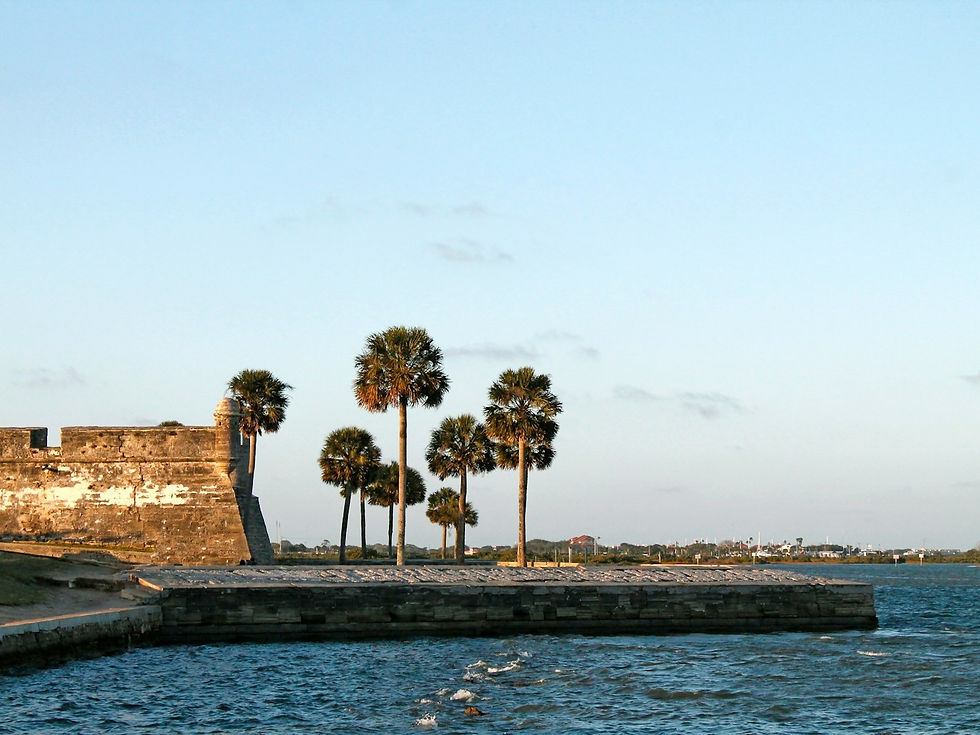
The tourist flood is not an insult. It is the economic weather of America's oldest city. People come for the Castillo, for Flagler College photos, for a walk that feels older than the rest of Florida. Coffee is how they punctuate that walk. They decide in motion. They may love the cup and still never return, because home is a plane ride away. Serving that person well is a first impression craft: hours, photos, a room that matches the listing, a street name they can find.
What that customer does not need is insider language. They do not know which sister brand roasts for which cafe. They do not know that West King Street is a Thursday and Saturday tasting room. They know they are near a fort and they would like a cup. If your public pages assume they already belong, they will tap a more obvious pin, including a chain or franchise unit they noticed from the trolley. Clarity is hospitality for this customer.
The Small, Loyal Base
The second customer is a much smaller group: locals, and in a college adjacent city like this one, students who come back week after week. They already know the name, already have a usual order, and are not deciding based on Maps stars. They are deciding based on habit, familiarity, and whether the shop still feels like their shop.
This customer's relationship to the business is built over time, through dozens of small, repeated interactions rather than a single decisive moment. Their loyalty is not won through a clever Maps listing. It is won through consistency, the coffee tasting the same way it did last week, the staff remembering their name, the space still feeling like the place they chose to make part of their routine.
The loyal base is smaller and it is not less important. Locals keep a room honest. Students from Flagler keep a morning rhythm when the cruise of visitors thins. People who live a few blocks off the walking loop are the reason a shop still feels like a shop in September. They are not deciding off stars. They are deciding whether the place still feels like theirs.
What this customer needs from the internet is less romance and more reliability. Correct hours when they bother to check. A page that still names the neighborhood they actually live in. A sense that the business did not become a costume for tourists only. You cannot buy that with a single campaign. You keep it by remaining consistent, and by not letting the public listing rot while you take care of the people in front of you.
Where Each Customer Actually Shows Up
A cafe on Spanish Street, deep in the Historic District, sits squarely in tourist walking territory. A room further out on San Marco Avenue, closer to the Uptown and North City area, leans more toward a local, repeat visit rhythm, alongside its wine service in the evening. King Street itself also holds a mix of chain and franchise coffee units that a visitor riding a trolley loop through downtown is likely to encounter first, simply by virtue of visibility along that main corridor.
This geographic split is worth understanding as more than a passive fact. It suggests that different specialty coffee locations within the same small city should reasonably think about their own marketing priorities differently, depending on which customer type their specific street and neighborhood naturally attracts more of. A Spanish Street location leaning into landmark proximity and visitor discovery makes more sense than the same approach applied uniformly to a quieter, more locally rooted San Marco Avenue room.
Geography sorts the two customers more than any slogan will. Relámpago on Spanish Street sits in the walking path between the Castillo and Flagler College, which means first time visitors will keep finding the door whether the website is ready or not. DOS on San Marco Avenue sits in Uptown and North City, with wine in the evening, which leans more toward people who chose the trip. 3rd Wave on West King Street, open two days, is almost a local and pilgrim hybrid: you have to know, or you have to be told.
King Street itself still holds chain and franchise coffee units a trolley loop makes easy to see. I am not going to turn those units into villains. They are part of what a first time visitor encounters. Specialty rooms nearby should not pretend the visitor has already rejected those units on principle. The specialty argument has to be visible at a glance: a listing that looks current, a street name that matches the walk, a photo of a real room. Geography starts the split. The public pages finish it, or they do not.
Showing Up Means Something Different for Each
For the first time visitor standing at the Castillo, showing up in search means clean Maps stars, real recent photos, and hours that are actually accurate in that exact moment. For the local who already knows the name, showing up means something closer to a real neighborhood page and consistent, correct listing information across the platforms they might check out of habit rather than discovery.
It is worth thinking through why these needs diverge so sharply. The tourist's entire relationship to the business happens in a single, compressed window of decision making, where every signal, good or bad, carries outsized weight. The local's relationship unfolds over months or years, where a single inconsistency matters far less than the accumulated pattern of reliability the business has built over time. Serving both well requires understanding that these are not the same problem wearing two different hats.
Showing up for the tourist is Maps work and first impression work. Accurate hours. Recent photos. A category that says cafe. A page that names Spanish Street and the Castillo instead of a foggy downtown. Showing up for the local is consistency work. The same hours on every clock. A neighborhood page that still feels like it was written for someone who will be back on Thursday. Those are not the same content calendar.
A single homepage can still serve both if it is built with the split in mind. Lead with the facts a stranger needs so they will walk in. Keep a second layer of story for the person who already knows the name and wants to feel the family, the roasting, the reason this room is theirs. Flattening those layers into one generic paragraph is how you get copy that sounds like a tourism brochure and a local bulletin at once, and therefore like neither.
Why This Framing Matters More Than a Single Strategy
Treating both customers as the same audience, answered by the same generic homepage copy, leaves real value on the table in both directions. Understanding the split, and building differently for each, is a more honest and more effective starting point than any single, one size fits all marketing move.
A business that builds specifically for the tourist, chasing Maps optimization and landmark proximity messaging, risks feeling impersonal and generic to the loyal local who wants to feel like more than a passing statistic. A business that builds only for the local, leaning entirely into insider language and assumed familiarity, risks confusing or alienating the first time visitor who needs far more context to feel comfortable walking through the door. The goal is not choosing one audience over the other. It is understanding both clearly enough to serve each on its own terms.
This is why I do not trust a single strategy in the Historic District. Optimize only for the tourist and the regular starts to feel like a prop in their own cafe. Optimize only for the regular and the stranger cannot find the door, or finds it and does not understand the hours. The starting point is the split itself. See both customers. Then build the listing and the pages so each one is being spoken to on purpose.
That is the close I wanted for St. Augustine. A tiny resident count. A loud visitor economy. Three specialty rooms that are easy to miss behind tourism copy. Two customers at one counter. If you want help building a presence that speaks to both, Hillcane is at hillcane.co/contact. The work is not a new personality for the shop. It is letting each customer find the version of the truth they actually need.
If you only remember one pairing from this cluster, remember this one. The stranger needs the listing. The regular needs the consistency. Spanish Street, San Marco Avenue, and West King Street each mix those two people in a different ratio, and none of them is served by a generic downtown paragraph. See the split. Write for both. That is the whole marketing decision hiding inside a Historic District morning.
Related Reading
More from this Hillcane city series, plus the pages on the site that sit next to the work.
St. Augustine's Coffee Scene Is Small, Real, and Easy to Miss Behind the Tourism
We Searched Coffee Shop Marketing in St. Augustine. Here's What Came Up.
Spanish Street's Coffee Lab Is a Two Minute Walk From the Castillo
San Marco Avenue Has Coffee, Wine, and a Roastery in One Room
One Family, Two Coffee Businesses: The Story Behind Relampago and DOS in St. Augustine
What St. Augustine Actually Offers a Small Business Owner Looking for Marketing Help
The Two Person Coffee Roaster Working Two Days a Week in St. Augustine
Reviews Are Doing More Work in St. Augustine Than a Homepage Usually Gets Credit For
Why Isn't My St. Augustine Coffee Shop Showing Up on Google?
Frequently Asked Questions
Who are the two customer types for a Historic District coffee shop in St. Augustine?
One is the daily flood of first time tourists who may never return. They walk from Castillo de San Marcos at 1 South Castillo Drive or from Flagler College at 74 King Street and decide off a phone. The other is a smaller loyal base of locals and Flagler students. Flagler Factbook 2024 to 25 fall enrollment is 2,407 total, 2,391 undergraduate and 16 graduate. St. Augustine city proper is 14,979 residents, ACS 2023. This research does not lock a tourist to local percentage, so the split stays qualitative, two audiences at one counter.
Which St. Augustine coffee rooms lean tourist, and which lean local?
Relámpago Coffee Lab at 74 Spanish Street is the walking distance Historic District example, between the Castillo and Flagler. DOS Coffee and Wine at 300 San Marco Avenue is Visit tagged North City, with Relámpago coffee plus wine and beer, Monday through Saturday 7 am to 7 pm and Sunday 7 am to 5 pm, phone (904) 342-2421. 3rd Wave Coffee Roasters at 215 West King Street, Suite 3, is Visit tagged West St. Augustine, public Thursday 9 am to 4 pm and Saturday 9 am to 1 pm only. Geography sorts the mix more than a slogan will.
Does a smaller local customer base matter less in St. Augustine?
No. Locals and students keep a room honest when the visitor walk thins. Flagler College sits on a 47 acre campus with Ponce de Leon Hall, a National Historic Landmark built in 1888, and Flagler Legacy Historic Tours start at 74 King Street. That is a repeat rhythm Relámpago at 74 Spanish Street can feel without treating students as scenery. DOS on San Marco leans toward people who chose the trip, including evening wine. 3rd Wave on West King Street, two public days, is almost a local and pilgrim hybrid. Loyalty is consistency, not a first impression listing.
What does showing up in search mean for a first time tourist here?
It means hours, photos, and a street name a stranger can match while walking from 1 South Castillo Drive. Relámpago Friday and Saturday close still disagrees: Visit St. Augustine shows 8 am to 6 pm, the DOS homepage shows 8 am to 8 pm. Sunday through Thursday 8 am to 2 pm agrees. A locked door against the listed close sends that person to a more obvious pin. Do not invent Castillo ticket counts. NPS lists the monument mailing address and phone 904 829-6506, homepage last updated March 16, 2026. Clarity is hospitality for this customer.
What does showing up in search mean for a St. Augustine local?
It means the clocks match every time they bother to check, and a page still names the neighborhood they use. A San Marco regular at 300 San Marco Avenue needs North City truth, wine after coffee, and hours Monday through Saturday 7 am to 7 pm, Sunday 7 am to 5 pm. A West King regular needs the two day tasting window at 215 West King Street, Suite 3, not a fake daily cafe promise. Unique neighborhood URLs are still missing on Relámpago, DOS, and 3rd Wave. Reputation on Visit cards and searchability on owner pages are two different systems.
Are chain and franchise coffee rooms part of the same Historic District walk?
They are part of what a trolley loop visitor sees first, a different category, not dunks of the audited three. Southern Grounds lists 124 King Street across from Flagler College, opened December 2024, pouring Intelligentsia, daily 6:30 AM to 9:00 PM. Foxtail lists 160 King Street Unit 3, 7:00 AM to 6:00 PM daily, (904) 217-0213. Visit St. Augustine lists Kookaburra Downtown at 18 Cathedral Place, daily 6:30 am to 9:00 pm. Official Kookaburra visit pages list seven cafes plus Amphitheater and Ponte Vedra Concert Hall outposts. Specialty rooms nearby still have to look current at a glance.
Is Dutch Bros or 7 Brew in the Historic District coffee split?
Dutch Bros official city copy lists 1 location in St. Augustine, Florida at 50 McCoy Way, ZIP 32095, pickup window and drive thru. That is north city World Golf Village geography, not Spanish Street. Official 7 Brew Florida index has no St. Augustine city card in current locator copy. Do not print 7 Brew as open in the city. Those drive thru facts belong in the wider map. They do not replace Relámpago at 74 Spanish Street, DOS at 300 San Marco Avenue, or 3rd Wave at 215 West King Street, Suite 3.
Is there a verified tourist versus local percentage for St. Augustine cafes?
No, and this post does not invent one. ACS 2023 city proper is 14,979. Visitor search still dwarfs resident search as a qualitative pattern, not a ratio. This research does not lock a live Maps pack for St. Augustine. Argue from geography instead: Castillo walk versus San Marco locals versus a West King two day room versus McCoy Way drive thru. Nights of Lights is a qualitative Historic District surge. Southern Grounds King Street copy even names extra parking time. Do not turn that into a visitor count.
Can one St. Augustine cafe website serve both customers?
Yes, if it is built with the split in mind. Lead with facts a stranger needs so they will walk from the Castillo or from 74 King Street to 74 Spanish Street. Keep a second layer of story for the person who already knows DOS on San Marco or the Thursday Saturday tasting room on West King Street. Visit St. Augustine and Florida Historic Coast already publish drinker cards. Owner sites still lack unique neighborhood URLs. Flattening both audiences into one downtown paragraph sounds like a tourism brochure and a local bulletin at once, which means it serves neither.
How can Hillcane help a St. Augustine shop speak to both customers?
Hillcane can help build listing and page work that names each street on purpose. Relámpago at 74 Spanish Street needs first impression clarity for Castillo and Flagler walkers. DOS at 300 San Marco Avenue needs North City hours and the wine after coffee truth. 3rd Wave at 215 West King Street, Suite 3, needs the two day public window, Thursday 9 am to 4 pm and Saturday 9 am to 1 pm. Reach Hillcane at hillcane.co/contact or call (256) 384-2449. The work is letting each customer find the version of the truth they actually need.
Work with Hillcane
Every coffee shop in St. Augustine's Historic District serves a stranger who may never return and a regular who comes back every week. Showing up online means something different for each.
If your St. Augustine coffee shop wants to serve both its tourists and its regulars well online, reach Hillcane at hillcane.co/contact or call (256) 384-2449.
Reach out at hillcane.co or (256) 384-2449.


Comments