How 7 Brew and Scooter's Openings Change Maps and Search

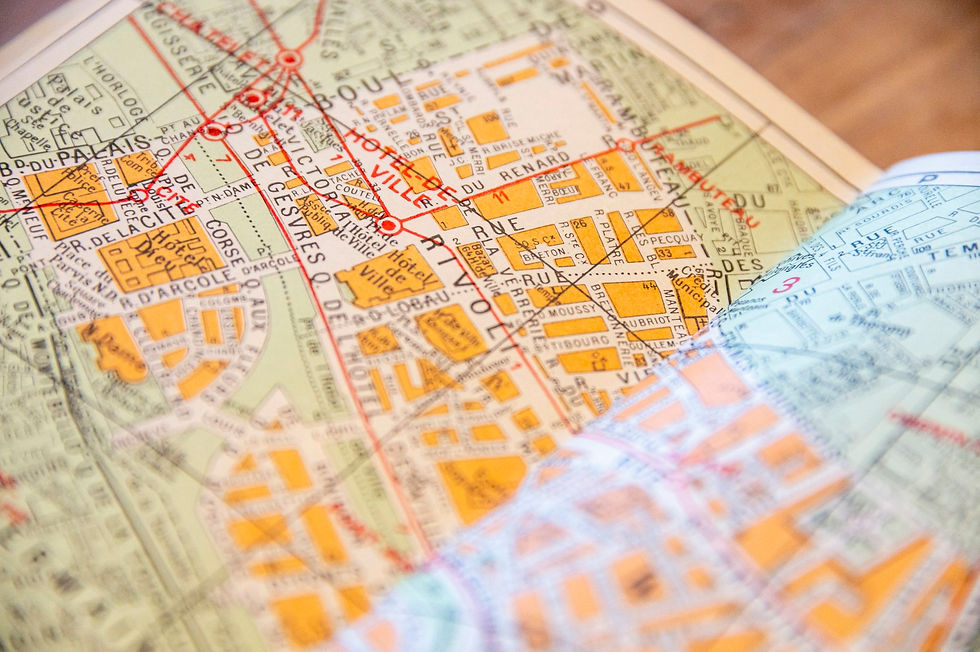
An independent cafe owner hears that a 7 Brew or a Scooter's is opening across town and assumes their own Maps ranking is about to take a hit. It is a reasonable worry, but it is built on a mechanism that does not actually exist the way people describe it.
Short answer: a new chain location does not mechanically push your independent cafe down in rank. What an opening actually does is add a new business listing, generate new mentions in best of lists and local coverage, and create new searches for the chain's own name. Whether that changes anything visible for your cafe shows up, if it shows up at all, in three specific places: who appears in the Maps pack for generic coffee searches, whether your cafe still gets mentioned in local lists, and how often people search your name directly.
This post walks through those three signals, gives you a monitoring timeline built as checkpoints rather than predictions, and lays out a response that does not involve reacting to rumor before you have looked at your own numbers.
The Three Signals Worth Watching
The first signal is Maps pack composition for generic searches, coffee near me, coffee shop in your town, run periodically over time. This is the most direct place a new chain location could show up, since Maps pulls from the pool of nearby, relevant businesses when assembling that top three result. If a 7 Brew or Scooter's opens near your cafe, checking whether it appears in that pack for the searches your customers would run is the most concrete thing to look at.
The second signal is list mentions, whether your cafe continues to appear in local best of lists, roundups, and coverage the way it did before the opening. A new chain does not remove your cafe from a list that already exists, but it can compete for a spot in any new list written after the opening, especially if local coverage of the new location crowds out coverage that would otherwise have mentioned independents.
The third signal is your own branded search volume, how often people search your cafe's actual name rather than a generic term. This one is worth watching less because a chain opening would suppress it and more because it tells you whether your existing customer base is staying loyal and searching for you directly, which is a much stronger position to be in than depending entirely on generic search traffic in the first place.
None of these three signals moves automatically. Watching them is the only way to know whether anything has changed for your specific cafe in your specific town, rather than assuming a general story about chain expansion applies to your situation without checking.
These three signals have limits. They are not a promise that watching them will reveal a dramatic change, and in a lot of cases the honest result of tracking all three for several months will be that nothing measurable moved at all. That is a legitimate finding, not a failed check. Knowing that your numbers held steady through a nearby opening is genuinely useful information, even though it is less exciting than a story about direct competitive impact.
What the Evidence Actually Shows, and What It Does Not
Hillcane's own records include dated store locator checks and Maps pack snapshots for 7 Brew and Scooter's across a number of cities, and it is worth being direct about how sparse and limited that record is. Locator data confirms a location exists in a city and roughly when, and Maps snapshots show which businesses appeared in a pack on a specific date, but neither one is a repeated, tracked measurement of the same city over time.
That means there is no before and after series in the files that could support a claim about what changes and by how much once a chain opens nearby. This post is not going to manufacture a timeline out of a single snapshot, and any post or article claiming a specific effect size or a predictable number of weeks for a ranking change to occur is making a claim that, as far as Hillcane's own records show, is not backed by a repeated measurement.
What the snapshots do confirm is that these chains do sometimes appear in the Maps pack for generic coffee searches in cities where they have opened, appearing alongside independents rather than automatically displacing them from the results entirely. A pack showing three results, one of them a chain, is a genuinely different outcome than a pack showing three results, all of them chains, and the snapshots on file show both independents and chains coexisting in the same pack in more than one city.
This is also consistent with how Google documents local ranking generally. Google Business Profile Help describes local ranking as based on relevance, distance, and prominence for each individual listing being evaluated against a specific search, not as a fixed set of slots where one business's addition automatically subtracts from another's position. A new listing entering the pool changes what is being compared, but it does not describe any mechanism where an existing listing is penalized simply because a new one appeared nearby.
It is also worth separating two brands that sometimes get lumped together in casual conversation but are recorded as distinct in the underlying locator data, one brand appearing under two slightly different labels depending on the source. Treating them as a single undifferentiated wave of expansion risks overstating how concentrated any one brand's presence is in a given town, when the more accurate picture is often two separate, smaller footprints rather than one large one.
A Monitoring Timeline, Not a Forecast
Because there is no repeated measurement in the files to build an actual timeline claim from, the honest version of a timeline section is a monitoring checklist rather than a set of predicted milestones. Think of it as four checkpoints relative to a known or rumored opening date, each one a moment to look rather than a moment something is guaranteed to happen.
Before the opening: note your current Maps pack position for your two or three most relevant generic searches, and note whether you currently appear in any local best of lists or roundups, so you have an honest baseline to compare against later rather than relying on memory.
Around the opening date: run the same generic searches again and note whether the new location appears in the pack, and in what position relative to your cafe. This is a single date observation, not a trend, and should be labeled that way if you are recording it anywhere.
One to three months after: repeat the same searches again, and check whether any new local coverage or list content has appeared mentioning the new location, and whether it also still mentions your cafe. Six months to a year after: repeat once more, and by this point you will have enough repeated checks of your own to form an honest sense of whether anything in your specific market has shifted, which is a different thing than assuming a shift happened because a chain opened nearby.
The Response: Stay Ready, Not Reactive
The response that holds up across this uncertainty is to keep your own profile and site fresh on an ongoing basis, monitor the three signals above on a simple weekly or monthly cadence, and specifically avoid making reactive changes to your profile, your pricing, or your messaging based on a rumor that an opening is coming or has come.
Keeping your profile fresh means the same basics that matter regardless of what your competition is doing: accurate hours, current photos, prompt responses to reviews, and a Maps presence that reflects what a visitor would find today. None of this is a special defensive measure against a chain opening. It is simply the baseline every cafe should already be doing, and a chain opening is a reasonable prompt to check that you have not let any of it slip.
Avoiding reactive changes matters because a rumored or confirmed chain opening is exactly the kind of moment that tempts an owner into a hasty decision, an aggressive review push, a sudden pricing change, a defensive rewrite of the website's messaging, made from anxiety rather than from an actual observed change in your numbers. Wait for your own monitoring checkpoints to tell you something concrete before making a change, rather than acting on the opening itself.
Monitoring weekly or monthly, rather than daily, is deliberate. Maps results shift for all sorts of ordinary reasons that have nothing to do with a nearby chain, a temporary dip in reviews, a seasonal change in search behavior, a platform level update unrelated to any single competitor. Checking daily invites you to read meaning into ordinary noise. Checking on a steady, spaced out schedule gives you a clearer signal by smoothing over the day to day wobble that is normal for any local listing.
A composite illustration, not a real cafe: picture an independent shop that, on hearing a 7 Brew was opening two miles away, immediately dropped its prices and posted several urgent sounding updates to its profile in the same week, before the new location had even opened its doors. Three months later, its Maps pack position for generic searches had not moved, but its pricing had, and it had spent real effort reacting to something that had not yet been observed to affect it at all. The better use of that same energy would have been the simple, patient monitoring checklist above.
This does not mean doing nothing while you wait. It means directing your energy toward things that are within your control and worth doing regardless of the outcome, a fresher set of photos, a more complete set of attributes, a habit of responding to reviews promptly, rather than toward a defensive move aimed specifically at a competitor whose actual effect on your numbers you have not yet measured.
How This Differs From a Prediction
It is worth restating plainly what this post is not doing. It is not predicting that your cafe's rank will or will not change. It is not offering a number of weeks before an effect appears, because no effect size or timeline is documented in the records this post draws from. And it is not suggesting that a chain opening is harmless in every case, since local conditions vary enough that a blanket reassurance would be just as unfounded as a blanket warning.
What it is doing is separating the parts of this situation that are documented, chains do sometimes appear in the Maps pack alongside independents, local ranking is based on relevance, distance, and prominence rather than a fixed slot system, from the parts that are not, any specific claim about how much or how fast anything changes for a specific independent cafe. Keeping that line clear is more useful to an owner than a confident sounding prediction built on nothing more than pattern matching from a single snapshot.
If you take one thing from this post, let it be that the honest response to uncertainty is a simple, repeatable habit rather than a one time reaction. Set your monitoring checkpoints, write down what you observe at each one, and let that record, built from your own market over time, be the thing that tells you what a chain opening meant for your cafe specifically, instead of a general assumption borrowed from a headline about national expansion.
Related Reading
More from Hillcane on this topic, plus the pages on the site that sit next to the work.
Frequently Asked Questions
Will a new 7 Brew or Scooter's automatically push my cafe out of the Maps pack?
No documented mechanism supports that claim. Local ranking, per Google Business Profile Help, is based on relevance, distance, and prominence evaluated for each listing against a specific search, not a fixed set of slots where a new listing automatically displaces an existing one. Maps snapshots on file show independents and chains coexisting in the same pack in more than one city.
How can I tell if a chain opening has affected my cafe's visibility?
Run your own two or three most relevant generic searches, note your current position, and repeat the same searches at set checkpoints before and after the opening, around the opening date, one to three months after, and six months to a year after. That repeated, self tracked record is the only honest way to know what changed in your specific market.
Does Hillcane have data showing how much chain openings affect independent cafes?
No. Hillcane's records include dated store locator checks and single date Maps snapshots, but no repeated, tracked measurement of the same city before and after an opening. Without that before and after series, no claim about an effect size or a timeline can be made, and this post does not make one. Your own checkpoints, run on the same searches over six months to a year, will tell you more.
Should I lower my prices when I hear a chain is opening nearby?
This post does not recommend reactive pricing or messaging changes based on a rumored or confirmed opening. The recommended response is to keep your profile and site fresh as an ongoing baseline practice and monitor your actual signals over time, rather than making a change based on anxiety before you have observed anything concrete. Accurate hours, current photos and prompt review replies do more for you than a same week price cut.
Do 7 Brew and Scooter's show up in Google Maps results for generic coffee searches?
Dated Maps pack snapshots on file do show these chains appearing in the pack for generic coffee searches in some cities where they have opened, appearing alongside independent listings rather than filling every position in the pack. This is a snapshot observation for specific cities and dates, not a general statistic about how often it happens nationwide.
What three things should I monitor after a chain opens near my cafe?
Watch your Maps pack position for the generic searches your customers would run, whether your cafe still appears in local best of lists and coverage after the opening, and how often people search your cafe's own name directly. These three signals are specific, checkable, and do not require guessing at a mechanism that is not documented.
How accurate are official store locators for tracking where chains are opening?
Store locator pages are a dated, first party record of a chain's own claimed locations, which is useful as a starting point, but Hillcane's own review of this data found it sparse, and in places it did not line up cleanly with other sources, including one brand recorded under two slightly different labels. Treat locator counts as a dated reference point rather than a complete or fully confirmed picture.
Is there a set number of weeks before a chain opening affects search rankings?
No documented timeline exists in the records this post is built from, so no specific number of weeks is given here, and any claim you encounter elsewhere stating a precise timeline should be treated with real skepticism unless it is backed by its own repeated, dated measurements. The four checkpoints in this post, before, around the opening, one to three months after and six to twelve months after, give you that record for your own town.
Does a chain opening near me mean I should stop investing in my Google Business Profile?
No, the opposite. Keeping your profile accurate and current, hours, photos, review responses, is the same baseline practice worth maintaining regardless of nearby competition, and it is the most direct thing within your control while you wait to see whether anything in your actual monitoring checkpoints changes. Google Business Profile Help ties local ranking to relevance, distance and prominence, and a complete, current profile supports all three.
What is the difference between a chain appearing in local coverage and a chain appearing in the Maps pack?
These are two separate signals worth tracking independently. The Maps pack is a live, searchable result that can include both chains and independents together. Local coverage, like best of lists or news articles, is separate written content that can mention a new chain opening without necessarily removing mentions of existing independent cafes from that same coverage.
Work with Hillcane
The rumor spreads faster than the drive thru gets built. Check your own numbers before you believe either one.
If you want help setting up a simple monitoring routine for your Maps position and local mentions, reach out at hillcane.co/contact or call (256) 384-2449.


Comments