Lincoln Sites and Route 66 Bring Visitors to Springfield Coffee


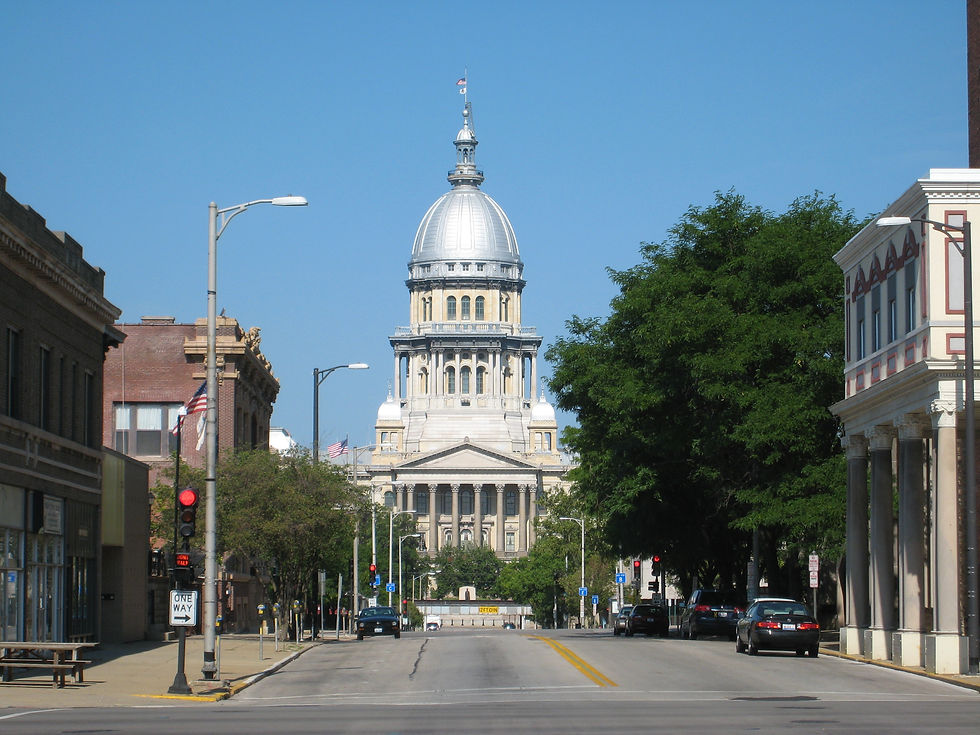
Photo: Daniel Schwen, CC BY-SA 4.0, via Wikimedia Commons
Springfield is a city that carries two identities at once, and both of them shape how people move through it on any given day. It is the seat of Illinois state government, full of the steady rhythm of a working capital city. It is also Abraham Lincoln's home city and a stop along the old Route 66 corridor, which means it draws a genuine stream of visitors who are not here for government business at all. Coffee shops in this city sit at the intersection of both of those worlds, whether they mean to or not.
I want to be careful here, because it would be easy to reach for a big number, a visitor count, an attendance figure, something that makes this sound more dramatic than the sources allow. The National Park Service and Visit Springfield pages behind this piece do not print one, and none is invented here. What is real is the pattern itself: a capital city with a national historic site and a genuine piece of American highway history, layered on top of the ordinary rhythm of daily local life.
The Lincoln Home, Plainly Described
Lincoln Home National Historic Site sits in Springfield, operated by the National Park Service, and the site's official pages on nps.gov name it plainly as the Lincoln Home in Springfield, Illinois, with a Basic Information page laying out practical details for anyone planning a visit. That is a federally operated historic site, not a local attraction dressed up to sound bigger than it is.
Springfield's own visitor bureau has built a roundup specifically pointing tourists toward the Lincoln related sites worth seeing around the city, a page titled plainly enough as five Lincoln sites visitors should not miss. That kind of dedicated tourism content only gets built for a destination that genuinely draws people asking where to start.
None of those pages prints a visitor count. It would be easy to guess at a number and make it sound authoritative, but guessing is exactly what this piece is not going to do. The honest version is simpler and still real: Springfield has a federally recognized Lincoln destination, and the city treats it as worth its own dedicated tourism content.
Route 66, Still Running Through Springfield
The same pattern holds for Route 66. Springfield's visitor bureau runs a dedicated page calling it legendary Route 66, and a separate blog post specifically covers the Route 66 wayside exhibits located around the city, the kind of roadside markers built for travelers tracing the old highway's path.
Route 66 tourism is its own genuine category of American travel, drawing people specifically interested in following the historic road rather than any single city's attractions in isolation. Springfield sitting directly along that route means it picks up a share of that traveling audience simply by being on the map those travelers are already following, distinct from anyone visiting specifically for Lincoln history or state government business.
Again, no attendance figure for Route 66 traffic through Springfield appears on those pages, and none should be invented to fill that gap. The honest fact is that the city has built out real, dedicated content for Route 66 travelers, which only makes sense if that audience is genuinely worth addressing.
A Capital City, Tourist Plus Local Climate
Put the Lincoln sites and Route 66 together with Springfield's ordinary role as the seat of Illinois state government, and a specific climate emerges. This is not a city that is purely a tourist destination, the way a small resort town might be, entirely dependent on visitors passing through. It is also not a city with zero outside visitor traffic, the way a purely residential suburb might be.
It is both at once, a working capital city with a real, steady population of state employees and residents going about ordinary days, layered with a genuine stream of Lincoln history tourists and Route 66 travelers passing through on their own itineraries. That combination shapes demand for coffee in a way that neither a pure tourist town nor a pure local market experiences on its own.
This tourist plus local climate touches all three of Springfield's real coffee pockets differently. Downtown near the Capitol sees both state workers and Lincoln site visitors, since much of the historic core sits close to the government district. North 1st, near Memorial and SIU Medical, is shaped far more by the medical corridor than by tourism. The West Side, on Governor Street, leans more residential and local than either of the other two.
What Matters Most During Visitor Weeks
Given this pattern, the most practical thing a Springfield coffee shop can do has nothing to do with chasing a tourist headcount. It has to do with the basics that matter most whenever an unfamiliar visitor is the one deciding where to stop for coffee: accurate hours on a shop's Google Business Profile, and current, genuine photos of what the shop actually looks like inside and out.
A local regular already knows a shop's real hours from memory and does not need a photo to know what the counter looks like. A Lincoln history tourist standing outside the Old State Capitol, or a Route 66 traveler following wayside markers through downtown, has none of that built in knowledge. They are relying entirely on what shows up on their phone in that moment, and a listing with wrong hours or an outdated photo can lose that visitor before they ever walk through the door.
That is a small, achievable piece of upkeep, not a major undertaking, and it matters most precisely during the weeks when Springfield's visitor traffic is heaviest, whether that traffic is drawn by Lincoln history, Route 66, or simply the ordinary rhythm of state government business downtown.
How a Visitor Actually Finds Coffee on a Trip Like This
Picture the actual sequence a Lincoln history tourist or a Route 66 traveler follows on an average visit to Springfield. They have likely already planned their historic stops, the Lincoln Home, the Old State Capitol, one or two Route 66 wayside markers along their route through the city, well before they ever start thinking about where to grab a coffee. The coffee decision, for most of these visitors, happens in the moment, standing outside one of those sites with a phone in hand.
That moment favors whichever shop shows up clearly and quickly, with accurate information a stranger can trust immediately. A visitor standing outside the Lincoln Home has no local knowledge to fall back on. They cannot rely on having heard a friend recommend a shop, or on already knowing a neighborhood's layout. They are entirely dependent on what their phone tells them right then, which is exactly why the basics matter so much more for this kind of visitor than for a Springfield local who already knows where to go.
This is also why the neighborhood distinction matters so much for a Lincoln or Route 66 focused visitor specifically. Someone near the historic downtown core is far more likely to end up near Monroe Street than near North 1st or Governor Street, simply because of where Springfield's Lincoln sites and downtown Route 66 markers happen to sit. A shop that clearly identifies its own proximity to those landmarks gives that specific visitor a much easier decision to make.
Why No Number Appears Here
It is worth explaining why this piece keeps returning to what the sources do not say, rather than moving past it quickly. A useful account of Springfield's tourist and local coffee climate has to stay inside what the public record shows, or it becomes the kind of confident sounding but unreliable content that makes search results harder to trust in the first place.
There is a real temptation, writing about Lincoln history tourism or Route 66 traffic, to reach for an impressive sounding number, even a rough one, because numbers make writing feel authoritative. Resisting that temptation is a deliberate choice. A sourced fact, like a federally operated Lincoln Home National Historic Site, a Visit Springfield roundup titled 5 Lincoln Sites You Do Not Want To Miss, or a dedicated Legendary Route 66 page, is worth more than an invented statistic dressed up to sound precise.
The numbers that are on the record are useful in their own right. Springfield city has 113,714 residents on the ACS 2023 five year estimate, which describes the local half of the tourist plus local mix. The visitor bureau itself works from 1 S. Old State Capitol Plaza, in the middle of the downtown historic core. Those facts say where the city lives and where its visitors start, without pretending to count the visitors.
A Climate That Layers, Rather Than Replaces
It is worth being precise about how this tourist layer interacts with Springfield's ordinary local rhythm, since the two do not simply swap places with each other. A downtown coffee shop near the Capitol does not stop serving its regular local customers just because a Route 66 traveler happens to walk in the same morning. The tourist traffic sits on top of the local rhythm, adding to it during certain weeks and seasons rather than displacing the everyday customer base a shop already relies on.
That layering effect means a shop's core identity does not need to change to accommodate visitors. A downtown shop that already serves Capitol area workers well, with genuine, reliable coffee and a clear sense of its own downtown identity, is already most of the way toward serving a curious Lincoln history tourist well too. The visitor is simply looking for the same genuine local experience the regular customer already values, just discovering it for the first time.
That is a reassuring way to think about this pattern for any Springfield shop owner. Serving visitors well during Lincoln and Route 66 heavy weeks is not a separate project layered awkwardly on top of everyday operations. It is largely the same good, consistent local service, made easier to find by an accurate listing and a clear sense of where the shop sits in the city.
A Real Pattern, Told Honestly
None of this needed an invented number to be worth telling. Springfield is both a working capital city and a genuine national tourist destination tied to Lincoln and to Route 66, and that dual identity shapes who walks into a coffee shop on any given day, from Custom Cup near the Capitol to Yellow Bird on North 1st to Stella on the West Side.
The honest version of this story, without a manufactured attendance figure attached, is still a useful one for a Springfield coffee shop owner thinking about who is likely to walk through the door on any given week, and why accurate, current basics matter more here than they might in a purely local market.
If you run a Springfield coffee shop and want help making sure your own listing and your own page are ready for both the local regular and the visitor who has never been to this city before, that is exactly the kind of groundwork Hillcane helps with. Reach out at hillcane.co/contact or call (256) 384-2449.
Related Reading
More from this Hillcane city series, plus the pages on the site that sit next to the work.
7 Brew Leads the Maps Results for Coffee Shop in Springfield, IL
What Shows Up When You Search Coffee Shop in Springfield, IL
Springfield IL Coffee Is Capitol Monroe, North 1st and West Governor, Three Different Searches
Stella Coffee & Tea Serves Springfield's West Side on Governor Street
Visit Springfield and Sprudge Already Tour the Capital's Coffee
Yellow Bird Coffee House Serves North 1st Street Near Memorial and SIU Medical
The State of Specialty Coffee Visibility in North America (2026)
Google Business Profile for Coffee Shops: The Complete 2026 Checklist
Frequently Asked Questions
What kind of demand do Lincoln sites and Route 66 create for Springfield coffee?
A capital city, tourist plus local climate rather than a countable number. Springfield's 113,714 residents on the ACS 2023 five year estimate include a steady base of state workers, and the city also draws Lincoln history visitors to Lincoln Home National Historic Site and Route 66 travelers following the Visit Springfield wayside exhibits. Both groups shape who walks into a coffee shop.
Is there a published Lincoln Home visitor count in this post?
No. The National Park Service pages for Lincoln Home National Historic Site, including its Basic Information page, do not print a visitor figure, and none is invented here. The sourced facts are that the site is operated by the National Park Service in Springfield, Illinois, and that Visit Springfield runs a roundup titled 5 Lincoln Sites You Do Not Want To Miss.
What is Springfield, Illinois' population?
Springfield city in Illinois has 113,714 residents on the ACS 2023 five year estimate. That is the city proper, not the metro area, and it is a different place from Springfield, Missouri, at 169,432, or Springfield, Ohio, at 58,410. The resident base is the local half of the tourist plus local climate that shapes the city's coffee shops.
Which coffee pockets share Springfield's tourist and local traffic?
Downtown near the Capitol along Monroe Street, North 1st Street near Memorial Health and SIU School of Medicine at 801 N Rutledge St, and the West Side along Governor Street. Downtown sees the most overlap between state workers and history visitors because the Old State Capitol and the visitor bureau sit in the government district, while North 1st and the West Side lean local.
What matters most in visitor weeks for a Springfield coffee shop?
Accurate Google Business Profile hours and current photos. A visitor leaving Lincoln Home National Historic Site or following a Route 66 wayside exhibit decides from a phone in the moment, with no local knowledge. A shop on Monroe Street, North 1st or Governor Street with correct hours and real photos gets considered; a stale listing loses that visitor before they reach the door.
Should a Springfield shop publish Route 66 visitor totals?
No. Visit Springfield's Legendary Route 66 landing page and its Route 66 Wayside Exhibits in Springfield IL post describe the road and its markers but do not print a traveler count, and none should be made up for marketing. Better copy names the shop's street, its distance from downtown landmarks, and its real hours for visitors passing through.
Is Lincoln Home National Historic Site in Springfield?
Yes. It is a National Park Service site in Springfield, Illinois, and its official pages on nps.gov include a Basic Information page for planning a visit. Visit Springfield's 5 Lincoln Sites roundup points visitors toward it, and the bureau's own office at 1 S. Old State Capitol Plaza puts visitor planning squarely downtown, which is one reason coffee shops along Monroe Street see the most history focused visitors.
Does Visit Springfield promote Route 66?
Yes. Visit Springfield runs a landing page titled Legendary Route 66 and a blog post called Route 66 Wayside Exhibits in Springfield IL, which covers the roadside markers built for travelers tracing the old highway. The bureau works from 1 S. Old State Capitol Plaza downtown, close to the Lincoln sites it promotes in its 5 Lincoln Sites roundup.
Is downtown Springfield more touristy than North 1st or the West Side?
Most likely, yes. Downtown holds the Old State Capitol and the visitor bureau at 1 S. Old State Capitol Plaza, so history visitors usually start their day there. North 1st is shaped by Memorial Health and SIU School of Medicine at 801 N Rutledge St, and the West Side along Governor Street leans residential and local.
How can a Springfield coffee shop prepare for visitor traffic?
Keep Google Business Profile hours accurate and photos current, and build a first party page that names the shop's street and its distance from landmarks such as the Old State Capitol or Lincoln Home National Historic Site. That page serves the local regular and the Route 66 traveler alike. Hillcane helps with that groundwork at hillcane.co/contact or (256) 384-2449.
Work with Hillcane
Springfield is both a working state capital and a genuine Lincoln and Route 66 destination, and that dual identity shapes who actually walks into a coffee shop on any given day.
Hillcane helps Springfield coffee shops get their listings and pages ready for both local regulars and first time visitors. Reach out at hillcane.co/contact or call (256) 384-2449.


Comments