
The State of the Coffee Scene in Mobile, Alabama

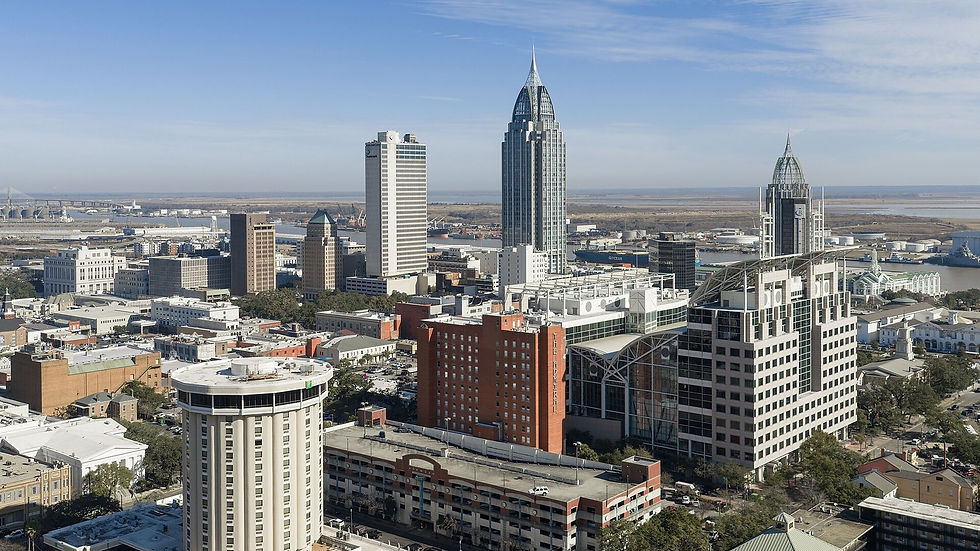
Mobile does not look like most of the small Alabama cities that show up in visibility research. It is a Gulf port city, with a real cruise terminal and a genuinely tourist facing downtown, and it also carries two distinct residential pockets that behave nothing like the historic district a few blocks away. Anyone trying to describe this city's coffee scene with a single sentence is going to miss most of what actually makes it interesting, because Mobile is not one coffee market wearing three neighborhood costumes. It is three real markets that happen to share a city limit.
The city proper counts 185,097 residents by the most recent Census estimate, a real number worth naming exactly rather than rounding into a metro area figure or confusing with the much smaller Mobile, Arizona that occasionally pollutes a generic search. That population sits across a downtown built for visitors, a college adjacent residential corridor, and a Midtown strip with its own separate identity, and the coffee scene sorts itself into those same three geographies almost perfectly. A shop's address in this city is not a footnote. It is close to the whole story.
What follows is a walk through what that scene actually looks like today: three real independent shops, each anchoring a different pocket of the city, one well run seven location brand that has genuinely earned its scale, and a long running Royal Street name carrying its own complications. Then, because a rich scene is not the same thing as a fully visible one, a look at what the online side of that same scene does and does not currently show anyone searching for it.
Three Geographies, Not One Downtown Blob
The instinct when writing about a city's coffee scene is to treat it as one contest, a single ranked list of who is best across the whole map. Mobile resists that instinct more than most cities its size, because it genuinely functions as three separate places for coffee purposes. Detonti Square and Saint Anthony Street anchor the tourist facing downtown, the kind of area where cruise passengers and historic district walkers make up a real share of daily traffic. Old Shell Road and the Spring Hill area form a residential, college adjacent pocket with an entirely different rhythm, close enough to Spring Hill College to pick up real foot traffic from that campus community. Midtown's Dauphin Street corridor is its own third place again, closer to a neighborhood strip than either of the other two.
That distinction matters more than it might first sound like it should, and it matters for a reason that has nothing to do with taste in coffee. A visitor stepping off a cruise ship and walking the historic district is looking for something different than a Spring Hill College student grabbing coffee between classes, and both of those people are looking for something different again than a Midtown regular who already knows exactly which door to walk through. A single citywide coffee page trying to speak to all three of those searches at once usually ends up speaking clearly to none of them.
For an owner reading this, the practical version of that point is simple: which of these three geographies is your shop actually in, and does your website currently admit it. A Detonti Square address surrounded by copy written for a residential regular is going to underperform for the tourist actually standing outside the door, and the reverse is just as true. Knowing which of the three markets you are competing in is the first real decision behind almost everything else in this cluster.
The Three Prime Independents
Three shops anchor the audited independent roster in this research, one in each of Mobile's distinct pockets. Nova Espresso sits at 306 Saint Anthony Street in Detonti Square, downtown, and runs a real working locations page that cleanly separates its Mobile room from a second location in New Orleans. Carpe Diem Coffee and Tea Company operates out of a restored Victorian house at 4072 Old Shell Road, close enough to Spring Hill College to draw real foot traffic from that campus community, and has been roasting and serving coffee in that same building for close to two decades. Rooted and Grounded holds down Midtown at 2754 Dauphin Street, a coffeehouse built around a genuinely values driven, faith centered identity rather than a straightforward retail model.
All three of these shops run on Squarespace, and all three carry real structured data marking them correctly as local businesses, a genuinely encouraging technical starting point that not every city in this research can claim. That is worth sitting with for a moment. A three for three record on correct schema is not a given anywhere, and it means the foundational, invisible plumbing search engines depend on is already in place at every one of Mobile's three prime independents.
None of the three currently runs a blog with any published content, which is worth noting here and will come up again in more detail elsewhere in this cluster. What ties these three shops together is not a shared platform or a shared score. It is that each one is a genuine anchor for its own specific pocket of the city, not a competitor trying to win the same generic search as the other two. Nova Espresso is not chasing Carpe Diem's Old Shell Road regulars, and Carpe Diem is not trying to out rank Rooted and Grounded for a Midtown search. Each shop's real competition is closer to indifference than to each other.
Yellowhammer's Real Scale
Layered on top of those three independents sits Yellowhammer Coffee, a real seven location brand with an official locator page naming every single room by name and address, from a downtown Saint Joseph Street location through a hospital location, a trailer concept, and several suburban rooms scattered across the wider Mobile area. This is not a chain in the sense of a national drive through brand muscling into a market from outside. It is a homegrown Alabama coffee company that has genuinely built out real scale within its own region.
That scale is worth naming honestly rather than treating it as either a threat or an irrelevance. A seven location brand with a working locator page buys itself a very specific kind of search advantage, simply by existing at seven real addresses with seven real listings rather than one. Every one of those rooms is a separate opportunity to show up in a nearby search, a separate Google Business Profile, a separate small win multiplied across the map.
That is not a strategy a single location independent should try to copy directly. Growing to seven locations is a multi year, capital intensive undertaking suited to a very different stage of business than most of the shops in this cluster are at. It is, however, a useful, concrete example of what scale actually buys a brand in search, worth understanding clearly even if the right response for a one room shop looks completely different. A later piece in this series digs into that comparison in more detail, but the short version belongs here too: seven locations is not a goal, it is a different business model, and the honest lesson from Yellowhammer is about what search visibility rewards, not about how many doors a small shop should try to open.
Serda's, A Long Running Name With Its Own Complications
Serda's Coffee Company has held down a presence on Royal Street for years, a genuinely long running, well known name in this market. Its online footprint carries its own real complications worth being honest about rather than glossing over. A long cited domain associated with the shop currently returns essentially nothing useful to a visitor or a search engine trying to load it, while a newer domain appears to be live and functioning. That kind of split, one dead URL still being cited by directories and one working URL search engines have not fully caught up to, is exactly the kind of gap that can leave a genuinely open, genuinely busy shop looking invisible to anyone searching for it online.
This is not a story about a struggling business. It is a story about how a real, established shop's digital footprint can quietly drift out of alignment with its actual operating reality, a pattern that shows up more than once in this research and deserves its own closer look elsewhere in this cluster. Nobody sets out to leave a dead domain live in directory listings while quietly running a business off a different one. It happens gradually, a domain renewal missed, a platform migration that never got fully communicated back out to the directories still citing the old address, and the result is a genuinely confusing signal sitting in front of anyone trying to find the shop.
The lesson generalizes well beyond this one shop. A business does not need to be struggling, or even doing anything wrong in its daily operations, to end up with a search footprint that quietly stops matching reality. It just needs enough time to pass without anyone specifically checking.
What the Zero Blog Pattern Actually Signals
Three for three on zero published blog content is easy to read as a minor footnote, but it is worth spending a moment on why it matters more than it might first appear. A blog is not primarily a marketing gimmick. For a coffee shop, it is one of the only natural places to publish the kind of specific, neighborhood level content that answers a real searcher's real question, what a Detonti Square visitor should know before walking those four extra blocks, what makes a Victorian house on Old Shell Road worth a special trip, what a Midtown regular gets from a coffeehouse built around community as much as a menu.
None of the three prime independents in Mobile is doing anything wrong by not having a blog. Plenty of genuinely successful small businesses never publish one. What it does mean is that all three are currently leaving a real, low cost channel for neighborhood specific content entirely unused, at exactly the moment when this research shows that neighborhood specificity is the actual differentiator between shops competing in the same small pocket of the city.
For an owner reading this, the honest takeaway is not that a blog is mandatory. It is that the absence of one, combined with three genuinely distinct geographies each needing their own story told clearly, represents real, addressable opportunity sitting untouched across this entire market.
A Dense Scene, A Real Gap
None of this paints Mobile as a thin or struggling coffee market. Three genuinely distinct independent anchors, a real regional brand with honest scale, and a long running name that has clearly earned its place in the city's food and drink identity add up to a scene with real substance behind it. That density is exactly what makes the visibility gaps sitting underneath it worth taking seriously rather than dismissing.
A zero post blog across all three of the audited independents is not, on its own, a crisis. It is a signal that even shops doing real, correct technical work elsewhere are leaving a real opportunity untouched, a pattern this cluster will return to from several different angles. A dense, genuinely good coffee scene deserves an online presence that actually matches how good it is, and right now there is real distance between the two in Mobile.
That distance is the entire reason this cluster exists. Not to rank one shop against another, and not to suggest anything here is broken beyond repair, but to name specifically, geography by geography and shop by shop, where the gap between quality and visibility currently sits, so that owners reading it can see their own situation reflected honestly rather than generically.
What Comes Next in This Cluster
The rest of this series walks through each of these pieces in more detail: what it actually means to write for Detonti Square's tourist facing crowd versus Old Shell Road's residential regulars versus Midtown's Dauphin Street corridor, what Yellowhammer's real scale does and does not teach a single location shop, and what it looks like when a genuinely beloved, decades old institution turns out to be quietly invisible to the exact search engines its next customer is using to find it.
It also looks honestly at what actually shows up when a Mobile coffee shop owner goes looking for marketing help built for their specific business, and at what a genuinely values driven cafe can teach about balancing identity with the practical basics any searcher and any search engine still need.
None of it is meant as a scorecard ranking one shop against another. It is meant as an honest, specific look at a genuinely rich coffee city, and at the real, fixable gap between how good this scene actually is and how well that quality currently shows up online.
Related Reading
More from this Hillcane city series, plus the pages on the site that sit next to the work.
What Shows Up When You Search for Coffee Shop Marketing Help in Mobile
Old Shell Road and Spring Hill: The Victorian House Serving Mobile's Coffee
Dauphin Street's Mobile Coffeehouse With a Different Kind of Mission
Yellowhammer's Seven Mobile Locations and What Scale Actually Buys a Coffee Brand
Mobile's Small Business Marketing Content Doesn't Know Coffee Shops Exist
Nearly 20 Years in a Mobile Victorian House: What Longevity Buys, and Doesn't, Online
Two Cities, One Site: What Mobile's Nova Espresso Gets Right About Building for Multiple Locations
A Genuine Mobile Institution Can Still Be Invisible to Google
Cruise Passengers, Downtown Regulars: Writing for Two Different Mobile Coffee Customers
What a Mobile Ministry Cafe Teaches About Building Real Community Online
Frequently Asked Questions
How many independent coffee shops does this research cover in Mobile?
Three prime independents anchor the audited roster in this research: Nova Espresso in Detonti Square downtown, Carpe Diem Coffee and Tea Company on Old Shell Road near Spring Hill College, and Rooted and Grounded on Dauphin Street in Midtown. A broader directory count of the wider scene runs higher, though that figure is a general estimate rather than a full census.
What is Mobile's population?
Mobile's city proper population is 185,097 according to the most recent Census estimate. That figure refers specifically to the city itself, not a wider metro area, and should not be confused with the much smaller Mobile, Arizona, which sometimes surfaces in a general web search for the name alone.
Are Detonti Square, Old Shell Road, and Dauphin Street really different markets?
Yes. Detonti Square is Mobile's tourist facing downtown corridor, with real cruise passenger and historic district foot traffic. Old Shell Road and Spring Hill form a residential, college adjacent pocket. Midtown's Dauphin Street corridor is its own separate neighborhood strip again. Each draws a genuinely different kind of customer, and each deserves its own content strategy rather than one shared citywide approach.
Is Yellowhammer Coffee a national chain?
No. Yellowhammer is a homegrown coffee brand that has built out seven real locations within the wider Mobile area, with an official locator page naming each one. It represents genuine regional scale rather than an outside national brand entering the market, and it is best understood as a positive example of what scale buys in search rather than a competitor a single location shop should try to imitate directly.
Do the independent shops in Mobile have working websites?
The three prime independents run on Squarespace and carry real, correctly typed structured data identifying them as local businesses, a genuinely solid technical foundation. None of the three currently runs a blog with published content, which represents a real, addressable gap given how distinct each shop's own neighborhood story actually is.
Is Serda's Coffee Company still open?
Yes, based on this research, Serda's remains a real, operating shop on Royal Street. Its online footprint includes some complications worth understanding, including a long cited domain that does not currently load properly alongside a newer one that does appear to be functioning, a mismatch that can confuse a search engine even while the shop itself keeps serving customers.
Why does Mobile's coffee scene need to be described as three markets instead of one?
Because the actual customer walking into a Detonti Square shop, an Old Shell Road shop, and a Dauphin Street shop is looking for genuinely different things. Treating the whole city as one homogenous coffee market flattens real differences in audience, foot traffic, and intent that matter for how each shop should present itself online.
What does it mean that all three prime independents have zero blog content?
It means each shop is leaving a natural, low cost channel for neighborhood specific storytelling entirely unused, at a moment when this research shows that specificity is exactly what separates shops competing within the same small geography from one another.
Is this research a ranking of Mobile's coffee shops?
No. This cluster is an honest look at how a genuinely rich coffee scene shows up, or does not yet show up, in search, not a scorecard comparing one shop's coffee against another's.
How can Hillcane help a Mobile coffee shop close this visibility gap?
Hillcane focuses specifically on the kind of neighborhood level content and technical groundwork this research points to, built around a shop's actual geography rather than generic small business advice. Reach out at hillcane.co/contact or call (256) 384-2449 to talk through what that would look like for your shop.
Work with Hillcane
Mobile's coffee scene is three real markets wearing one city limit, and right now most of it is telling only one story online.
If your Mobile coffee shop wants its actual neighborhood story told clearly online, reach Hillcane at hillcane.co/contact or call (256) 384-2449.
Reach out at hillcane.co or (256) 384-2449.


Comments