Old Salem, Brookstown, and the Cafe That Has Been Waking Up Winston Salem Since 2003


Brookstown and Old Salem hold three of Winston Salem's most interesting cafes within a few blocks of each other. Krankies Coffee has roasted and poured inside the Innovation Quarter since 2003, more than two decades of continuous operation in a district that has changed dramatically around it. Sayso Coffee and ByGood Coffee both sit on Brookstown Avenue, close enough to be a genuine two stop walk. Lot 63 runs as a coffeehouse by day and a pub by night inside a building that has stood since 1867.
This is not a corridor that can be summarized in a single sentence about good coffee near downtown. It is a district defined as much by Moravian settlement history and old tobacco warehouse brick as it is by espresso machines, and that texture matters to anyone who has actually walked it, even if a Convention and Visitors Bureau blog post can only name it in passing without stopping to explain why any of it matters.
What it means to drink coffee here is worth writing about directly, not as a sales pitch for any single shop, but as an honest account of what this specific few blocks of the city actually offers, and why it deserves a page built around Brookstown and Old Salem specifically rather than a paragraph buried inside a citywide best of list.
Each of these four cafes has its own story, its own regulars, and its own relationship to the district around it. Treating them as one interchangeable coffee neighborhood misses most of what actually makes the corridor worth writing about at all.
Krankies and Two Decades in the Innovation Quarter
Krankies opened in 2003, inside what would become the Innovation Quarter, years before that district's transformation into a technology and biotech corridor was anything more than a plan on paper. That timing matters. Krankies did not move into an already thriving innovation district looking to capture foot traffic from a booming tech scene. It was already there, already pouring coffee, while the old tobacco warehouses around it were still mostly empty or still in industrial use.
Over more than two decades, the neighborhood changed considerably around the shop. New office buildings went up. Biotech companies moved in. Wake Forest School of Medicine expanded its presence in the district. Krankies stayed put through all of it, which means it has effectively watched an entire redevelopment happen from the same storefront, serving the same kind of regulars who wanted a serious cup of coffee before the district had much else to offer, and serving a very different, more corporate daytime population now that the surrounding blocks look completely different than they did in 2003.
That kind of longevity is rare in any industry, and it is especially rare for an independent coffee shop competing in a downtown corridor. It means Krankies is not just a coffee shop in the Innovation Quarter. In a real sense, it is one of the reasons the Innovation Quarter has the cultural texture it has today, a fact that most descriptions of the district's redevelopment leave out entirely in favor of talking about the biotech tenants and the office space.
Brookstown Avenue's Working Roast Corridor
A few blocks from Krankies, Brookstown Avenue holds two more working cafes, Sayso Coffee and ByGood Coffee, close enough together to make a real crawl out of visiting both in a single afternoon. Each has developed its own regulars and its own read on the neighborhood, which is a different kind of density than a single flagship cafe surrounded by unrelated businesses.
Brookstown itself carries its own layered history, tied to the tobacco warehouse economy that shaped much of Winston Salem's built environment in the nineteenth and early twentieth centuries. Walking Brookstown Avenue today means walking past brick structures that once served an entirely different industrial purpose, now home to cafes, apartments, and small businesses that have adapted the same buildings to a different era.
That adaptive reuse is common across historic industrial cities, but it is worth naming specifically here because it shapes the actual experience of getting coffee on Brookstown Avenue. The brick, the scale of the old buildings, and the sense of a corridor that has been repurposed rather than built from scratch all contribute to what makes drinking coffee here different from doing the same thing at a generic strip mall location.
Lot 63 and the 1867 Building
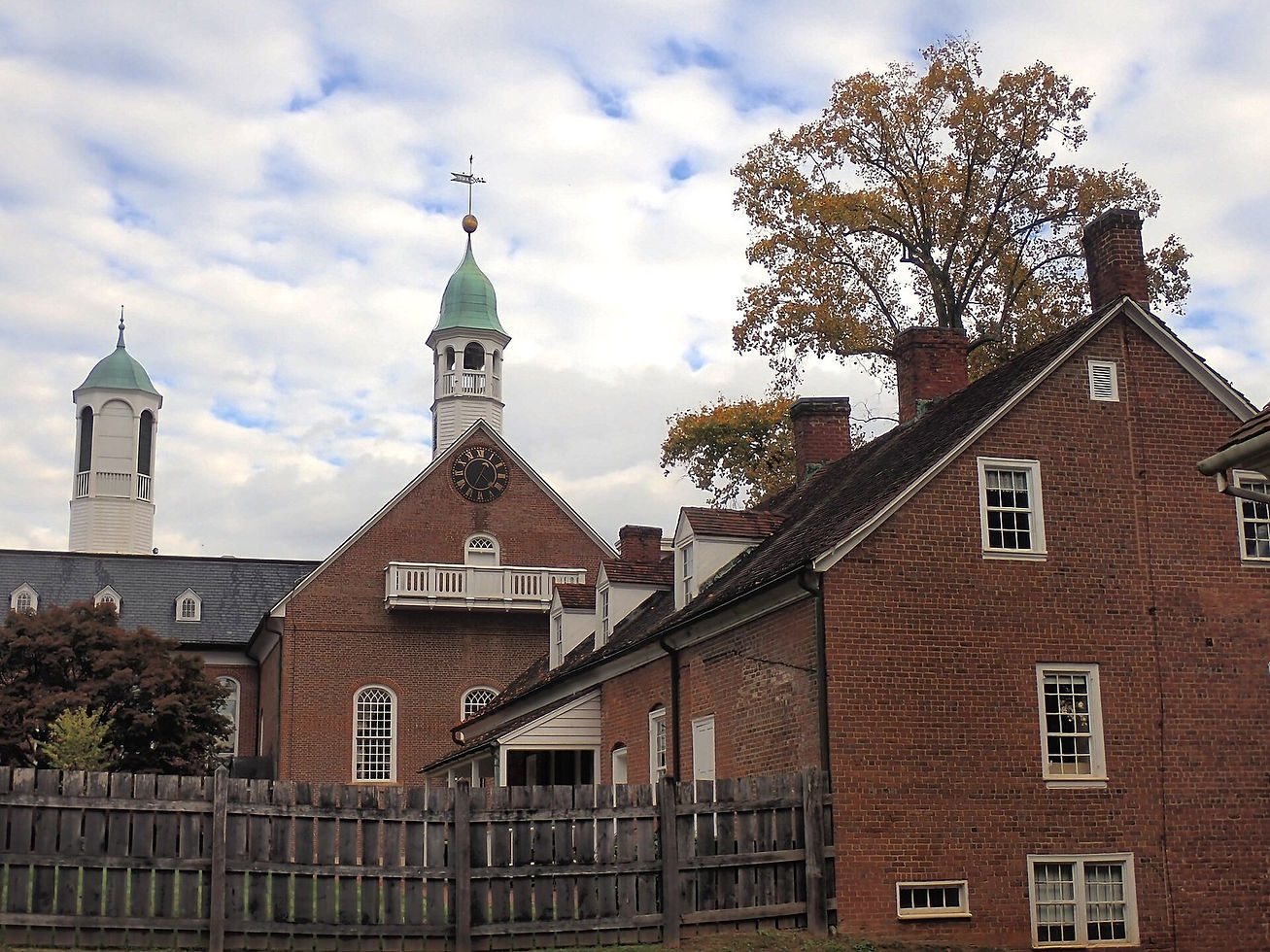
Lot 63 sits inside Old Salem proper, in a building that has stood since 1867. That is not a small detail. A structure standing since 1867 has survived the entire span of Winston Salem's growth from a Moravian settlement town into a modern mid size city, through world wars, through the tobacco industry's rise and eventual decline, and into whatever the building serves as today.
What Lot 63 does with that space is itself worth describing plainly: it runs as a coffeehouse by day and transitions into a pub by night, meaning the same walls and the same floor serve two distinct businesses depending on what time someone walks in. That kind of dual identity is not unusual in itself, but doing it inside a building this old, in a district this historically significant, gives it a different weight than the same concept would carry in a newer commercial space.
Old Salem's broader identity as a preserved Moravian settlement means visitors already come to the district expecting a certain kind of historical density, costumed interpreters, restored buildings, a museum quality preservation of an entire community's early architecture. Lot 63 sits inside that same historical fabric while functioning as a fully modern, working business, which is its own kind of achievement, blending the preserved past with a genuinely current coffee and pub program.
What a Tourism Blog Post Can and Cannot Say
A Convention and Visitors Bureau blog post can absolutely mention that Old Salem has coffee shops nearby, and it might even name Krankies or Lot 63 in a single sentence as part of a broader list of things to do in the historic district. What it almost never does is stop long enough to explain that Krankies predates most of the Innovation Quarter's redevelopment, or that Lot 63's building has stood since 1867, or that Sayso and ByGood on Brookstown Avenue are close enough to visit both in one trip.
That is not a failure of the tourism content specifically. A CVB blog post is built to cover an entire district's worth of attractions in a short, skimmable format, which by its nature cannot hold the kind of granular, cafe specific detail that actually makes this corridor distinctive. The texture, the exact years, the exact addresses, the exact feel of walking from one shop to the next, belongs with the cafes themselves and the people who know this corridor block by block.
That gap between what a tourism blog can say and what actually makes this corridor worth visiting is exactly the kind of thing a dedicated page built around Brookstown and Old Salem specifically could hold, without needing to compress two decades of history and three distinct businesses into a single passing sentence. A page like that could serve both a first time visitor planning a trip and a longtime resident who has never stopped to consider how much history sits inside these few blocks.
Why This Corridor Deserves Its Own Page
A corridor with this much genuine history and this many working roasters deserves a page built around Brookstown and Old Salem specifically, not a paragraph buried in a citywide best coffee in Winston Salem list. The facts already exist to support a page like that without inventing anything: Krankies opened in 2003, Lot 63's building has stood since 1867, Sayso and ByGood both operate on Brookstown Avenue, and the entire district carries Moravian settlement history that shapes its architecture and its identity to this day.
None of that requires embellishment. It requires organization, putting these facts in one place structured around the corridor itself rather than scattered across separate cafe homepages and tourism board paragraphs that each only capture a fragment of the full picture. That organization is the entire task, not the invention of anything new.
A visitor searching for coffee near Old Salem, or a Winston Salem resident trying to plan an afternoon around Brookstown Avenue, currently has to piece that picture together from several different sources. A single page built around this corridor specifically could do that work for them, and could do it with the kind of detail a citywide list or a tourism blog post structurally cannot provide.
Walking the Corridor in Practice
Consider what an actual afternoon in this corridor looks like, moving on foot rather than reading about it from a distance. Starting at Krankies in the Innovation Quarter means starting in a district built around biotech offices and Wake Forest School of Medicine facilities, a genuinely modern commercial landscape that happens to contain a cafe that has been there since before most of it existed. The contrast between the newer buildings and Krankies' two decade history is part of what makes stopping there feel different from stopping at a coffee shop inside a brand new mixed use development.
From there, walking toward Brookstown Avenue changes the scenery again, from office towers to the brick facades of former tobacco warehouses, now home to Sayso Coffee and ByGood Coffee along with residential lofts and other small businesses that have moved into the same adaptive reuse buildings. The shift from one architectural era to another happens within a short walk, which is part of what makes this corridor interesting as a whole rather than as a collection of separate stops.
Continuing into Old Salem proper for Lot 63 means entering the most historically preserved part of the walk, a district built around restored Moravian architecture that predates the tobacco warehouse era entirely. Getting a cup of coffee there, inside a building that has stood since 1867, means sitting inside a physical structure that has outlasted most of the businesses that have occupied it, now serving as a coffeehouse by day and a pub by night. That is a genuinely different experience across three stops within the same few blocks, and it is the kind of experience a dedicated corridor page could describe in the detail it deserves.
None of this requires a car. The entire walk, from the Innovation Quarter through Brookstown Avenue and into Old Salem, covers a compact enough area that someone could reasonably visit all four cafes in a single afternoon, on foot, without rushing. That kind of walkable density is itself worth stating plainly, because it is exactly the sort of detail that turns a passive list of coffee shops into an actual plan someone could follow, start to finish, in one visit to the city.
A Trail That Already Runs Through These Same Blocks
The Rescue Mission periodically runs the Winston Salem Coffee Trail, a thirty dollar stamp card fundraiser that sends people to ten local shops across the city, and Sayso, ByGood, and Lot 63 have all appeared on the most recent map alongside names like Ardmore, Camino, Coffee Park Airstream, and DeBeen. That a single fundraising event can pull three of this corridor's four cafes onto the same card is itself a small proof of how tightly clustered this stretch of the city already is.
It is also a reminder of how much of this corridor's story currently lives on a physical object rather than a page. A stamp card is a genuinely good way to get someone to visit ten shops in a season. It is not a good way to help that same person, or anyone else, find Sayso, ByGood, or Lot 63 again three months later when the card has already been turned in. The corridor's own density, the density this fundraiser depends on to work at all, deserves a more permanent home than a punch card that expires.
Related Reading
More from this Hillcane city series, plus the pages on the site that sit next to the work.
Downtown and the Innovation Quarter: Winston Salem's Newest Coffee Corner
Winston Salem's Coffee Shops Do Not Have a Dutch Bros Problem. They Have a Reddit Problem.
The Cafe Winning Google Maps Without a Website in Winston Salem
The Coffee Trail, the 2003 Flagship, and the Community Most Searches Never Find in Winston Salem
What Winston Salem's Small Business Resources Get Right About Marketing
The Six Cafes Winning Google's Map Pack for Coffee Shop in Winston Salem
Why Winston Salem's Biggest Coffee Chain Does Not Need Hillcane, and Its Neighborhood Cafes Do
What an AI Would Actually Say About Winston Salem's Coffee Scene
When Instagram Is Doing More Work Than the Website in Winston Salem
Frequently Asked Questions
How long has Krankies been open in the Innovation Quarter?
Krankies has run continuously in the Innovation Quarter since 2003, predating most of the district's technology and biotech redevelopment.
What cafes operate on Brookstown Avenue?
Sayso Coffee and ByGood Coffee both operate on Brookstown Avenue, close enough to visit both in a single trip.
What is notable about Lot 63's building?
Lot 63 operates inside a building that has stood since 1867 in Old Salem, running as a coffeehouse by day and a pub by night.
What historical identity does Old Salem carry?
Old Salem is a preserved Moravian settlement district, known for restored historic architecture and a strong sense of place.
Why does Brookstown Avenue's brick architecture matter to this corridor?
Brookstown's buildings reflect the district's tobacco warehouse era history, now adapted for cafes and other small businesses.
Does a Convention and Visitors Bureau blog post capture this level of detail?
Not usually. Tourism content tends to mention the district's cafes briefly rather than describing their individual histories in depth.
Is this post promoting any single cafe over the others?
No, it describes the Brookstown and Old Salem corridor as a whole, naming Krankies, Sayso, ByGood, and Lot 63 as parts of one coffee identity.
Why does this corridor deserve its own dedicated page?
Because its combination of specific history and working coffee culture is currently only covered in fragments across separate sites and tourism blogs.
How does the Innovation Quarter relate to Krankies' history?
Krankies opened years before the district's transformation into a technology and biotech corridor, meaning it helped shape the area's early character.
How can a Brookstown or Old Salem cafe get a page like this built?
Reach out at hillcane.co/contact or call (256) 384-2449 to talk about a page built around this corridor's real history.
Work with Hillcane
Krankies has poured coffee in the Innovation Quarter since 2003, years before the district became what it is today. Brookstown and Old Salem hold that history in brick, and almost none of it lives on a page the cafes control.
A corridor this layered deserves more than a single sentence in a tourism blog post. Reach Hillcane at hillcane.co/contact or call (256) 384-2449.
Reach out at hillcane.co or (256) 384-2449.


Comments