Which Redding Cafes Count as Coffee Shops

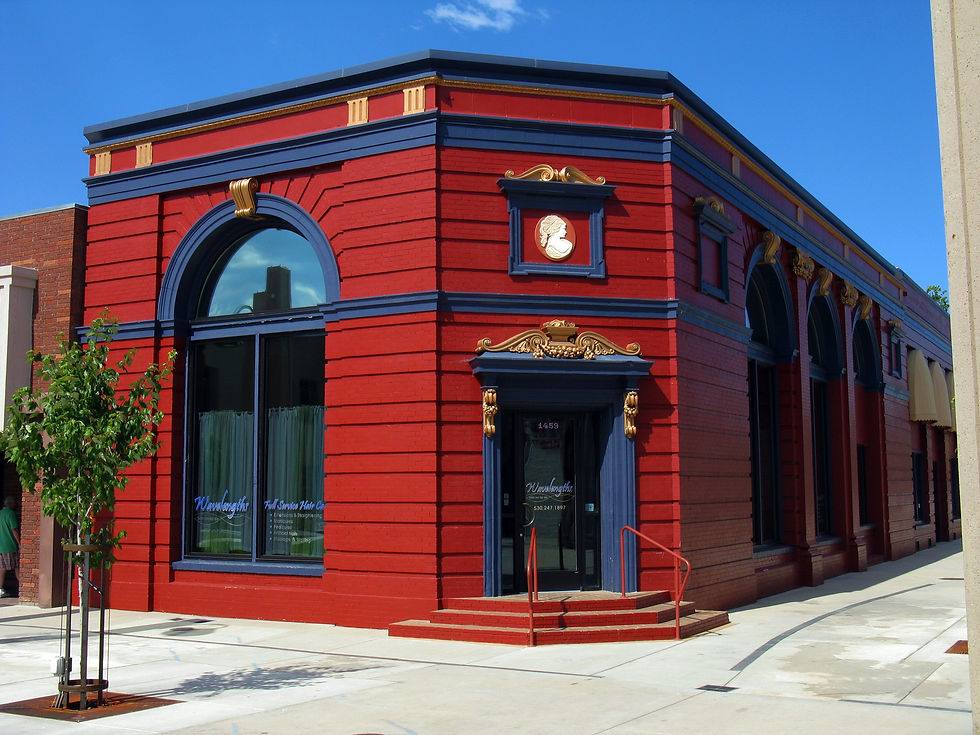
Photo: Publichall, CC BY-SA 4.0, via Wikimedia Commons
A city coffee census sounds like a simple counting exercise until you actually try to do one carefully. Redding has a real, defined set of independent coffee shops, and getting that set right means drawing some genuine, defensible lines around what counts as a coffee shop and what does not, even when the excluded business genuinely sells good coffee.
A recent pass through Redding's coffee scene, run on September 13, 2026, confirmed the existing set without adding anything new. Understanding why certain categories of business sit outside that set, without naming any specific business as the reason, gives a much clearer picture of how a city's coffee scene gets counted in the first place.
This kind of exercise matters more than it might seem at first. A city's coffee scene is easy to describe loosely, everywhere that sells a cup of coffee, but that loose definition ends up including businesses that have nothing in common with each other beyond the fact that a drink shows up somewhere on their menu. A careful count has to be more precise than that, and precision means drawing real, defensible lines.
No Addition to the Set
The most recent census of Redding's coffee scene did not add any new shop to the existing set, and that does not mean some undiscovered cafe was simply overlooked. The set of Redding independents already accounted for represents a real, careful accounting of this city's coffee scene as it currently stands.
A census that confirms rather than expands is not a disappointing result. It means the existing picture of Redding's coffee scene was already accurate, and it gives everyone working from that set, whether researchers, marketers, or curious residents, real confidence that nothing significant was missed on this particular pass.
It is worth being honest about why a null result like this one is a good outcome rather than a letdown. A census that keeps adding new entries every time it runs is a sign the underlying set was never stable to begin with. A census that confirms the same careful set pass after pass is a sign the work behind that set was done right the first time.
Why a Multi City Chain Sits Outside the Set
A business operating across multiple cities under one shared brand is a genuinely different kind of thing than a local independent coffee shop, even when its Redding location serves good coffee. A multi city chain's decisions, its menu, its branding, its overall direction, are made at a company level that extends well beyond any single Redding storefront.
This is not a judgment about the quality of coffee a multi city chain serves. It is simply a category distinction. A count of Redding's independent coffee shops is specifically about businesses rooted in and owned from this community, not about every business anywhere in the city that happens to sell coffee, regardless of how good that coffee might be.
Think about what an independent coffee shop count is trying to capture: a picture of this specific city's own coffee culture, built by people who live here and made decisions specifically for this community. A multi city chain's Redding location, however busy or well run, is part of a much larger, differently structured business, answering to a different set of priorities than a local shop does.
Why a Campus or Church First Cafe Sits Outside the Set
Some cafes exist primarily to serve a university campus or a religious congregation, with coffee sales functioning as a secondary offering rather than the business's actual first purpose. A coffee counter inside a campus building or a church facility is useful to the community it serves, but its core purpose is not retail coffee sales to the general public the way an independent coffee shop's purpose is.
Drawing this line carefully matters because it keeps a coffee shop census honest about what it is counting. A campus or church first cafe is a real, valuable part of its own institution's life. It is simply a different kind of business than a standalone coffee shop built specifically around serving coffee to the general public as its primary purpose.
Consider what makes a campus or church cafe different in practice. Its hours often follow the institution's own schedule rather than a standard retail week. Its customer base is largely made up of students, staff, or congregation members rather than the general public wandering in off the street. And its very existence usually depends on the institution it serves, rather than standing on its own as an independent retail business competing in the open market.
Why a Third Party Closed Flag Is Not the Last Word
Review platforms and directories sometimes mark a listing as closed. A careful count does not remove a shop on the strength of that flag alone. It waits for a current, first hand source, the shop's own page, a posted sign, a local news item, before treating any change in a business's status as settled.
This is a deliberately careful standard, and it is worth explaining why. Third party platforms are not always kept current by the businesses they list, and a stale flag can sit on a listing long after a shop has reopened or changed its hours. A census that deletes a business on that basis, only for the business to still be serving coffee, does a real disservice to the shop and to anyone relying on the count.
The same patience runs the other way. A listing that looks active on a directory is not added to the set on that basis alone either. In both directions, the count follows first hand sources, and that is what keeps it steady from one pass to the next.
Why a Bakery First Counter Sits Outside the Set
A bakery whose primary business is baked goods, with coffee served as a secondary offering alongside pastries and bread, is a different kind of business than a coffee shop whose primary purpose is the coffee itself. Plenty of excellent bakeries pour a good cup of coffee, and that does not make them coffee shops in the specific sense this kind of census is measuring.
The distinction matters for the same reason the campus and church first distinction matters. A count of coffee shops needs a consistent, defensible standard for what counts as a coffee shop, and a business built primarily around a different core product, even one that also happens to include coffee, sits outside that specific standard.
A bakery's whole operation, its ovens, its staffing rhythm, its daily production schedule, is built around baked goods first. Coffee service there is a genuine complement to that core product, and often a very good one, but it is not the reason the business exists. That is the real, practical difference between a bakery that happens to serve great coffee and a coffee shop built around the coffee itself.
Why a Restaurant First Room Sits Outside the Set
A restaurant that serves coffee as part of a broader food menu, where coffee is one item among many rather than the business's actual reason for existing, is a restaurant first business rather than a coffee shop. That distinction holds regardless of how good the coffee served there happens to be.
This category exclusion follows the same logic as the bakery first exclusion. The question a coffee shop census asks is not simply does this business serve coffee. It asks whether coffee is the actual core purpose of the business, and a restaurant built around a full food menu answers that question differently than a dedicated coffee shop does.
A restaurant's kitchen, staffing, and menu development are all built around a full dining experience, breakfast, lunch, dinner, or some combination of the three, with coffee simply rounding out that offering the way it might round out a menu at any sit down restaurant. That is a fundamentally different business model than a coffee shop whose entire operation exists to serve coffee well.
Naming No Excluded Business
It is worth being direct about something important here: this piece deliberately does not name any specific business excluded from Redding's coffee shop set. Every category described above, the multi city chain, the campus or church first cafe, the bakery first counter, the restaurant first room, and the listing with a third party closed flag, is explained in general terms rather than attached to any specific name.
That approach is deliberate. A business excluded from a coffee shop specific count is not being criticized or diminished by that exclusion. It simply sits in a different category, serving a different core purpose, and naming it here would risk making the exclusion feel like a judgment it was never meant to be.
A restaurant, a bakery, a campus cafe, or a multi city chain outlet excluded from this specific count may well be a excellent business doing exactly what it set out to do. The exclusion says nothing about quality. It says only that a coffee shop specific census, by its own careful definition, is measuring something narrower than every business in Redding that happens to pour a cup of coffee.
A Careful, Defensible Set
Redding's counted coffee shop set represents businesses whose core purpose is coffee retail, independently rooted in this community, not part of a multi city chain, not primarily serving a campus or congregation, and not primarily a bakery or a restaurant, with any change in status taken from first hand sources rather than a directory flag. That is a careful standard, built to be defensible and consistent rather than simply inclusive of anything that happens to sell a cup of coffee. Every category excluded here was excluded for a specific, consistent reason applied evenly across the whole city, not selected case by case to fit a predetermined outcome.
Getting a city's coffee count right matters for anyone trying to understand that city's actual coffee scene, whether a visitor planning a trip, a researcher studying local business patterns, or a marketer trying to reach the right audience. Redding's set reflects real, careful work to draw those lines honestly, on September 13, 2026 and on every pass before it.
A loosely defined count would be easier to produce and would look bigger on paper, but it would tell anyone relying on it much less about what makes Redding's independent coffee scene distinctive. A careful count, built on real, defensible categories, is worth the extra discipline it takes to maintain.
Where Redding Proper Ends
A count also needs a map boundary, and Redding's has a few edges worth stating. Redding city counts about 93,268 residents in the Census Bureau's 2023 five year estimate. Several Redding area coffee companies run locations beyond that line: one in Shasta Lake, a separate city of about 10,334 on Shasta Dam Boulevard; one in Anderson, a separate city of about 11,282 to the south; and one in Mount Shasta, a separate city of about 3,208 well north on Interstate 5.
Those locations are real and worth visiting, and each is labeled by its own city rather than folded into a Redding total. Chico, about 102,032 residents, and the Humboldt County towns of Eureka and Arcata sit outside this count entirely, each with its own coffee story. Keeping the line clean is what lets the Redding number mean something.
A Standard Worth Applying Consistently
The real test of any census standard is whether it gets applied the same way every time, regardless of whichever specific business happens to be in question. A category rule that only gets enforced against some businesses and not others is not really a standard at all, it is simply a set of convenient exceptions dressed up as a rule.
Redding's coffee census applies its category rules evenly. A multi city chain is excluded because it is a multi city chain, full stop, not because of anything specific to any one chain's Redding location. A campus cafe is excluded because it is campus first, not because of anything specific to any one campus. That consistency is what makes the resulting set trustworthy rather than simply convenient.
Related Reading
More from this Hillcane city series, plus the pages on the site that sit next to the work.
Kaleidoscope Runs Three Rooms in Three Formats Around Redding
Redding Coffee Lives on California Street, Hilltop and Churn Creek
Theory Coffee Roasters Runs Four Rooms From California Street to Mt Shasta
Redding Is Not Chico, and Dutch Bros Has Six Drive Thrus Here
The State of Specialty Coffee Visibility in North America (2026)
Google Business Profile for Coffee Shops: The Complete 2026 Checklist
Frequently Asked Questions
Did the September 13, 2026 census add a shop to Redding's coffee set?
No. The census run on September 13, 2026 kept the existing set of Redding independent coffee businesses without adding a new one. Leads from listicles, a tourism board page and a coffee directory were checked against the same rules as every earlier census, and none of them met the standard of an independent, coffee first business inside Redding proper that was not already counted.
Why do multi city chains sit outside the independent set?
A multi city chain makes its menu, branding and direction at a company level beyond any one Redding location. That is a category line, not a judgment on its coffee. Redding has real chain coffee, including six Dutch Bros drive thrus listed on the chain's own locator, and those stands are counted as chain texture rather than as independent Redding coffee shops.
Why do campus or church first cafes sit outside the set?
A cafe whose first purpose is serving a college campus or a congregation keeps hours tied to that institution's calendar and serves mostly students, staff or members. Coffee there is real and often good, but retail coffee for the general public is not the room's core job. The September 13, 2026 census applied that line the same way it applies the chain and bakery lines.
What happens to a listing that a review platform flags as closed?
A closed flag on a review platform does not remove a shop from the count by itself. The census waits for a current, first hand source, such as the shop's own page, a posted notice or local news coverage, before treating any change as settled. The same rule works in reverse: an active looking directory listing does not add a shop without a first hand source.
Do bakery first businesses count as Redding coffee shops?
No. A bakery built around ovens, a daily production schedule and baked goods, with coffee poured alongside, is counted as a bakery first counter. Plenty of them pour excellent coffee. The census line is about the business's core purpose, and on September 13, 2026 that line kept bakery first counters outside the independent coffee set in Redding, as it does in every city.
Do restaurants that serve coffee count as coffee shops?
No. A restaurant with a full breakfast, lunch or dinner menu, where coffee rounds out the meal, is a restaurant first business. The census asks whether coffee is the reason the business exists, not whether coffee is on the menu. That keeps the Redding count focused on places like downtown cafes, walk up windows and drive thru independents built around the coffee itself.
Does this census name any excluded business?
No, deliberately. Every excluded category, the multi city chain, the campus or church first cafe, the bakery first counter, the restaurant first room and the listing with a third party closed flag, is described in general terms. Exclusion from a coffee specific count is a category distinction, not criticism, so naming a business here would read as a judgment it was never meant to be.
Are Shasta Lake, Anderson and Mount Shasta locations part of Redding's count?
They are labeled by their own cities. Shasta Lake counts about 10,334 residents, Anderson about 11,282 and Mount Shasta about 3,208 in the Census Bureau's 2023 five year estimates, while Redding city counts about 93,268. Rooms in those towns belong to Redding area companies and are worth a visit, but they are not folded into the Redding city total.
Does the census invent replacement shops to fill out the set?
No. The set holds only businesses a first hand source places inside the coffee shop standard. When a pass finds nothing new, as the September 13, 2026 pass did, the set stays the same size rather than being padded with a restaurant, a bakery or a chain outlet. A count that stays stable across passes is a sign the earlier work was done carefully.
Why does getting a coffee shop count right matter?
A visitor, a researcher or a marketer working from a loose count ends up comparing chains, bakeries and campus counters with independent cafes as if they were the same thing. A careful Redding count, checked on September 13, 2026 and bounded at the city line of about 93,268 residents, gives each of them a set they can trust and compare with other cities.
Work with Hillcane
Redding's most recent coffee shop census, run on September 13, 2026, confirmed the city's existing set without adding anything new, drawing real lines around what actually counts as a coffee shop.
If you want a clear, accurate picture of your own city's independent coffee scene, reach Hillcane at hillcane.co/contact or call (256) 384-2449.



Comments