The State of the Coffee Scene in Roanoke, Virginia


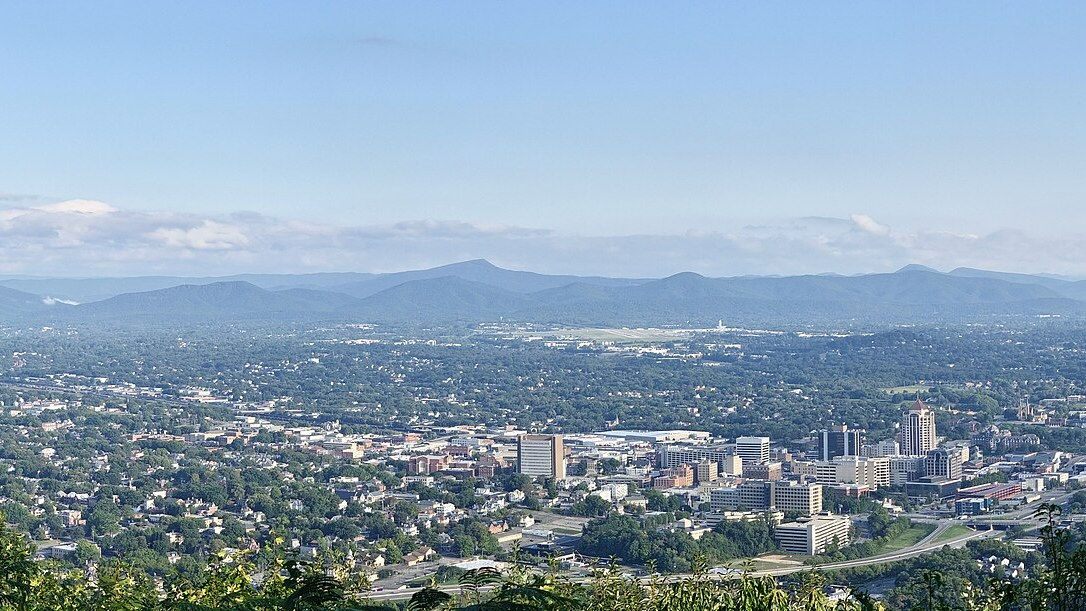
Roanoke is a Blue Ridge city of 98,677 people, according to the most recent Census estimate for the city proper alone, not the wider metro area and not the Roanoke County line drawn loosely around it. That distinction sounds like a technicality until you notice how often it gets skipped. A lot of what gets written about Roanoke, including plenty of the casual coffee coverage that turns up in a search, quietly blurs the city into its surrounding county or the broader metro, as if the boundary did not matter. It matters, because the city proper is where the actual walkable coffee scene lives, block by block, neighborhood by neighborhood, not spread across a county line on a map.
Inside that city limit sits a specialty coffee layer that is genuinely small, roughly ten cafes and roasters by a rough count that should be treated as an estimate rather than a hard census. Nobody has walked every block of Roanoke counting doors, and a number like that shifts as fast as leases turn over. What matters more than the exact count is what that handful of shops actually looks like on the ground, spread across neighborhoods that do not resemble each other much, and how that reality lines up, or fails to line up, with what shows up first when someone searches for coffee in Roanoke.
That gap between what a scene actually is and what a search engine happens to surface first is the real subject of this piece. Roanoke's coffee identity is not concentrated downtown. It is scattered across four distinct pockets of the city, each with its own texture, and the two shops doing the deepest, most technically demanding work, actually roasting coffee rather than just serving it, are not the ones showing up first when a stranger goes looking.
Four Neighborhoods, Not One City
The easiest mistake to make about Roanoke coffee is treating it as one undifferentiated scene, a single citywide category you can rank top to bottom. On the ground it is closer to four separate neighborhoods, each with its own coffee identity, connected by city limits more than by shared character. Wasena, along Main Street SW, holds RND Coffee's flagship room, a stretch of the city with real day to day foot traffic rather than tourist traffic. Vinton, a separate town just east of Roanoke proper, holds RND's second room, tucked into a corner that functions more like a neighborhood hangout than a destination stop. Grandin Village, one of Roanoke's most walkable commercial strips and a recognized historic district, now holds Asher's Coffee, a newcomer to an old commercial block. And South Roanoke, Old Southwest, and the Broadway Avenue corridor hold Sweet Donkey Coffee House, operating out of an actual house built in 1922.
Four pockets, four different rhythms. A regular grabbing a morning cup at RND in Wasena and a first time visitor wandering into Sweet Donkey on Broadway are having two entirely different experiences of what Roanoke coffee feels like, even though both are technically inside city limits and both would show up under the same citywide search. Collapsing that into one flat scene, the way most casual coverage does, erases the texture that actually makes each shop worth visiting on its own terms.
This matters for more than nostalgia. When a shop's own website does not say which neighborhood it belongs to in any structured, crawlable way, when there is no dedicated page for Wasena or Grandin or Broadway that a search engine can actually index, the neighborhood texture that makes Roanoke coffee interesting in person disappears online. A homepage that just says Roanoke, without ever building out the specific corner of the city it occupies, is leaving real local context on the table, context a nearby searcher is often looking for.
The Two Shops Actually Roasting Their Own Beans
Of the roughly ten shops that make up Roanoke's specialty layer, only two are audited here as genuinely roasting their own coffee rather than pouring someone else's beans under their own name. RND Coffee, short for Roasters Next Door, runs both its Wasena and Vinton rooms as working roasteries, not simply cafes with a coffee shop's aesthetic layered over somebody else's supply chain. Asher's Coffee in Grandin Village is the newer of the two, a small batch operation that had already been roasting at local farmers markets since 2020 before it opened its own storefront this year. RND's flagship sits at 1114 Main Street SW in Wasena, open seven to three daily, while the Vinton room at 101 East Washington Avenue opens an hour later on the same schedule. Chef and owner Quincy Randolph runs both rooms, and the Vinton location doubles as a private event space large enough to seat thirty eight people or hold fifty standing, a detail that rarely shows up in casual coverage of the shop.
That distinction, roasting your own coffee in house versus serving someone else's roast, however good, is not a small technical detail buried in a supply chain footnote. It is close to the entire identity of a specialty coffee shop. A cafe that roasts its own beans controls its flavor profile from the green bean forward, can talk with real authority about sourcing and roast curves, and builds a kind of credibility that a cafe pouring a well regarded but externally sourced coffee simply cannot claim in the same way, no matter how good that coffee tastes in the cup.
Two shops out of roughly ten doing that work is not a small share of a small scene. It is the deepest layer of what actually makes Roanoke's coffee culture distinctive rather than interchangeable with any other mid sized city's collection of pleasant cafes. And yet, as the next section lays out, that depth is not what a stranger searching for coffee in Roanoke sees first.
What Google Actually Shows First
A recent look at Google's map pack for the query coffee shop in Roanoke VA turned up six businesses in the first results: Covenant Coffee Company, Sweet Donkey Coffee, Second Cafe, Canvas and Coffee Art Cafe, Little Green Hive, and Cello coffee house and cafe. Every one of those is a legitimate, well reviewed business. None of that is in question. What is worth sitting with is who is missing from that list. Neither RND Coffee nor Asher's Coffee, the two shops actually roasting their own beans in house, appeared in those first six results.
Of the six shops that did show up, only Sweet Donkey overlaps with the small audited roster of shops examined closely in this research, and Sweet Donkey itself, for all its real strengths, is a cafe partnered with an outside roaster rather than an in house roasting operation. The map pack, in other words, is not sorting Roanoke's coffee scene by roasting depth or craft credibility. It is sorting by an entirely different set of signals, ones that have more to do with review volume, listing completeness, and search visibility than with what is actually happening behind the espresso machine.
This is not a conspiracy or an accident aimed at any particular shop. It is simply what happens when a shop's own website gives a search engine very little to work with. A homepage with no structured data describing it as a cafe, no blog posts building topical relevance over time, no unique landing pages for the neighborhoods it actually serves, gives Google far less to rank than a well maintained listing plus a stack of reviews does. The shops with the deepest roasting credibility in Roanoke are not losing on quality. They are losing on a technical visibility gap that has nothing to do with what is in the cup.
The six shops that did surface carry real numbers behind them, at least as of a recent look at those Maps cards. Covenant Coffee Company, a coffee trailer on Franklin Road pouring beans from a roaster called Gladheart rather than roasting its own, sat at five stars across 322 reviews. Sweet Donkey held 4.6 stars across 1,281 reviews, by far the deepest review base of the group. Second Cafe, Canvas and Coffee Art Cafe, Little Green Hive, and Cello coffee house and cafe each carried strong ratings of their own, all sitting between 4.5 and 4.9 stars. Worth noting too is who actually owns the discovery layer sitting above all six of those listings. The guides that surface when someone searches for the best coffee in Roanoke, sites like My Coffee Explorer, VA Foodie, Yo! Noke, West End Flats, and the Scout Guide, are not run by any of the cafes themselves. Right now, none of Roanoke's coffee shops own that conversation. Outside guides do.
Two Kinds of Competitive Pressure
Roanoke's independent specialty shops are not only competing against each other for the same small pool of coffee drinkers. They are also competing against real, well funded expansion from two very different directions. Mill Mountain Coffee and Tea is a long running hometown chain, founded in 1990, that has grown to several distinct locations across the Roanoke Valley, with its own dedicated pages for individual cafes like Downtown Roanoke, Starkey Road, Downtown Salem, and Daleville. Little Green Hive runs three locations of its own, Downtown, Grandin Village, and Daleville Town Center, and is actively recruiting new franchisees through its own dedicated franchise website, complete with an initial franchise fee and an estimated total startup cost.
Neither of those businesses is a villain in this story. A hometown chain that has survived and grown since 1990 has clearly done real things right, and a cafe successful enough to franchise has built something worth replicating. But their presence changes the competitive math for a two room roastery in Wasena and Vinton or a single storefront in Grandin Village. Scale brings resources that a small independent simply does not have: dedicated web pages for every location, consistent branding across multiple sites, marketing budgets sized for growth rather than survival.
The honest takeaway is not that independents cannot compete. It is that the competition is broader than shop against shop down the street. It is craft coffee against genuine scale, and craft coffee needs every advantage it can find online to make up ground that scale buys automatically.
A Thin But Real Scene, Honestly Described
None of this adds up to a case against Roanoke's coffee scene. It adds up to an honest description of a real but genuinely thin specialty layer, roughly ten shops spread across four distinct pockets of a Blue Ridge city, with its two deepest roasting operations currently invisible in the exact search results a new customer is most likely to use. That is a strange and fixable state of affairs, not a permanent one.
What ties every thread in this piece together is a simple mismatch: the things that make a coffee shop genuinely good, roasting your own beans, building a real relationship with a specific neighborhood, operating out of a building with a hundred years of real history, are not automatically the things a search engine rewards. Search engines reward structured, crawlable, consistently maintained websites. A shop can have both kinds of credibility, the real one built one cup at a time and the digital one built one indexed page at a time, but only if someone actually builds the second kind on purpose.
For a Roanoke shop that already has the first kind of credibility, the kind that shows up in a hundred year old house or a name like Roasters Next Door, closing that gap is a matter of catching a website up to what is already true in the neighborhood. That is a smaller lift than building the reputation from scratch, and it is the kind of work Hillcane exists to help with. A conversation at hillcane.co/contact or a call to (256) 384 2449 is a reasonable place to start that conversation.
Closing the Gap With Practical Steps, Not a New Coat of Paint
None of the fixes implied by this research require a Roanoke shop to change what it actually does behind the counter. Schema markup that tells a search engine plainly that a site is a cafe, a roaster, or both, takes real technical setup but changes nothing about how the coffee itself is made. A dedicated page for Wasena, for Vinton, for Grandin Village, for Old Southwest, gives each neighborhood its own crawlable identity without asking a single shop to open a second location or hire a second barista.
That is worth saying plainly because it is easy to hear a story like this one and assume the fix must be expensive or disruptive. It is neither. It is the same kind of foundational, structural work that Mill Mountain and Little Green Hive have already put behind their own multiple locations, scaled down to fit a single flagship room or a two room roastery instead of six locations or a franchise recruiting page. A shop with a hundred years of real history behind it, or a roasting process nobody else in the city can claim, already has the raw material. What is missing is simply the online structure to let that material do its job.
A shop that closes this gap early is not catching up to some competitor who already solved it. As this whole piece has shown, nobody in Roanoke's specialty layer has fully solved it yet, which means there is no established playbook to chase, only an open field to move into first.
Related Reading
More from this Hillcane city series, plus the pages on the site that sit next to the work.
What Shows Up When You Search for Coffee Shop Marketing Help in Roanoke
A Hometown Chain and a Franchise Track Cafe Are Growing in Roanoke
Roanoke's Small Business Resources Are Lifestyle Press, Not a Marketing Playbook
The Map Pack Doesn't Know Who Roasts Their Own Coffee in Roanoke
What Roasters Next Door Actually Means for a Roanoke Roastery
The First Ninety Days: What a Brand New Roanoke Cafe Needs Online Before the Reviews Catch Up
In Roanoke, a Hundred Year Old Building Is a Better Story Than Any Menu
Why Near Carilion Might Matter More Than Best Coffee in Roanoke
Frequently Asked Questions
How many specialty coffee shops are actually in Roanoke, Virginia?
A rough estimate puts the specialty layer at around ten cafes and roasters citywide, spread across neighborhoods like Wasena, Vinton, Grandin Village, and South Roanoke. That number should be read as a general shape of the scene rather than an exact census, since it shifts as new shops open and others close or relocate.
Which Roanoke coffee shops actually roast their own beans?
Two shops in this research stand out as genuine in house roasters: RND Coffee, which roasts at both its Wasena and Vinton rooms, and Asher's Coffee in Grandin Village, a small batch roastery that had been roasting at local farmers markets since 2020 before opening its own storefront. Most other well known Roanoke cafes serve coffee roasted elsewhere.
Why don't Roanoke's actual roasters show up first on Google?
Showing up first in Google's local results depends heavily on structured website data, consistent listing information, and review volume, not directly on roasting quality. A shop that roasts its own beans in house but has a bare bones website with no schema markup or neighborhood pages can easily rank behind a well reviewed cafe with a more complete online presence, even if the roasting cafe's coffee is objectively deeper.
Is Roanoke's coffee scene concentrated downtown?
No. Roanoke's specialty coffee identity is spread across four distinct areas: Wasena and Vinton for RND Coffee, Grandin Village for Asher's Coffee, and South Roanoke, Old Southwest, and the Broadway Avenue corridor for Sweet Donkey Coffee House. Each pocket has its own character rather than funneling into one central downtown coffee district.
What is RND Coffee?
RND stands for Roasters Next Door, a small batch roastery and coffee lounge with two rooms, a flagship in the Wasena neighborhood of Roanoke and a second room in the nearby town of Vinton. It is one of the two shops in this research audited as genuinely roasting its own coffee.
What is Asher's Coffee?
Asher's Coffee is a small batch roastery and cafe that opened its storefront in Grandin Village this year, after roasting coffee at local farmers markets since 2020. It is the newer of Roanoke's two in house roasting operations audited in this research.
Does Sweet Donkey Coffee House roast its own beans?
No. Sweet Donkey is a cafe, not an in house roaster. It partners with an established outside roasting company for its beans, operating out of a real 1922 house in the Old Southwest neighborhood on Broadway Avenue. It is still a well regarded, independently owned local business.
Is Roanoke's coffee scene bigger than the city proper suggests?
The 98,677 population figure most often cited for Roanoke refers specifically to the city proper as measured by the Census, not the wider metro area or Roanoke County. Coffee coverage that quietly expands that boundary to include surrounding areas is describing a larger geography than the city itself, which can make the scene sound bigger or smaller than it actually is within city limits.
What competitive pressure do Roanoke's independent cafes face beyond each other?
Independents are competing against real, well funded expansion, not just against each other. Mill Mountain Coffee and Tea is a hometown chain founded in 1990 with several locations across the valley, and Little Green Hive runs three locations while actively recruiting new franchisees through its own dedicated franchise website.
How can a Roanoke cafe close the gap between real credibility and search visibility?
The fix generally involves building the same structured, crawlable foundation that larger, better resourced competitors already have: schema markup that tells search engines what kind of business the site is, dedicated pages for the specific neighborhood a shop actually serves, and consistent, well maintained listing information. It is a smaller technical lift than building a reputation from scratch, since the reputation is often already real.
Work with Hillcane
Roanoke's coffee scene is small enough to walk in an afternoon, and split across four neighborhoods that barely resemble each other.
If a Roanoke cafe's real story is not showing up the way it should online, a short conversation at hillcane.co/contact or a call to (256) 384-2449 is a low pressure place to start.
Reach out at hillcane.co or (256) 384-2449.


Comments