
Rome and Cartersville Coffee Map: Two Downtowns, Three Cafes

Updated: Oct 21
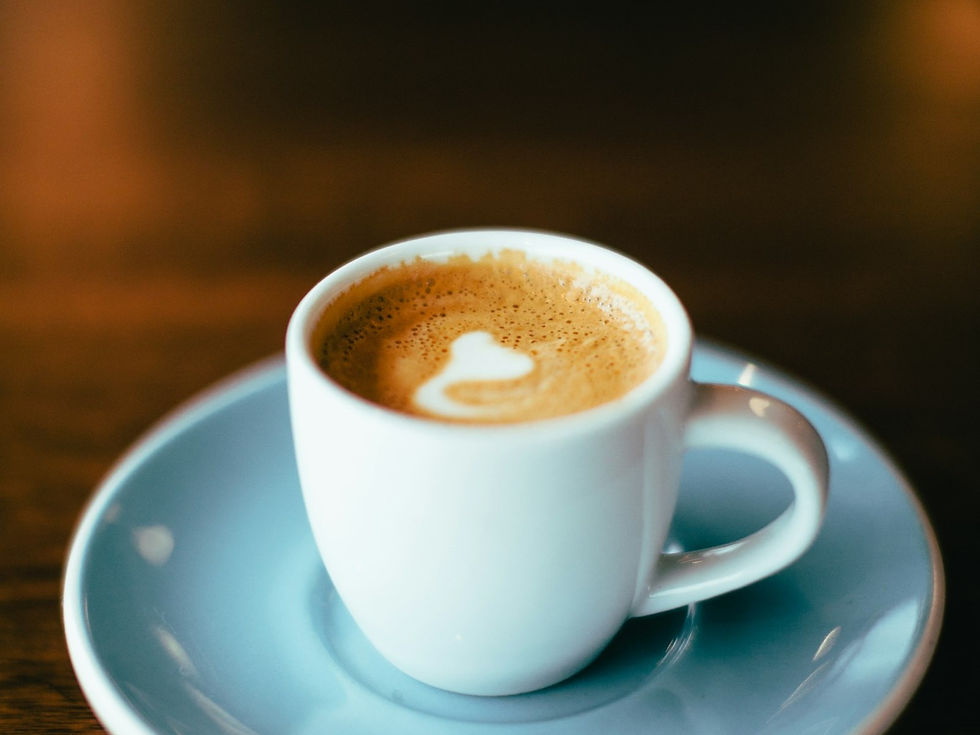
Rome, Georgia is a town of about 37,754 people, according to the 2023 Census estimate. Its neighbor Cartersville sits nearby at roughly 23,617. Neither city is large, and together they form what is genuinely the smallest coffee scene covered anywhere in this batch of city research. That is not a knock on either town. It is simply the honest starting point for understanding what specialty coffee looks like here, and why a map of this scene has to be drawn a little differently than a map of a bigger market.
Because here is the thing a quick glance at population numbers misses entirely. Rome and Cartersville are not a diner only market where the only coffee option is whatever drip pot sits behind a breakfast counter. Each town has its own real downtown, and each downtown has its own specialty cafe with its own identity, its own equipment, and its own story. Downtown Rome has a specialty cafe on Broad Street and a second cafe near the ballpark. Downtown Cartersville has a coffee shop built inside a service station that has stood since 1945. That is three distinct, serious specialty coffee operations across two small Georgia downtowns, plus a handful of other coffee related businesses once you count everything that touches coffee in some form.
This piece is a map, not a ranking. It is meant to walk through what actually exists across both towns, honestly and specifically, so that anyone reading it (an owner, a customer, a curious neighbor) comes away with a clear and accurate picture of where the coffee actually is, what makes each spot distinct, and why treating this as one blended market undersells both Rome and Cartersville.
A small scene, not a thin one
The distinction between small and thin matters more than it might first appear. A thin coffee scene is one where the only options are a gas station coffee bar or a diner urn, where nobody has invested in sourcing, equipment, or training, and where there simply is not much of a story to tell. Rome and Cartersville are not that. General search demand for the pair is low, but this is not a diner only market. Real specialty coffee exists here, built by real people who made real choices about beans, equipment, and space.
Once you set aside the national chains that operate in both towns, the coffee related business count across Rome and Cartersville lands at roughly six. That is a small number by the standards of a larger metro area, but it is not a small number in the sense of being negligible. Six coffee related businesses spread across two small downtowns is a functioning scene, with enough variety that a visitor moving between Rome and Cartersville in a single day would notice the difference between one downtown's cafes and the other's right away.
For an owner running one of these businesses, the size of the scene is not really the limiting factor. What matters in a small scene is how well each business tells its own story to the people searching for it. A market this size does not need ten competing cafes clawing for the same customers. It needs the handful of real, well built cafes that already exist to show up clearly when someone searches for coffee in Rome or coffee in Cartersville.
Downtown Rome: a specialty cafe on Broad Street
Downtown Rome's specialty coffee identity starts with Swift & Finch Coffee at 600 Broad Street, a downtown storefront on the main retail strip.
Swift & Finch also runs a 1971 Citroen H van for catering, a genuinely memorable piece of equipment that most coffee shops simply do not have. A vintage French delivery van converted for coffee catering is not a detail you can manufacture. It is either true or it is not, and in this case it is true, verified, and sitting somewhere in Rome ready to show up at weddings, markets, and local events. That kind of asset is worth far more as a story than as a line item on a services page, and it is the kind of thing later Hillcane posts will dig into more specifically.
Downtown Rome also holds Lumina Coffee Co., positioned near the ballpark on Braves Boulevard rather than directly on Broad Street. That geography matters. A cafe near a ballpark draws a different crowd, at different hours, for different reasons than a cafe on the main downtown retail strip. Rome, in other words, is not a single coffee neighborhood. It has at least two distinct pockets of activity inside one small downtown, and each pocket has its own rhythm.
Together, Swift & Finch and Lumina give downtown Rome two different specialty coffee experiences within walking distance of each other, one on the Broad Street strip with a piece of transportation history, the other built around proximity to a community gathering spot. That is a real, if modest, coffee scene, and it deserves to be described as one.
Downtown Cartersville: coffee inside a 1945 service station
Cartersville's specialty coffee anchor is Noble & Main Coffee Co., housed in a converted 1945 service station on West Main Street. Like the Citroen van in Rome, this is the kind of fact that does not need embellishment. A coffee shop built inside a genuine, seventy plus year old service station is a real architectural and historical hook, one that ties the business physically to the town's past rather than to a generic strip mall build out.
Noble & Main describes its program as third wave coffee. Paired with the building's history, that gives Cartersville a cafe doing two things at once: serving specialty coffee, and doing it inside a space with a story that a customer can see and feel the moment they walk through the door. Old brick, old bones, a building that used to fuel cars now fueling people instead. It is a strong scene anchor for the town.
West Main Street in Cartersville is, functionally, the town's version of Broad Street in Rome: the downtown corridor where the specialty coffee identity lives. Understanding that parallel matters for anyone trying to make sense of these two towns as a whole. Two small Georgia towns, two distinct downtown streets, two specialty coffee anchors, each with a strong, verifiable story behind it.
What the map leaves out, and why that is honest
A map like this should also be honest about what it is not. This is not a comprehensive directory of every place in Rome or Cartersville that happens to serve coffee. National chains operate in both towns, and these posts treat those chains as a separate category, distinct from the independent specialty scene, because they compete on different terms: convenience, consistency, and in at least one documented Rome case, amenities like a dedicated meeting room built into the store. That chain pressure is real and worth its own discussion, which later Hillcane posts take on directly.
This map also does not rank the three independent cafes against each other. Doing that is simply not the point here, and frankly is not something a public facing piece should be doing to small, real businesses run by real people. What this map does instead is describe what exists, plainly and specifically, so that the picture of Rome and Cartersville's coffee scene is accurate rather than flattened into a single blended assumption about what a small Georgia coffee market looks like.
Why two downtowns deserve two identities
It would be easy, especially for anyone looking in from the outside, to treat Rome and Cartersville as one interchangeable small town coffee market. They are close to each other, both in northwest Georgia, both modest in population, both home to a specialty coffee scene that outsiders might assume looks roughly the same. That assumption would be wrong, and it matters that it would be wrong, because Broad Street in Rome and West Main Street in Cartersville are not the same place with two names. They are two separate downtown corridors, each with its own foot traffic patterns, its own local landmarks, and its own specific coffee identity.
For the cafes themselves, this distinction is not academic. A customer searching for coffee near downtown Rome is not the same customer searching for coffee near downtown Cartersville, even though both searches might technically fall under a broader Rome Cartersville regional label somewhere in a spreadsheet. Someone planning a morning in Rome wants to know what is on Broad Street. Someone planning a morning in Cartersville wants to know what is on West Main. Collapsing those two intents into one undifferentiated regional identity does a disservice to both towns and, more practically, to both sets of cafes trying to be found by the people walking around downtown that day.
A later Hillcane post is built entirely around that structural point. For now, the map itself makes the case: two downtowns, two distinct specialty coffee identities, and two sets of local search intent that deserve to be treated as what they are, rather than merged into one regional shorthand that flattens the real, specific character of each town.
The tourism and Yelp layer
Where do people currently find out about these cafes online, absent any dedicated coffee marketing content built for either town? Mostly through tourism sites and Yelp, not through food focused editorial coverage of the kind a bigger city's coffee scene might attract. That is not a criticism of Rome or Cartersville. It is simply where a market this size tends to sit in the broader media landscape, and it means each cafe's own website carries more of the storytelling weight than it might in a city where local food writers are doing some of that work for free.
That reliance on tourism sites and review platforms also means a cafe's Google Business Profile and its own website are doing double duty. They are not just a convenience for existing customers who already know the shop exists. In a market this size, with this little independent editorial attention, a cafe's own online presence is very often the first and sometimes the only real introduction a new visitor gets before deciding to walk in. Getting that introduction right carries more weight here than it might in a market with more press coverage to lean on.
What this means if you run one of these cafes
If you run a cafe in either downtown, the honest takeaway from this map is not that your market is too small to bother marketing well. It is closer to the opposite. In a scene this size, with this few independent competitors and this little existing editorial coverage, a well told story travels further, faster, and with less competition for attention than the same story would in a saturated market. The bar to stand out is lower here, not higher, because there are fewer other voices in the room.
The raw material is already there. A vintage catering van. A ballpark adjacent cafe with its own local rhythm. A specialty coffee program inside a genuine 1945 service station. None of that needs to be invented, exaggerated, or dressed up. It needs to be told clearly, specifically, and in a way that search engines and the people scrolling through them can find.
Two downtowns mean two different searches
Rome and Cartersville make sense as a pair on a research map, but people search them one town at a time. Someone typing coffee shop Rome GA is thinking about Broad Street and the ballpark block. Someone typing coffee shop Cartersville GA is thinking about West Main Street. Those are different questions, and the answer to one does not help the other.
Search engines are good at this. They try to match a query to the part of town the person is in or asking about, so a page that says downtown Rome, Broad Street or Braves Boulevard in its first line is easier to match than one that says the Rome Cartersville area. The three independent addresses here are Swift & Finch Coffee at 600 Broad Street, Lumina Coffee Co. at 640 Braves Boulevard and Noble & Main Coffee Co. at 145 West Main Street. That is three addresses in two cities. A page that lists them as if they share a sidewalk asks a search engine to forget geography.
A Google Business Profile works the same way. Each shop should be tied to its own city, its own street and its own pin. A profile that talks like it belongs to the neighboring town makes the map hesitate, and in a small market a hesitating map often hands the tap to whichever chain pin is unambiguous.
The cost of blending is practical. A visitor planning a morning in Cartersville is not helped by a combined paragraph that never says which street belongs to which city, and a wasted trip to the wrong downtown is how a first visit never happens. Tourism pages already treat Rome's cafes as Rome attractions, which is a habit worth copying.
Connecting the two towns is fine when there is a real reason, such as studying the region. It should not replace a page for each downtown. If you only have time for one change this month, rewrite the first sentence on your site so it could not be pasted onto the other town's homepage. If it still works in both cities, it is too vague. Add the street and the city.
What the first screen looks like when someone searches both towns
A search that names both towns tends to return pages that someone else built. For the phrase coffee shop Rome and Cartersville, GA, the first screen leans toward chain location pages, review platform pages, an ordering platform page, a coffee directory, a trade magazine story about a chain, and a page on the Rome tourism site. Only some of those results are a cafe speaking for itself.
A drinker cannot always tell a shop's own words from a directory's summary of the shop, and most do not try. They tap whatever looks most useful. When a query names two towns, the engine reaches for pages that mention both places or clearly belong to one. Structured local listings do that well. A short, hand built cafe site can have a harder time saying, in a way a machine can read, which town it serves and what it is.
Titles do much of the work. A chain location title names the category, the town and a store code, which is clear but reads like inventory. A review platform title often carries a street address and a review count. A title that gives the shop name, the kind of place and the town lets a stranger decide at a glance. Your home page title is one of the easiest things on the page to read with fresh eyes.
Two parts of the page change with the searcher. The map pack depends on where the person is standing and the hour, so check it on your own phone in each town at different times of day. The AI summary at the top leans on pages that state plain facts: what a place is, where it is, when it opens, what it serves. A short, direct page is easier for any summary to repeat correctly than a slogan or an address buried in an image. If a fact in the summary is wrong, the fix usually starts on your own site and your Google profile.
Listings and review platforms are part of the storefront
Do not fight the platforms in Rome or Cartersville. Keep them accurate. Third party listings often hold more searchable text than a small business site because they are built to be found, and they carry photos and reviews from many neighbors, which makes a listing feel safe to a stranger.
In a market this size, discovery runs through tourism sites and review platforms more than through food magazines, so your listings are often the first introduction a visitor gets. Check that the name, address, phone number and hours match on your Google Business Profile, Yelp, any ordering platform and any directory page that mentions you. Add a few current photos and answer reviews with a short, warm note.
Pages about your shop get made whether or not you take part. An ordering page or a directory page may already exist. Read each one the way a customer would, and correct what is out of date. Small, steady care here usually matters more than one big push.
Who is actually typing the search in Rome
In Rome, the person searching for coffee is usually someone who does not know your shop yet. That is a different reader from a regular, and your online pages have to do the introducing.
Think of who that is. A new resident settling into a city of about 37,754 people. A visitor in a hotel typing coffee near Broad Street before a downtown errand. Someone following a page on the Rome tourism site. A group organizer typing meeting space Rome GA or coffee shop with a room for a small group. None of them has been to a chamber breakfast, and none of them inherits your local reputation. They get whatever the first screen says.
Each of those searches asks something a cafe can answer in plain words. Where are you, in which part of downtown? What kind of visit can a person have, a quick cup, a laptop table or a standing weekly meeting? When do you open? A small cafe often knows all of this and never writes it down, because the regulars already know it.
Search demand for Rome and Cartersville is low, which makes each of these searches count for more. A shop does not need to answer every possible question. It needs to answer the few a stranger actually asks, in language a search engine and a person can both read. If your shop welcomes small groups, even informally, say so on your site and your Google Business Profile.
Being known in town and being found online are different jobs
The Rome Floyd Chamber of Commerce is a real, active organization, and it does general business work well. Coffee specific search guidance is a different job, and a general membership organization is not built to do it. This is a Rome conversation. Cartersville has its own downtown and its own cafe story, and folding the two into one civic sentence would pretend the chamber covers a town it does not automatically cover.
A chamber gathers owners across industries: a retailer, a clinic, a contractor, a cafe. That mix is the point, and it is also the limit. The programming speaks the language of small business in general. Coffee as a local search problem is not the shared language of that room. Think of chamber support as horizontal, spread across every kind of business. Search guidance for a cafe is vertical, going deep on one kind.
The risk is quiet. An owner who is well liked and busy can postpone website work, because the regulars already know the way. That holds until a new resident, a visitor using the Rome tourism page, or a group comparing meeting spaces shows up. Those people do not inherit your local reputation. They inherit whatever the search result says. Keep the chamber, and add the separate work: a complete Google Business Profile, a website that says what makes the shop specific, and structured information behind the scenes so search and AI tools describe the business accurately.
Here is a simple test. Open your homepage on a phone and read it as if you had never been to your street. Does it name your downtown? Does it name your street? Does it say what you do and what kind of visit a person can have? If those sentences are missing, the missing piece is not another mixer. It is a short, specific set of pages.
Five small steps for this month
None of these needs a large budget, and a Rome or Cartersville owner can do them alone over a few weeks.
First, search the phrases yourself. Type coffee shop and your town, then coffee shop and both towns, on your phone. Write down the titles, the map pack and any summary at the top, then do it again on another day. Your own record is more reliable than anyone else's. Second, read your home page title. It should say who you are, what you are and where you are in one short line. A name alone works for people who already know you.
Third, put the plain facts in text. Write your address, hours and nearby streets or landmarks into words on the page, not only into a photo or logo. Say downtown, near the ballpark or on the main street, whatever is honestly true. Fourth, tidy your listings so every one matches. Fifth, give the drinker a reason. One paragraph about what you do well, whether that is roasting, baking, a quiet corner or a friendly regular crowd, beats a list of generic promises.
Use the facts you already own. A year, an object or a street resists vague language, and most coffee copy starts instead with how the owners feel about community. Feelings are fine, and also generic. Owners live so close to their own story that it stops feeling remarkable, but a customer meets it once, and that first meeting is the marketing. If it happens only in person, the story is told one visitor at a time. On a page, it works while you pour. The test is simple: can a stranger verify it, and would they remember it tomorrow.
Guides for coffee shop owners
Go deeper on the fixes behind this city study:
Related Reading
More from this Hillcane city series, plus the pages on the site that sit next to the work.
Frequently Asked Questions
How many specialty coffee shops are in Rome and Cartersville, Georgia?
Across both downtowns there are three independent specialty coffee businesses with real storefronts and their own websites: Swift and Finch Coffee and Lumina Coffee Co in Rome, and Noble and Main Coffee Co in Cartersville. Counting other coffee related businesses beyond those three brings the regional total to roughly six once national chains are set aside as a separate category.
Is Rome and Cartersville a diner only coffee market?
No. While the overall search demand for coffee in this region is low compared to larger markets, the scene is explicitly not diner only. Real specialty coffee exists in both towns, including specialty cafes in downtown Rome and a third wave cafe built inside a converted 1945 service station in Cartersville.
Where is Swift and Finch Coffee located?
Swift and Finch Coffee is at 600 Broad Street in downtown Rome, Georgia.
What is unique about Noble and Main Coffee Co in Cartersville?
Noble and Main Coffee Co is built inside a converted 1945 service station on West Main Street in downtown Cartersville, and describes its program as third wave coffee.
Where is Lumina Coffee Co in Rome?
Lumina Coffee Co sits near the ballpark on Braves Boulevard, a different part of downtown Rome than the Broad Street corridor where Swift and Finch operates.
Does Swift and Finch Coffee really operate a vintage van?
Yes. Swift and Finch runs a 1971 Citroen H van, a vintage French delivery vehicle converted for coffee catering, which it uses for events and catering work around the Rome area.
Are Rome and Cartersville the same coffee market?
Not really, despite being geographically close. Each town has its own separate downtown, its own specialty cafe, and its own local search intent, so treating them as one blended market understates the distinct identity of both Broad Street in Rome and West Main Street in Cartersville.
How big are Rome and Cartersville, Georgia?
Rome has a population of roughly 37,754 based on the 2023 Census estimate, while Cartersville sits at approximately 23,617. Together they form a modest but genuine two town coffee market in northwest Georgia.
Do national coffee chains operate in Rome and Cartersville?
Yes, national chains are present in both towns alongside the independent specialty cafes, and represent a separate category of competition that Hillcane's posts on these towns cover in more detail elsewhere.
Where do people find these cafes online right now?
Mostly through tourism sites and review platforms like Yelp rather than dedicated food editorial coverage, which means each cafe's own website and Google Business Profile carry more weight in introducing new visitors than they might in a larger media market.
Does the Rome Floyd Chamber offer coffee shop marketing help?
A chamber of commerce is a general membership organization built to serve many industries through networking, events and advocacy. Search focused guidance for a cafe, such as Google Business Profile work, website structure and how to stand next to chains, is a separate job. Keep chamber involvement for the local relationships, and handle your online presence on its own track.
Can an independent cafe in Rome compete with chains for group bookings?
Yes, it can compete for group bookings by saying plainly what it offers. If your shop welcomes small groups, even informally, write that on your website and Google Business Profile. A group organizer searching for meeting space clicks the result that answers the question, so a clear sentence about the kind of gathering you can host gives your shop a place in that comparison.
Why does a specific street matter more than the Rome Cartersville area?
Search engines match a query to a place, and a person searching for coffee in Rome is thinking about Broad Street or the ballpark block, not West Main Street in Cartersville. A page that names its city and street gives a stronger signal than a regional label covering both towns, and it keeps a visitor from driving to the wrong downtown.
Why do review sites and directories show up so often when people search for coffee in Rome and Cartersville?
They are built to be found. Review platforms, ordering platforms and directories carry photos, reviews and structured details that a search engine can read easily, while a small cafe site may have only a short home page. Treat them as part of your storefront by keeping the address, hours and phone number accurate on every one.
What is the easiest thing a Rome or Cartersville cafe can fix first?
The home page title. One short line that gives the cafe name, says it is a coffee shop and names the town tells a drinker what they need before they click. After that, put your address, hours and nearby streets into plain text on the page so a search engine and a person can both read them.
Work with Hillcane
Two small Georgia downtowns, three real specialty cafes, and a scene worth mapping honestly rather than lumping together.
If you run one of these cafes and want help telling that story clearly online, reach out at hillcane.co/contact or call (256) 384-2449.
Reach out at hillcane.co or (256) 384-2449.

Comments