Sonoma Magazine Already Lists the County. Neighborhood Pages Add the Streets.


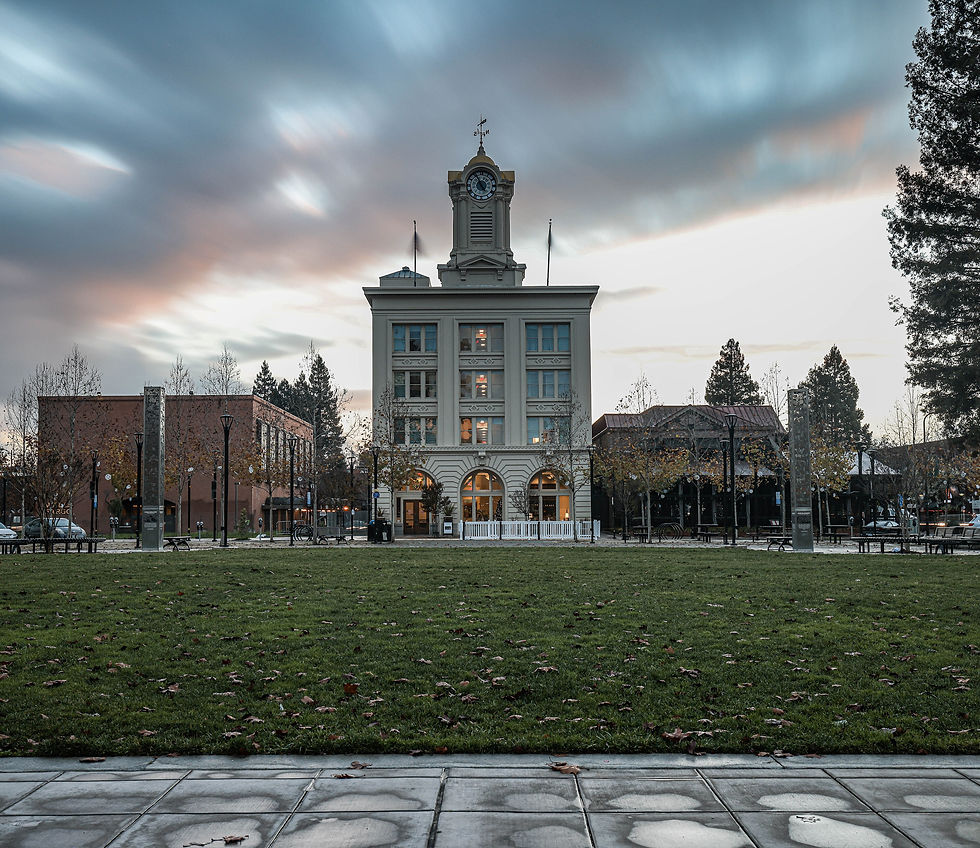
Photo: Dicklyon, CC BY-SA 4.0, via Wikimedia Commons
My Coffee Explorer's Santa Rosa guide, updated as of September 2026, lists 13 shops across 7 local roasters. Sonoma Magazine covers coffee alongside the rest of the county's food and drink scene. The Historic Railroad Square Association keeps its own coffee and tea directory for the district. All three do real, useful work. None of them replace what a single, specific neighborhood page for 4th Street, Railroad Square or Cleveland Avenue can add.
I am Thomas, and I write the marketing side of what Hillcane does, so this is the kind of comparison I think about often: what does a countywide list actually give a reader, and where does it stop short. Santa Rosa is a genuinely good test case, because it already has solid drinker coverage at the county and district level. The gap is not that no one is covering this city's coffee. The gap is one level down, at the street.
It is worth being fair to these sources before pointing at what they leave out. A countywide guide, a district directory and a regional magazine each require real, ongoing work to maintain, and each genuinely helps someone new to Santa Rosa get oriented quickly. This is not a criticism of any of them. It is an observation about where the next useful layer of content sits, once that first layer of orientation is already covered.
What the County and District Level Coverage Already Does Well
My Coffee Explorer's Santa Rosa guide is a real, maintained resource. As of its September 2026 update, it counts 13 shops and 7 local roasters across the city, a useful starting inventory for anyone trying to get a sense of scale before diving into specifics.
The Historic Railroad Square Association keeps its own Coffee and Tea page for that district, listing six food and drink rooms around the old depot. That kind of association page is valuable precisely because it is hyper local to one district, built by people who actually know that few block stretch well.
Sonoma Magazine, meanwhile, covers coffee the way a regional publication covers most local categories, as one piece of a broader county food and drink beat. That breadth is exactly the point of a publication like that. It is trying to serve readers across the whole county, from Santa Rosa to Sebastopol to Healdsburg, not to zoom in on one specific street.
Each of these three sources is doing a different job well, and none of them is competing directly with the other two. A countywide guide answers the question what exists here. A district association answers which businesses belong to this specific few blocks. A regional magazine answers where does coffee fit into everything else worth doing and eating in this county right now. All three are legitimate, useful answers, and a reader benefits from having all three available.
What the Maps Result Actually Shows
It is worth setting that drinker coverage next to what Google's own Maps results surfaced for a coffee search in this city. A read of the results feed for coffee shop in Santa Rosa CA on September 13, 2026, led with six cafes, and all six were independents, spread across more than one part of the city. No Starbucks, Dunkin, Dutch Bros, 7 Brew or Peet's sat among them, even though Dutch Bros runs two Santa Rosa drive thrus.
That is a results feed, not a confirmed three pack, and it is worth being precise about the difference rather than overstating what one snapshot proves. Still, it is a real world signal of what surfaces when someone searches with local intent, distinct from both the countywide guide and the district association page described above.
Setting the two side by side is instructive in a different way than it first seems. The countywide guide counts 13 shops. The first six of the map is, by definition, fewer than half of that. Every list and every map is a slice, and a reader who treats any single slice as the whole scene will miss cafes that are well loved and a short walk away. A results feed shows one moment, not a verdict on any shop's quality.
What a List Cannot Do That a Street Can
Here is the actual gap. A countywide guide like My Coffee Explorer's Santa Rosa page can tell a reader that 13 shops and 7 roasters exist in the city. It cannot easily tell that same reader which two addresses on 4th Street are a five minute walk apart, what a stop on Cleveland Avenue near Vintners Square feels like compared to a downtown room, or what a Railroad Square coffee stop looks like layered against the SMART rail line and the old depot buildings around it.
A district association page, like Railroad Square's own Coffee and Tea list, gets closer, since it is hyper local by definition. But it is still built as a directory, a name and maybe an address, not a fuller story of the block. It tells you which shops sit in the district. It does not tell you how the morning moves from the SMART platform to the square, which doors open at 6am, or which ones close by noon.
A single neighborhood page, built specifically around one street or one district, can hold all of that at once: the exact address, the hours, the history, the neighboring businesses, the walk from one shop to the next. That is a different kind of resource than a list entry, even a good one, and it is the layer that is currently thin online for a city with Santa Rosa's real neighborhood structure.
Think about it from the perspective of an AI powered search answer trying to respond to a specific question, something like where should I get coffee near Railroad Square in Santa Rosa. A countywide guide gives that system a general pool of thirteen names to draw from, with limited detail on which ones sit in Railroad Square specifically. A dedicated neighborhood page gives that same system exactly the entity it needs, a named street, a named district, and the shops that belong there, described in enough detail to be quoted confidently rather than guessed at.
Why This Particular City Needs That Layer
Santa Rosa is not a one street coffee town. Its cafes split across downtown 4th Street, Railroad Square, Mendocino Avenue, West Santa Rosa's Cleveland Avenue, and Montgomery Village's Midway Drive, five different pockets of the city. A countywide list treats all five as one undifferentiated Santa Rosa entry. A neighborhood page treats each one as what it is, a specific place with its own character.
That distinction matters more here than it would in a city with one compact downtown coffee strip, because a visitor or new resident trying to plan an actual visit needs to know whether they are looking at a downtown walk or a drive across town to Montgomery Village. A countywide guide, built to cover the whole map at once, is not really designed to answer that kind of practical, street level question, and it should not have to be. That is a different job, done well by a different kind of page.
Compare that to Sebastopol, a smaller city where a single Main Street and a single marketplace at The Barlow cover most of the local coffee scene. A countywide or citywide list works reasonably well there precisely because the geography is already compact. Santa Rosa's size and its five distinct pockets are exactly what makes a single flat list fall short here in a way it might not somewhere smaller.
No List Publishes Schema for a Shop
One more distinction worth naming plainly: none of these countywide or district sources, not My Coffee Explorer, not Sonoma Magazine, not the Railroad Square association, publish structured data on behalf of any individual coffee shop. That is not a criticism of any of them. It is simply not what a general interest list or directory is built to do.
Structured data, the behind the scenes markup that helps search engines and AI systems understand what a business is, where it sits and what it offers, is something only a shop's own site, or a page built specifically for that shop, can carry. A countywide list can mention a shop by name. It cannot speak for that shop in the technical language that increasingly shapes how search engines and AI answers understand a local business.
A Quick Walk Through What the Streets Actually Look Like
It helps to make this concrete rather than abstract. Downtown 4th Street is a walkable historic strip, and a page built around it could describe two cafes within a few blocks of each other, the kind of detail useful to someone planning a morning downtown rather than just told a business exists somewhere in the city.
Railroad Square is a compact historic district organized around the old depot and served today by the SMART rail line, small enough to cross on foot in a few minutes. A page built around that district could describe how a commuter stepping off the train finds coffee within a block or two, how weekday and weekend hours differ across the district, and how the square connects on foot to 4th Street, the kind of practical detail a countywide list has no room for.
West Santa Rosa's Cleveland Avenue sits apart from downtown, near Vintners Square, with more parking than foot traffic and a working weekday feel. Montgomery Village's Midway Drive is different again, a suburban shopping center setting on the east side rather than a historic downtown strip. Each of these settings deserves its own description, not one shared paragraph inside a countywide roundup.
The Complementary Picture
None of this is an argument against My Coffee Explorer, Sonoma Magazine or the Railroad Square association. All three help a reader trying to get oriented to Santa Rosa coffee at a glance, and all three deserve credit for doing that job well and consistently over time. A countywide guide that names 13 shops and 7 roasters is doing real, useful work for anyone new to this market.
The point is simply that a countywide list and a single street page are answering two different questions. One tells you what exists across the whole map. The other tells you what a specific room, on a specific street, is like, in enough detail to plan a real visit or to give a search engine something concrete to work with. Santa Rosa currently has decent coverage of the first question. The second one is where the real opportunity sits.
For a Santa Rosa shop owner reading this, the practical version of that point is straightforward. You do not need to compete with My Coffee Explorer, Sonoma Magazine or the Railroad Square association, and trying to would be a waste of effort aimed at the wrong target. What is worth building instead is the thing none of them are set up to provide, a clear, specific page that says exactly where your room sits, what street it anchors, and what makes that particular stretch of Santa Rosa worth the trip.
Related Reading
More from this Hillcane city series, plus the pages on the site that sit next to the work.
Dutch Bros Has Two Santa Rosa Drive Thrus, and Independents Fill the Maps Results
Santa Rosa Coffee Is 4th Street, Railroad Square, Cleveland and Midway, Not Healdsburg
Taylor Lane at The Barlow and Retrograde on Main Are Sebastopol Coffee
A Walkable Coffee Morning From Railroad Square and the SMART Depot
The State of Specialty Coffee Visibility in North America (2026)
Google Business Profile for Coffee Shops: The Complete 2026 Checklist
Cafe Delmarette Sits Beside the Del Mar Theater on Pacific Avenue
Frequently Asked Questions
Which sources cover Santa Rosa coffee for drinkers?
Three sources do most of the county and district level work. My Coffee Explorer's Santa Rosa guide, updated September 8, 2026, counts 13 shops and 7 local roasters in the city. Sonoma Magazine covers coffee as part of its county food and drink beat. The Historic Railroad Square Association keeps a Coffee and Tea page listing six food and drink rooms in its district.
What did the Maps results feed show for Santa Rosa coffee?
A read of the Maps results feed for coffee shop in Santa Rosa CA on September 13, 2026, led with six cafes, and all six were independents from more than one part of the city. No Starbucks, Dunkin, Dutch Bros, 7 Brew or Peet's sat among them, even though Dutch Bros runs two Santa Rosa stands, at 1300 Mendocino Ave and 919 Hopper Ave.
What can a neighborhood page add that a list cannot?
A neighborhood page can hold the exact street, the hours, the walk between cafes and the feel of a district, the detail a countywide list of 13 shops is not built to carry. It can separate a downtown 4th Street morning from a Cleveland Avenue stop near Vintners Square or a Railroad Square visit by the SMART depot, which a single city entry cannot do.
Does any list publish structured data for a shop?
No. My Coffee Explorer, Sonoma Magazine and the Historic Railroad Square Association are general interest guides, magazines or directories, and none of them publishes structured data on a shop's behalf. That markup, which tells search engines and AI systems what a business is, where it sits and when it opens, can only come from the shop's own site or a page built for it.
Is a Maps results feed the same as a confirmed three pack?
No. The six cafes that led the September 13, 2026 read of the results feed for coffee shop in Santa Rosa CA reflect one feed on one day, not a confirmed three pack, and the two should not be treated as interchangeable. A three pack is the short block at the top of a search page; a results feed is the longer scrolling list behind it.
Why does Santa Rosa need street level coverage more than a small town?
Because its cafes split across five pockets: downtown 4th Street, Railroad Square, Mendocino Avenue, Cleveland Avenue and Midway Drive. Santa Rosa has 177,216 residents, while Sebastopol, with 7,466, fits most of its coffee around one Main Street and The Barlow. A single flat list works for the small town; the larger city needs its streets described one at a time.
How does a countywide count compare with the top of the map?
My Coffee Explorer's September 2026 guide counts 13 shops in Santa Rosa, while the Maps results feed on September 13 led with six cafes, fewer than half that count. Every list and every map is a slice. Readers who treat one slice as the whole scene miss cafes a short walk away, which is exactly the gap a neighborhood page can close.
Does this article rank which Santa Rosa shops were not in the Maps feed?
No. A first six is always shorter than a citywide count of 13, so many well known cafes will sit outside any single snapshot, and this piece intentionally does not list them or judge any shop by where it landed. A results feed reflects one moment on September 13, 2026, not a verdict on the coffee or the people making it.
What does the Railroad Square Association's page cover?
The Historic Railroad Square Association keeps a Coffee and Tea page for its district around the old Northwestern Pacific depot, listing six food and drink spots. It is hyper local, built by people who know those few blocks well, and it sits alongside the SMART rail line. What it does not carry is the fuller story of each shop's street, hours and neighbors.
How can Hillcane help fill the street level gap described here?
Hillcane builds the kind of neighborhood page a countywide list is not designed to provide: one that holds the address, posted hours, the walk to the next room and the character of a single Santa Rosa street or district, from 4th Street to Midway Drive. Reach Hillcane at hillcane.co/contact or call (256) 384-2449 to talk through what that would look like for your shop.
Work with Hillcane
My Coffee Explorer counts 13 shops and 7 roasters across Santa Rosa. None of that tells you what a walk down 4th Street actually looks like.
If your Santa Rosa coffee shop needs a page that tells its own street level story, reach Hillcane at hillcane.co/contact or call (256) 384-2449.


Comments