
Two Greenvilles in Coffee Search: Why NC Gets Lost

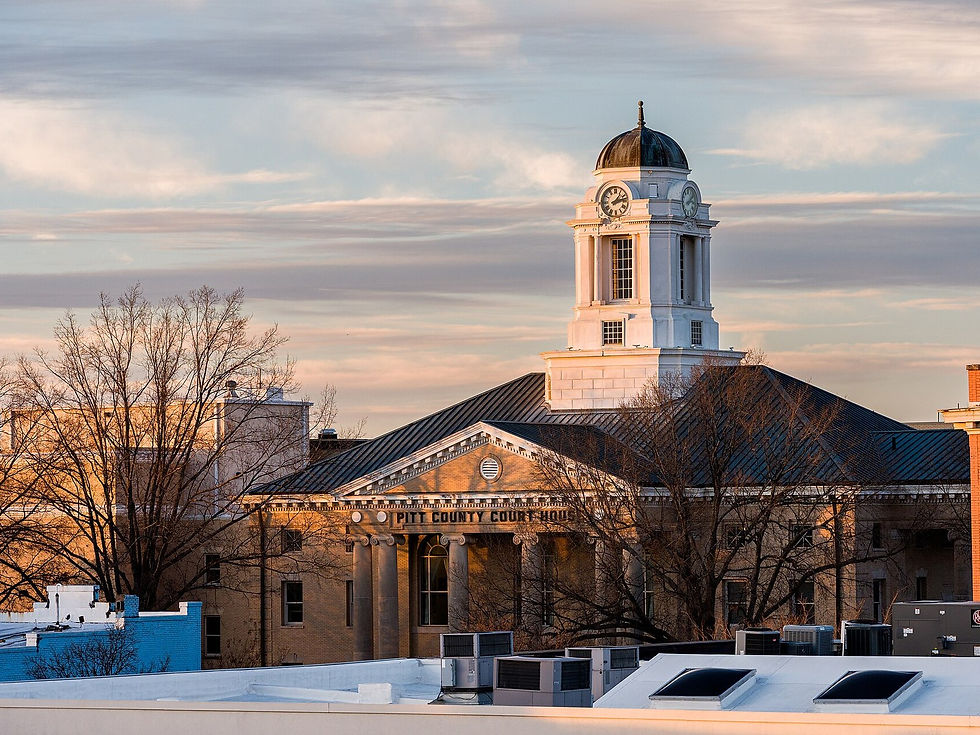
There are two Greenvilles that matter to a coffee search, and they are not close to each other. Greenville, South Carolina is a larger, tourism heavy downtown with a well documented river walk, a park, and a coffee scene that shows up constantly in national listicles. Greenville, North Carolina is a Pitt County city of about 88,540 people, home to East Carolina University, with a smaller and far less search visible independent coffee scene. Type coffee in Greenville into a search bar without specifying a state, and there is a real chance the results lean toward the bigger, better mapped city two states away.
This is not a story about which city has better coffee. It is a story about search infrastructure, and about how three real, currently operating businesses in Greenville, North Carolina are quietly competing against a much larger city's name recognition every single time a customer forgets to type the state.
The Collision Is Documented, Not Hypothetical
This is not a theoretical problem. Stock photo searches for Greenville return images of Falls Park in South Carolina, sometimes mislabeled as North Carolina by the stock platforms themselves. That mislabeling alone shows how easily the two cities blur together in generic content systems that were never built to check which state a place name belongs to.
Meanwhile, among Greenville, North Carolina's own three independently verified coffee businesses, only one currently writes North Carolina into its own homepage title. Backstage Coffee and Vintage's title reads Greenville NC Coffee Shop, a clear, deliberate disambiguation. Blackbeard Coffee Roasters' title is brand only, with no city or state mentioned at all. Awaken Coffee's title is similarly brand only. Two out of three homepages give a search engine no help sorting them into the right city.
Why This Happens: Population, Coverage, and the Weight of Listicles
Greenville, South Carolina benefits from a much larger tourism apparatus, more national press coverage, and a coffee scene that has been the subject of countless best of lists for years. Greenville, North Carolina, at roughly 88,540 residents according to the 2023 American Community Survey, is a smaller city whose coffee scene has had far less of that kind of sustained outside attention.
Search engines and content aggregators build their results partly from that accumulated weight of past coverage. A city with more listicles, more reviews, and more established local business schema will naturally surface more readily for a generic query, even when a searcher's actual intent was the other, less covered city. That is not a conspiracy against North Carolina. It is simply how search ranking tends to reward existing volume, and Greenville, North Carolina currently has less of that volume built up around its coffee scene.
What the Local Landscape Actually Looks Like, Once You Sort It Correctly
Once the two cities are properly separated, Greenville, North Carolina's coffee landscape comes into focus. Three independently verified businesses anchor it: Blackbeard Coffee Roasters on Fifth Street, a hybrid roastery and cafe one block from East Carolina University's main campus; Awaken Coffee, a nonprofit cafe with two locations, one on West Fourteenth Street and one inside East Carolina University's Health Sciences Student Center; and Backstage Coffee and Vintage on Greene Street downtown, pairing coffee with a vintage retail concept.
Two regional drive through chains, Seven Brew, confirm real Greenville, North Carolina locations on their official store locator, while Dutch Bros' locator only shows Greenville, South Carolina stands. That single chain detail is a useful test case: if a Greenville coffee list includes a Dutch Bros location, it has almost certainly pulled data meant for the other city, since no Dutch Bros currently appears on the official locator for Greenville, North Carolina.
The Fix Is Boring, and That Is the Point
Solving a geo disambiguation problem does not require a rebrand, a new marketing campaign, or a clever content strategy. It requires homepage titles, meta descriptions, and structured data that plainly state North Carolina, Pitt County, or a nearby landmark like East Carolina University. Backstage Coffee and Vintage already proves the model works. Its homepage title says Greenville NC Coffee Shop, and its meta description spells out its Greene Street address in plain text, exactly the kind of small, deliberate signal that tells both a human reader and a search engine which city they are looking at.
Blackbeard Coffee Roasters and Awaken Coffee have not yet made that same move. Their homepages are brand focused, with no city or state named in the title tag, which leaves both businesses more exposed to the Greenville, South Carolina collision than they need to be. Fixing that does not touch either business's identity, its menu, or its story. It is a title tag and a meta description away from doing what Backstage already does.
Why This Is a Search Opportunity, Not a Ranking Complaint
It would be easy to frame all of this as a grievance against Google or against Greenville, South Carolina's larger footprint, but that framing misses the actual opportunity. A search engine cannot correctly sort a homepage into the right city if the homepage itself never says so. That means the fix sits entirely within each business's own control, independent of what any competitor city or chain is doing.
For Greenville, North Carolina's coffee businesses, that is genuinely good news. This is not a crowded field where every shop has already optimized for geo disambiguation and the remaining opportunity is thin. It is closer to the opposite: two out of three independently verified coffee businesses in the city have not yet made the single easiest fix available to them, which means real, low effort upside is still sitting on the table.
A Pattern Worth Watching Over Time
Search engines do update their understanding of a page over time, particularly when a business itself sends clearer signals through its own title tags, metadata, and schema. That means the current imbalance, where two out of three of Greenville, North Carolina's independent coffee shops have brand only titles, is not necessarily a permanent condition. It is a snapshot of where things stand today, based on what could be directly verified.
Tracking whether Blackbeard Coffee Roasters and Awaken Coffee eventually update their own title tags to include North Carolina, the way Backstage Coffee and Vintage already has, would be a natural way to measure whether this specific search disambiguation gap narrows over time. For now, the honest accounting is that one shop has solved it and two have not.
A Problem That Extends Beyond Coffee, Even If This Post Does Not
While this post focuses specifically on coffee search, the underlying dynamic, two cities sharing a name with very different amounts of accumulated search coverage, almost certainly touches other categories of local business in Greenville, North Carolina as well. A restaurant, a boutique, or a service business in the city could face a similar version of this same disambiguation challenge.
This post deliberately does not make claims about those other categories, since verifying them would require separate research beyond what was confirmed here. But the coffee scene's experience, with two out of three independent shops still using brand only homepage titles, is a useful, concrete example of a pattern that likely repeats elsewhere in the city's broader small business search landscape.
Why Backstage's Example Should Travel Further Than Just Coffee
Backstage Coffee and Vintage's homepage title, explicitly naming Greenville NC, is not a coffee specific trick. It is a general best practice for any small business in a city whose name collides with a larger, more search visible place elsewhere. Any Greenville, North Carolina business owner, coffee or otherwise, could look at Backstage's title tag as a working example of how to solve this exact problem on their own homepage.
That makes Backstage's small, deliberate choice more significant than it might first appear. It is not just the right move for one coffee and vintage shop on Greene Street. It is a template that the rest of Greenville, North Carolina's small business community, across categories, could reasonably borrow.
A Simple Test Any Business Owner Can Run
Any Greenville, North Carolina business owner curious about their own exposure to this exact collision can run a simple test: open their own homepage's title tag, either by viewing page source or checking their website platform's SEO settings, and ask whether a stranger unfamiliar with the business could tell, from that title alone, which state the business operates in. If the answer is no, the same disambiguation gap identified across this coffee series likely applies to their business too.
That test takes only a few minutes and requires no technical expertise beyond knowing how to view a webpage's title tag. It is exactly the kind of low effort diagnostic that could help any Greenville, North Carolina small business owner, coffee related or otherwise, quickly understand whether they are exposed to the same search collision this post has documented across the city's coffee scene.
Why Two States, One Name, Is a Recurring Pattern Nationally
Greenville is far from the only place name shared across multiple states. Springfield, Franklin, and Georgetown are just a few examples of city names that repeat across the country, each creating some version of the same search disambiguation challenge this post has documented for Greenville specifically. Businesses in any of those repeated named cities face a comparable version of this problem.
That broader pattern does not make Greenville, North Carolina's version of the problem any less worth solving locally, but it does mean the fix, clear title tags, explicit state names, and proper local business schema, is a well understood, broadly applicable solution rather than something unique or unusual to this particular city's situation.
The Simplest Possible Summary
If this entire post could be reduced to a single sentence, it would be this: Greenville, North Carolina's coffee businesses need to say North Carolina clearly on their own homepages, because right now most of the internet's default assumption leans toward the bigger, more visible Greenville in South Carolina instead.
Backstage Coffee and Vintage already proves that fix works. The remaining opportunity for Blackbeard Coffee Roasters, Awaken Coffee, and any other Greenville, North Carolina business reading this is simply to do the same thing Backstage has already done, on their own terms, in their own voice, but with the same underlying clarity about which Greenville they mean.
A Closing Note on Fairness to Both Cities
None of this analysis should be read as suggesting Greenville, South Carolina's coffee scene is somehow at fault for Greenville, North Carolina's search visibility challenges. Greenville, South Carolina's businesses built their own strong search presence through their own efforts over time, the same way Backstage Coffee and Vintage has started to do in Greenville, North Carolina.
The fairest way to frame this collision is simply as an outcome of uneven effort and uneven coverage between two cities that happen to share a name, not as a competition either city's businesses ever consciously entered. Fixing it on the North Carolina side does not require anything from the South Carolina side to change at all.
The Takeaway for Any Reader Outside Greenville, North Carolina
Even a reader with no direct connection to Greenville, North Carolina's coffee scene can take something useful from this post: a reminder that shared place names create real, measurable search challenges for small businesses, and that the fix is almost always available to the business itself, without needing outside intervention or a change in how any search engine operates.
That principle applies well beyond coffee, and well beyond Greenville. Any small business anywhere sharing a city name with a larger, better known place elsewhere faces some version of this same challenge, and the same basic solution, clear titles, explicit geography, proper schema, applies just as directly there as it does here.
Related Reading
More from this Hillcane city series, plus the pages on the site that sit next to the work.
Awaken Coffee and Its Brew Crew: Greenville's Nonprofit Cafe
The Greenville Pitt Chamber Helps Small Business, Not Cafe Marketing
Port City Java vs Greenville's Independents: A Structural Contrast
Backstage Got the Title Right. Here Is What Is Still Missing
The Greenville NC Coffee Map: Blackbeard, Awaken, and Backstage
Coffee Shop Marketing in Greenville, NC: What Actually Comes Back
Blackbeard Coffee Near ECU: A Fifth Street Roastery Up Close
Backstage Coffee and Vintage: Greenville's Sparkly Neighborhood Shop
Frequently Asked Questions
Are Greenville, North Carolina and Greenville, South Carolina the same city?
No, they are entirely separate cities in different states. Greenville, North Carolina is in Pitt County and home to East Carolina University, with a city population of about 88,540 according to the 2023 American Community Survey. Greenville, South Carolina is a larger, more tourism heavy city with its own downtown park and river walk. A plain search for coffee in Greenville can return results from either city.
Why does a search for coffee in Greenville sometimes show South Carolina results to someone in North Carolina?
Search engines rely partly on how clearly a business's own website signals its city and state, and partly on the overall volume of content, reviews, and coverage already associated with a place name. Greenville, South Carolina has a larger tourism footprint and more accumulated coverage, which can cause it to surface more readily for a generic Greenville coffee query, even when the searcher meant the North Carolina city.
How many of Greenville, North Carolina's coffee shop homepages already say North Carolina clearly?
Among the three independently verified coffee businesses in Greenville, North Carolina, only one, Backstage Coffee and Vintage, currently writes North Carolina directly into its own homepage title. Blackbeard Coffee Roasters and Awaken Coffee both have brand only titles that do not mention a city or state.
Which coffee shop in Greenville, North Carolina already handles this disambiguation well?
Backstage Coffee and Vintage, located at 304 South Greene Street, is the model example. Its homepage title reads Greenville NC Coffee Shop, followed by Backstage Coffee, and its meta description spells out the Greene Street address in plain text, giving both readers and search engines a clear, immediate signal about which Greenville the business belongs to.
Does Dutch Bros have a location in Greenville, North Carolina?
No, based on the official Dutch Bros store locator, the company's Greenville locations are in Greenville, South Carolina, not Greenville, North Carolina. Any list of Greenville, North Carolina coffee options that includes a Dutch Bros location has likely mixed up data from the two different cities.
What chains do have confirmed locations in Greenville, North Carolina?
Seven Brew confirms two Greenville, North Carolina drive through locations on its official store locator, one on East Fire Tower Road and one on South Memorial Drive. Port City Java, a regional chain based in Wilmington, also has a documented but historically inconsistent presence near East Carolina University's campus.
What is the easiest fix for a Greenville, North Carolina coffee shop worried about this mix up?
The most direct fix is updating a homepage's title tag and meta description to plainly mention North Carolina, Pitt County, or a recognizable local landmark such as East Carolina University. Backstage Coffee and Vintage already demonstrates that this works well without requiring any change to a shop's branding, menu, or story.
Is this article criticizing Greenville, South Carolina's coffee shops?
No. This article is not a comparison of quality between the two cities' coffee scenes, and it is not intended as a dig at any specific Greenville, South Carolina business. It is focused entirely on helping Greenville, North Carolina's own independent coffee businesses become easier to find under their correct city and state.
Why does population size matter to this search collision?
A larger, more heavily covered city like Greenville, South Carolina tends to accumulate more listicles, reviews, and structured business data over time, which search engines can use as ranking signals. Greenville, North Carolina, with a smaller population of roughly 88,540 and a less extensively covered coffee scene, has less of that accumulated volume, making clear, explicit geo signals on its own business websites even more important.
Does this issue affect other kinds of businesses in Greenville, North Carolina, not just coffee shops?
This research focused specifically on coffee businesses, but the underlying dynamic, two cities sharing a name with very different amounts of search coverage, would logically apply to other local business categories in Greenville, North Carolina as well. This post does not make claims about categories outside coffee, since those were not part of the research verified for this piece.
Work with Hillcane
A bigger Greenville two states away is quietly winning a search fight that most North Carolina coffee shops never knew they were in.
Hillcane can help a Greenville, North Carolina coffee business fix the title tag and schema gap that decides which city a search engine picks.
Reach out at hillcane.co or (256) 384-2449.

Comments