
Brookstown to Yadkinville Road: What Winston Salem Coffee Looks Like Right Now

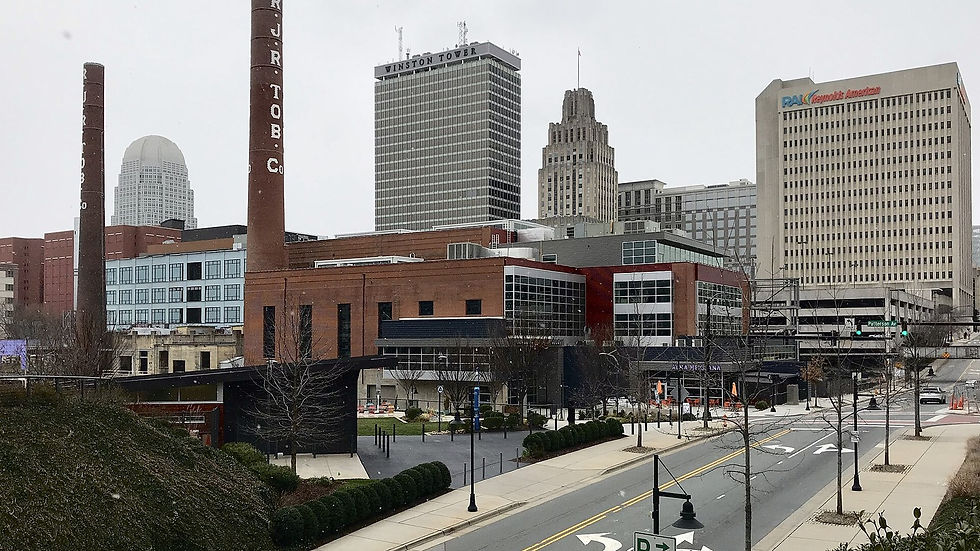
Winston Salem's coffee geography does not sit in one neighborhood. It runs from Sayso Coffee and ByGood Coffee roasting on Brookstown Avenue, through Krankies in the Innovation Quarter, out past Ardmore Coffee in its namesake neighborhood, into Lot 63 inside an 1867 Old Salem building, and up the north side along Yadkinville Road. Anyone who tries to describe this city's coffee scene in a single paragraph is already leaving something out.
The city's population sits at 250,887, city proper, according to the American Community Survey's 2023 five year estimate. That is bigger than Knoxville and the largest city Hillcane has researched to full first pass depth in this phase of the project. Winston Salem also ranks first of ten Phase 3 metros on Hillcane's own prioritization model, the strongest combination of independent shop density and digital emptiness in the batch.
Krankies has anchored the Innovation Quarter since 2003, more than two decades of continuous operation in the same district. Waterbean Coffee, a statewide chain with more than 17 locations and a storefront on Burke Mill Road, proves the market can support real scale. Those two data points are not offered as sales prospects. They are proof that Winston Salem already supports serious, established coffee operators, which matters because it means the independents in between are not fighting an unproven market. Between those poles sit roughly sixteen sampled independents scattered from Ardmore to Yadkinville Road, dense, well reviewed, and mostly described by someone other than themselves.
Brookstown, Old Salem, and the Flagship
Brookstown Avenue is a working roast corridor, not a single storefront. Sayso Coffee and ByGood Coffee both operate there, close enough to walk between in a few minutes, each with its own regulars and its own read on the neighborhood. A few blocks over, inside the Innovation Quarter, Krankies has been pouring coffee since 2003. That is not a marketing claim. It is a fact anyone can check against the year Winston Salem's tobacco warehouse district started turning into a technology and biotech corridor, and Krankies was already there before most of that transformation happened.
Lot 63 sits in Old Salem proper, inside a building that has stood since 1867. It runs as a coffeehouse by day and a pub by night, which means the same brick walls that once held whatever the building was built for now hold two different businesses depending on what time someone walks in. That kind of adaptive reuse is common in historic districts, but it is worth naming specifically here because it is part of what makes the Brookstown to Old Salem corridor different from a strip mall coffee shop. The Moravian settlement history of Old Salem, the old tobacco brick of Brookstown, and the coffee itself are three layers of the same few blocks.
A Convention and Visitors Bureau blog post can mention that Old Salem has coffee shops. It rarely stops to explain that Lot 63 is inside an 1867 building, or that Krankies has run continuously since 2003, or that Sayso and ByGood are close enough to be a genuine two stop crawl. That texture belongs to the cafes themselves, and right now most of it lives in tourism copy instead of on the cafes' own pages.
Ardmore to the North Side
Ardmore Coffee carries the highest review count in this sixteen shop sample, somewhere around 700 Google reviews, which puts it well ahead of most of the rest of the cluster. It sits in the Ardmore neighborhood along South Hawthorne Road, close enough to the cross streets that a regular could give someone walking directions without needing an address. The Ardmore Neighborhood Association has called ByGood best coffee in town on its own Facebook group, which is a small but real signal that this neighborhood already has opinions about its coffee and is willing to say them out loud, just not usually where a search engine can find them.
Head north from downtown and the identity shifts again. Yadkinville Road and the area around Wake Forest University carry their own coffee culture, built around students and neighbors rather than downtown foot traffic or Old Salem tourism. Our Coffee Shop sits directly on Yadkinville Road with one of the stronger ratings in the sample. Known Coffee roasts near the edge of campus on Polo Road. Coffee Park Airstream pours coffee out of an actual 1958 Airstream trailer on Reynolda Road, with an adjacent lounge for people who want to stay a while.
One city name, in other words, covers several genuinely different coffee markets. Ardmore is a residential neighborhood with a decades old anchor cafe. The north side is a university corridor with a trailer, a roaster, and a campus edge shop. Downtown and Old Salem are historic district coffee. Treating all of it as a single undifferentiated Winston Salem coffee scene flattens exactly the kind of local detail a search engine, or a person new to the city, actually wants.
Proof Without Prospect Confusion
It matters to be precise about why Krankies and Waterbean show up in a post about independent cafes. Neither one is a marketing prospect. Krankies has run since 2003 and does not need anyone to prove the neighborhood works, it has already proven that by staying open for more than two decades. Waterbean's 17 plus location statewide footprint and its Burke Mill Road storefront mean its marketing, brand consistency, and search visibility are already handled by a team built for exactly that job. Naming both of them here is about establishing that the underlying market is real, not about pitching either business.
The actual audience for a page like this is the roughly sixteen independent, mostly single location cafes sitting between those two poles. These are shops with real ratings and real regulars, the kind of place where the owner still opens most mornings, and where there is no marketing department because there does not need to be one for day to day operations. That is a different situation from either Krankies or Waterbean, and it deserves a different kind of attention.
Winston Salem ranks first in Phase 3 prioritization specifically because this combination exists: enough independent density to make the market interesting, and enough digital emptiness that almost none of these shops are currently winning the search visibility their coffee already earns in person.
The Reddit and Tourism Board Problem
Right now, a search for coffee in Winston Salem tends to surface a Reddit thread, a Yelp list, a local guide from an outlet like 6amCity, or Visit Winston Salem's own blog before it surfaces any cafe's own website. That is not a knock on any individual cafe. It is a description of what happens when a city has this much genuine coffee culture and almost none of it is written down anywhere the cafes themselves control.
A tourism board blog post can list ten coffee shops in a paragraph. It cannot explain that Krankies predates most of the Innovation Quarter's redevelopment, that Ardmore Coffee is the neighborhood's highest reviewed business, or that Lot 63 runs two different businesses out of the same 1867 building depending on the hour. Those details live with the cafes and their regulars, not with whoever wrote the tourism copy.
That gap is the actual opportunity here. It is not that Winston Salem lacks coffee culture. It clearly does not, given the density and the history packed into a few corridors. It is that the story of that culture is currently being told by everyone except the businesses living it.
What a Corridor Specific Page Actually Does
A page built around the Brookstown to Old Salem corridor specifically, rather than a citywide best of list, can hold detail no aggregator bothers with. It can say that Sayso and ByGood are close enough on Brookstown Avenue to walk between in a few minutes. It can say that Krankies opened in 2003 and has never left the Innovation Quarter since. It can say that Lot 63's building has stood since 1867 and that the same space runs two different businesses depending on the hour. None of that is complicated information, but none of it currently lives anywhere a search engine treats as authoritative for the corridor.
The same logic applies to Ardmore and the north side. A page scoped to South Hawthorne Road and the Ardmore neighborhood can name the cross streets, mention the roughly 700 reviews Ardmore Coffee has earned, and point to the neighborhood association's own comments about ByGood without ever needing to guess at what locals already know. A page scoped to Yadkinville Road and the university corridor can talk about Our Coffee Shop, Known Coffee near Polo Road, and Coffee Park Airstream's 1958 trailer as three different answers to three different kinds of customer, a student who wants a table for three hours and a neighbor who wants a fast regular order.
None of this requires inventing anything. Every fact above already exists somewhere, on a Facebook group, in a review count, in the year a business opened. The work is simply putting it in one place that belongs to the coffee scene itself instead of to whichever outlet got there first.
Why This Matters Beyond a Single Search Result
Search visibility is not just about ranking for a keyword. When a Reddit thread or a tourism blog answers a question about Winston Salem coffee, the shops mentioned are whichever ones the thread's participants happened to remember that day, or whichever ones the tourism board's writer had time to visit. That is a different kind of answer than one built from a cafe's own history, its own hours, and its own neighborhood.
It also matters for how AI assistants answer the same question. A model summarizing where to get coffee in Winston Salem can only cite what is actually indexed and readable. If the most detailed, well organized information about the Brookstown corridor, Ardmore, and the Yadkinville Road area lives on a page the cafes themselves built and maintain, that is the page most likely to get cited back. If it lives only in a Reddit thread, that thread gets cited instead, and the cafes lose the chance to shape how they are described.
Winston Salem's coffee geography is genuinely varied enough to support pages built around each of these corridors rather than one generic citywide list. The history is real, the density is real, and the gap between what exists in person and what exists online is the clearest opportunity in this entire Phase 3 cluster.
Anyone reading this who already knows this city's coffee scene has probably nodded along at one detail and quibbled with another, which is exactly the point. A citywide summary cannot hold that kind of local nuance. A corridor by corridor approach, written by or with the cafes themselves, can carry it in full.
Downtown's Newest Arrivals and the West End
Downtown itself is younger than Brookstown and moving faster. Viva Barista Cafe opened on West 5th Street in June 2026 and is already the top Google Maps result for the whole city, which is a fast climb for a shop that has been open only a few months. Okay Coffee opened its nitro focused shop on North Cherry Street in August 2025. DeBeen Espresso has run its Fifth Street cafe long enough to open a second location in High Point, proof that a Winston Salem shop can grow outward rather than only inward. Moji Coffee and More adds a different kind of story entirely, a nonprofit cafe that employs adults with intellectual and developmental disabilities, with a second counter inside the Forsyth Central Library.
West of downtown, the Remedy Cafe and Bar on West End Boulevard won WStoday's Best Coffee Shop award in 2025 and carries strong ratings on Yelp, real recognition for a real coffee program even though it also runs as a bar. South of downtown, Given Coffee Co operates inside HopeCity in South Winston with a stated mission on its own homepage that one hundred percent of proceeds go toward feeding kids. Those two shops alone show how wide the range already is here, from a downtown coffee bar with a liquor license to a mission driven counter built entirely around a charitable model.
The Coffee Trail That Proves the Community Already Shows Up
The Rescue Mission periodically runs the Winston Salem Coffee Trail, a thirty dollar stamp card fundraiser that sends people to ten local shops in one pass, with names like Ardmore, ByGood, Camino, Coffee Park Airstream, DeBeen, Lot 63, and Sayso appearing on the most recent map. It is a genuinely good piece of community coffee culture, the kind of organized, cafe spanning event that a city without this much real density could not support in the first place.
It is also, structurally, a paper trail. A stamp card does not show up in a search months later, and it does not help a visitor who never heard about that particular fundraiser find any of the ten shops on it afterward. The trail proves the community already exists and already shows up for its own coffee scene. It does not, on its own, give that community anywhere permanent to point back to.
Related Reading
More from this Hillcane city series, plus the pages on the site that sit next to the work.
We Searched Coffee Shop Marketing in Winston Salem. Here Is Who Owns That Page.
Why Coffee Shop in Ardmore Deserves Its Own Page in Winston Salem
Old Salem, Brookstown, and the Cafe That Has Been Waking Up Winston Salem Since 2003
Downtown and the Innovation Quarter: Winston Salem's Newest Coffee Corner
Winston Salem's Coffee Shops Do Not Have a Dutch Bros Problem. They Have a Reddit Problem.
The Cafe Winning Google Maps Without a Website in Winston Salem
The Coffee Trail, the 2003 Flagship, and the Community Most Searches Never Find in Winston Salem
What Winston Salem's Small Business Resources Get Right About Marketing
The Six Cafes Winning Google's Map Pack for Coffee Shop in Winston Salem
Why Winston Salem's Biggest Coffee Chain Does Not Need Hillcane, and Its Neighborhood Cafes Do
What an AI Would Actually Say About Winston Salem's Coffee Scene
Frequently Asked Questions
Which areas define this Winston Salem coffee walk?
Brookstown Avenue, the Innovation Quarter, Old Salem, the Ardmore neighborhood, and the Yadkinville Road corridor near Wake Forest University each carry a distinct coffee identity inside one city.
Who proves the Winston Salem coffee scene is already established?
Krankies has run continuously in the Innovation Quarter since 2003, and Waterbean Coffee's 17 plus location statewide footprint with a Burke Mill Road storefront shows the market can support real scale.
What is Lot 63 in Old Salem?
Lot 63 operates as a coffeehouse by day and a pub by night inside a building that has stood since 1867, one of the more distinctive dual use spaces in the Brookstown to Old Salem corridor.
Why does the Ardmore neighborhood matter to this hub?
Ardmore Coffee carries roughly 700 Google reviews, the highest count in this sixteen shop sample, and anchors South Hawthorne Road in a neighborhood that already talks about its cafes on its own Facebook group.
Are Krankies or Waterbean being pitched as Hillcane prospects here?
No. Both are named as evidence that Winston Salem's coffee market is real and established, not as businesses that need marketing help.
What currently answers most coffee searches in Winston Salem?
Reddit threads, Yelp lists, local guides like 6amCity, and Visit Winston Salem's own tourism blog tend to rank ahead of any individual cafe's own website.
Why does Winston Salem rank first among Phase 3 metros?
It combines strong independent coffee density with the widest digital emptiness Hillcane found across the ten metros studied in this phase.
Does this hub cover Greensboro or the wider metro area?
No. This post is scoped to Winston Salem city proper, not the broader Greensboro Winston Salem High Point metro.
What does the rest of the Winston Salem cluster cover?
Later posts look at neighborhood specific pages, the Google Maps pack, what an AI assistant currently says about local coffee, and individual cafe stories.
How can a Winston Salem cafe owner get help with this?
Reach out at hillcane.co/contact or call (256) 384-2449 to talk about building pages that match the map instead of leaving that story to someone else.
Work with Hillcane
Winston Salem already has serious coffee running from Brookstown to Yadkinville Road, with a flagship that predates the Innovation Quarter's redevelopment. Too much of that story still belongs to Reddit threads and tourism blog paragraphs.
A city this size deserves cafe pages that carry the same detail the neighborhood already knows by heart. Reach Hillcane at hillcane.co/contact or call (256) 384-2449.
Reach out at hillcane.co or (256) 384-2449.


Comments