A Coffee Counter Inside a Bakery Needs Its Own Address and Hours Online

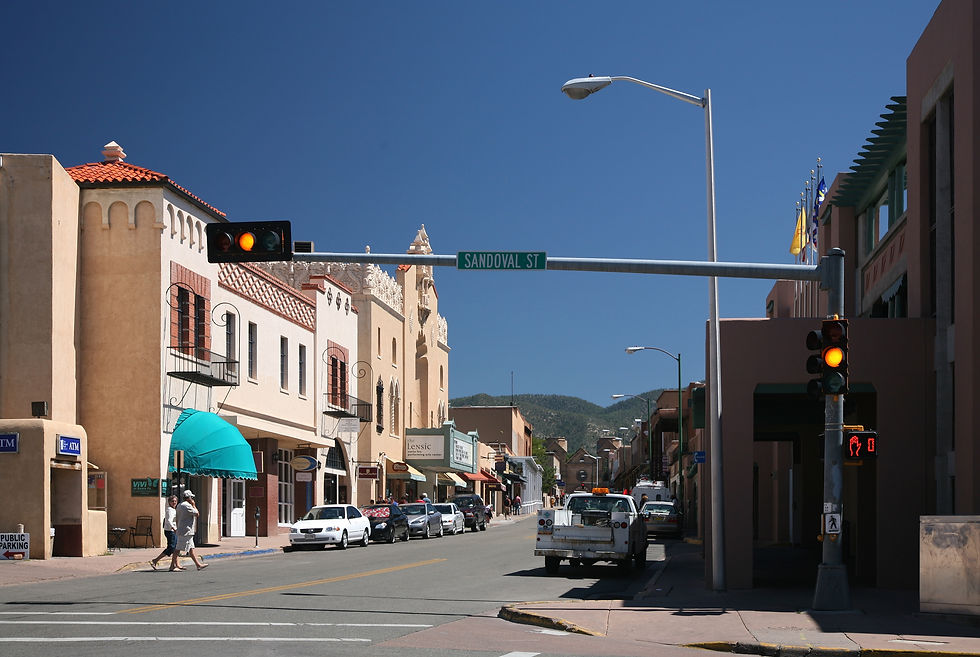
Photo: Daniel Schwen, CC BY-SA 4.0, via Wikimedia Commons
Some of the best coffee counters in any city are not standalone buildings. They are set up inside another business, a bakery, a bookstore, a bike shop, sharing a roof and a front door with something else entirely. Santa Fe has counters like this, and there is nothing wrong with the arrangement itself. A coffee counter built inside a bakery can be every bit as serious about its coffee as a shop with four walls of its own.
The trouble starts online, not on the street. A drinker searching for coffee on a specific block does not automatically know that the espresso machine they are looking for lives inside a bakery rather than behind its own storefront sign. If the counter's own name, address, and hours are not clearly stated somewhere a search can find them, that drinker either walks past without realizing, or gives up before they ever visit. This post is not about any one Santa Fe shop. It is a plain, practical pattern worth knowing for any coffee counter operating inside a host business.
It is worth being clear from the outset that this is a structural pattern, not a criticism of any specific arrangement. Plenty of genuinely excellent coffee is served from counters set up inside other businesses, and the coffee itself is very often just as good as anything poured from a standalone shop. The gap this post addresses lives entirely in how that counter presents itself online, a fixable, practical problem, not a reflection on the quality of the coffee or the character of the business.
Why This Pattern Is So Common
A coffee counter inside a bakery, a bookstore, or another retail space usually starts as a genuinely good idea. The host business already has foot traffic, a kitchen or prep space, and a built in customer base. Adding coffee is a natural extension, not a cold start, and it can work extremely well for both businesses at once.
The complication is that most of these arrangements grow organically, one espresso machine and a handful of regulars at a time, rather than starting from a clean plan for how the coffee side will present itself separately online. By the time the counter has its own following, its own hours, and its own identity among regulars, its online presence often still lives entirely inside the host business's own site, if it has any presence at all.
That gap between how real and established the counter is in person and how thin its footprint is online is exactly the pattern worth fixing, and it is fixable without disrupting anything about the actual arrangement between the counter and its host.
It helps to picture how this usually unfolds in practice. A bakery adds a small espresso setup near the register, mostly as a convenience for its own bread and pastry customers. Word spreads slowly among neighbors that the coffee itself is good, not just an afterthought. A year or two later, people are showing up specifically for the coffee, sometimes without buying bread at all, but the website, the online listings, and the search presence still describe the business as a bakery first, with coffee mentioned only in passing, if at all.
What a Drinker Actually Needs to See
A drinker searching for coffee on a specific street needs three things to find a counter like this with confidence: its name, its address, and its hours, stated clearly and consistently wherever they might look. That sounds obvious, but it is the exact piece that tends to go missing when a coffee operation lives inside a larger business.
The name matters because a counter needs to be searchable as itself, not only as a feature buried inside the host business's own branding. A drinker typing a coffee focused search should be able to find the counter's own name attached to its own address, not have to already know it exists inside another store to find it at all.
The address matters for the obvious reason that a drinker standing on the wrong end of a block, or driving past at the wrong entrance, will simply give up rather than wander looking for a hidden counter. And the hours matter because a coffee counter inside a host business does not necessarily keep the same hours as the host itself. A bakery might open early for bread and close by mid afternoon, while its coffee counter could run on a slightly different schedule tied to its own staffing and its own customer flow.
There is a fourth piece worth naming too, even though it gets less attention than name, address, and hours. A drinker also benefits from knowing, at a glance, that the coffee counter and the host business are in fact the same physical location, so they are not left wondering whether they need to visit two separate addresses to get both a pastry and a cup of coffee. A single sentence making that relationship clear removes an entire layer of unnecessary confusion.
Give the Counter Its Own Section, Not Just a Mention
The fastest fix is not a full website rebuild. It is giving the counter its own clearly labeled section, whether that is a dedicated page or simply its own clearly headed block on the host business's existing site, stating its name, its street address, and its hours in one place a drinker can find quickly.
This does not need to compete with or replace the host business's own identity. A bakery can absolutely keep its own homepage front and center while still giving its coffee counter a clear, separate presence for anyone specifically searching for coffee rather than bread. The two identities can coexist on the same site without either one crowding out the other.
What matters is that the coffee side of the operation stops being an afterthought buried in a paragraph about the host business, and starts reading as its own real, findable entity, because that is exactly what it is to the drinker walking in specifically for the espresso.
A well built version of this section does not need to be long or elaborate. A short, clearly headed block naming the counter, its exact address, its hours, and a single sentence noting that it operates inside the host business, is enough to answer the three or four questions a searching drinker actually has. The goal is clarity, not length.
One Title, One Address Block, One Hours Line
If a counter operator wants the single fastest improvement available, it comes down to three things stated plainly and consistently: one clear title naming the counter, one address block giving its exact street location, and one hours line that a drinker can trust matches what they will actually find when they arrive.
None of these require new equipment, new staff, or a rebuilt brand. They require simply writing down, in one place online, information that almost certainly already exists somewhere, on a chalkboard behind the counter, in a staff schedule, in the owner's own head, and making sure a search engine and a drinker can both find it just as easily as a regular who already knows the routine.
A coffee counter built inside another business is not a lesser version of a standalone cafe. It is a genuine cafe with an unusual floor plan. Treating its online presence with that same seriousness, its own name, its own address, its own hours, is what lets new drinkers find it as easily as the regulars already do.
It is worth thinking through what happens on both ends of this fix, before and after. Before, a drinker searching for coffee on that street either finds nothing specific to the counter at all, or finds the host business's page with no clear coffee focused information. After, that same search turns up a clearly labeled section naming the counter, its address, and its hours, answering exactly the question the drinker asked in the first place. The underlying coffee has not changed at all. Only its findability has.
Applying This Beyond One Counter
This pattern shows up in coffee scenes everywhere, not just in Santa Fe, and not just inside bakeries specifically. A coffee counter inside a bookstore, a bike shop, a gallery, or a hotel lobby all face the same basic problem: a genuine, well run coffee operation that is harder to find online than it should be simply because it shares a roof with something else.
The fix is the same in every case. Separate, clear online identity for the coffee side, its own name attached to its own address and its own hours, stated in a place a drinker searching for coffee can find, whether or not they already know the counter is tucked inside another business.
For any owner running a counter like this, the question worth asking is simple. If someone searched for coffee on this exact street right now, would they find your counter's name, its exact address, and its actual hours, or would they only find the host business, with the coffee itself left as a detail a visitor has to already know to look for.
This is also a good moment for a host business and its coffee counter to have a short, direct conversation about how the two want to present themselves online going forward. In most cases, both sides benefit from the coffee counter being more findable, more customers for the coffee generally means more customers walking past the bread case, the bookshelves, or the bike rack as well. Clarity for the drinker tends to help everyone sharing that roof, not just the counter itself.
A Quick Self Check for Any Counter Operator
A useful exercise for anyone running a coffee counter inside another business is to pretend, for a moment, to be a stranger who has never visited before, and to search for coffee on that exact street. Would the counter's own name come up, tied to its own exact address, or would only the host business's name appear, with the coffee itself left as a detail buried somewhere inside a longer page.
If the honest answer is that only the host business shows up, that is not a crisis, and it is not a reflection of how good the coffee is. It is simply a gap between what exists in person and what exists online, exactly the kind of gap this whole pattern describes, and exactly the kind of gap that a single clearly labeled section, stating the counter's own name, address, and hours, can close in a single afternoon of actual work.
It is worth running this same check again every few months, particularly after any change to hours, staffing, or the counter's relationship with its host business. A gap that gets closed once can reopen quietly over time if nobody checks back on it, which is exactly the same underlying lesson that applies to keeping a cafe's hours consistent everywhere a drinker might look.
It is also worth asking a regular customer or two the same question directly, since someone who already knows the counter exists is often the worst judge of how hard it is for a stranger to find. A regular already has the mental map, the counter is inside that bakery, on that street, open around that time. A first time searcher has none of that context and depends entirely on what is written down somewhere they can find it.
Related Reading
More from this Hillcane city series, plus the pages on the site that sit next to the work.
Frequently Asked Questions
What should a counter inside a bakery say online?
It should state its own name, its own exact street address, and its own hours, in a clearly findable place, whether that is a dedicated page or a clearly labeled section on the host business's site. Add one sentence saying the counter operates inside the host, so a drinker knows one visit covers both the pastry and the coffee. Those pieces let someone searching for coffee find the counter with confidence rather than guessing.
Should the counter and the host business share one page?
They can share a site without a problem, but the coffee counter benefits from its own clearly labeled section or page rather than a passing mention. A separate section lets a drinker searching for coffee find what they need without wading through the host business's full menu or story first. Keep it short: a heading with the counter's name, the street address, the counter's hours, and one line noting that it sits inside the host.
What hours matter most for a counter like this?
The counter's own hours matter most, since they may not match the host business's hours exactly. A bakery might open earlier for bread and run a shorter day than its coffee counter, or the reverse, so stating the counter's own actual hours, not just borrowing the host's posted hours, is what keeps a drinker from showing up at the wrong time.
What is the fastest fix for a counter with weak online visibility?
One clear title naming the counter, one address block with its exact street location, and one hours line stated the same way in every place a drinker might look. None of that requires new equipment, new staff, or a rebrand. It only means writing down information that already exists on a chalkboard behind the counter, in a staff schedule, or in the operator's head, then putting it where a search can find it in one afternoon.
Why does this pattern happen so often?
Most counters like this grow organically inside an already busy host business, one regular at a time, rather than starting from a plan for a separate online identity. A bakery adds a small espresso setup near the register for its bread customers, word spreads that the coffee is good, and a year or two later people come for the coffee alone. By then the online presence still describes a bakery first, with coffee barely mentioned.
Does giving the counter its own page take away from the host business?
No. A host business can keep its own homepage and identity front and center while giving its coffee counter a clearly separate section for coffee searches. The two coexist without either crowding the other out, and more people finding the coffee usually means more people walking past the bread case, the bookshelves, or the bike rack too. A short conversation between host and counter about how each presents itself online is usually all it takes.
Is this only a problem for coffee counters inside bakeries?
No. The same pattern shows up wherever a coffee counter operates inside another business, whether a bookstore, a bike shop, a gallery, or a hotel lobby. In every case the fix is the same: a clear, separate online identity for the coffee side, with its own name, address, and hours. National chains already do this at the address level, such as the Dutch Bros stand at 2841 Cerrillos Road in Santa Fe, which has its own page.
How does a drinker find a hidden counter like this?
Right now, mostly by already knowing it exists, through word of mouth or a regular's tip. A regular carries the mental map: the counter is inside that bakery, on that street, open around that time. A first time searcher has none of that and depends on what is written down online. A clearly stated name, address, and hours changes that, letting a newcomer find the counter on its own terms without needing inside knowledge.
Does this pattern apply to Santa Fe specifically?
Santa Fe, a city of 88,224 people per the 2023 American Community Survey, has coffee counters set up inside other businesses just as many cities do. The same fix applies here as anywhere: the counter's own name, address, and hours stated online, separate from the host's information. A search for coffee shop Santa Fe NM on September 15, 2026, opened with an AI Overview, and those summaries depend on facts written out plainly.
How can Hillcane help a counter like this get found?
Hillcane builds clear, street level pages that give a coffee counter its own findable identity, with its own name, exact address, and hours, without disturbing its arrangement with the business it shares space with. That can be as small as one labeled section on the host's site plus a single line saying the counter is inside. Reach out at hillcane.co/contact or call (256) 384-2449 to talk through what that could look like for your counter.
Work with Hillcane
A great coffee counter tucked inside a bakery is still a real cafe. Online, it needs its own name, its own address, and its own hours, or a searching drinker will never find it.
If your coffee counter shares a roof with another business and needs its own findable identity online, reach Hillcane at hillcane.co/contact or call (256) 384-2449.


Comments