
Cruise Passengers, Downtown Regulars: Writing for Two Different Mobile Coffee Customers


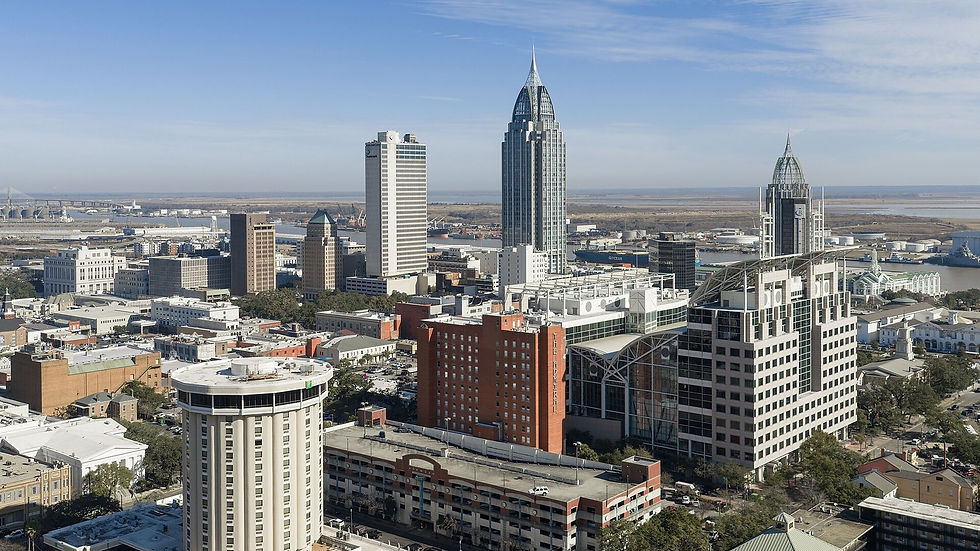
Mobile is a Gulf port city, and that fact shapes its coffee scene in a way that goes deeper than most citywide coffee lists ever acknowledge. Downtown Detonti Square sees genuine cruise adjacent and historic district tourist foot traffic, a real, recurring stream of people visiting this specific block for the first and possibly only time. A short distance away, Midtown's Dauphin Street corridor and the Old Shell Road area near Spring Hill College serve an entirely different kind of customer, people who live and work nearby, who already know exactly where they are going and why.
This is a localized look at what that split actually means for a coffee shop's content, and at why a single homepage trying to speak equally to both of these genuinely different audiences usually ends up serving neither one particularly well.
Two Real Geographies, Two Real Audiences
Detonti Square and downtown Mobile sit inside a tourist facing bubble shaped directly by the city's identity as a Gulf port, with cruise passengers making up a real share of the people walking those historic streets on any given day. Midtown and Old Shell Road sit outside that bubble entirely, drawing people whose relationship to the neighborhood is built on repetition, not novelty, a regular grabbing the same order before work, a Spring Hill College student stopping in between classes several times a week.
These are not subtly different versions of the same customer. They are genuinely different people with genuinely different relationships to the coffee shop in front of them, and that difference should shape what a shop's website actually says, not just where its pin drops on a map.
What a Downtown Tourist Actually Needs
Someone walking Detonti Square after stepping off a cruise ship is operating on a compressed, unfamiliar timeline. They likely have a few hours in this city, not a few years, and they are weighing this specific coffee stop against everything else they could be doing with that limited window. That means the content that actually helps them is practical and immediate: how far is this from where the historic district walking tour naturally passes, what are the hours right now, is there a clear, simple reason to choose this specific stop.
Nova Espresso's Detonti Square room is a real, live example of exactly this kind of location, sitting inside the historic district at 306 Saint Anthony Street, genuinely well positioned to answer that tourist's question, provided the content exists to answer it plainly and quickly rather than assuming familiarity that a first time visitor simply does not have.
What a Neighborhood Regular Actually Needs
A Midtown or Old Shell Road regular is operating from a completely different starting point. They already know the shop exists, already have a sense of what it offers, and are not deciding whether to make a special trip so much as confirming that today is a normal day, the hours are what they expect, and nothing has changed since their last visit. Carpe Diem's Old Shell Road location and Rooted and Grounded's Midtown room both serve exactly this kind of audience, people building a genuine, recurring relationship with a specific place rather than encountering it once.
Content built for this audience does not need to sell the neighborhood or explain why the stop is worth it. It needs to be accurate, current, and easy to confirm quickly, the practical opposite of a destination pitch aimed at someone deciding whether to visit at all.
Why One Homepage Cannot Do Both Jobs Well
A single homepage trying to speak to both of these audiences at once tends to end up in an uncomfortable middle ground, too generic to genuinely persuade a first time tourist that this specific stop is worth the detour, and too focused on introducing the business to actually serve a regular who has moved well past needing an introduction. The tourist skims past content written for someone who already knows the place. The regular skims past content written to convince a stranger, since they were already convinced years ago.
This is not a hypothetical risk. It is the practical, everyday cost of building one page to serve two genuinely different jobs, and it shows up across all three of Mobile's prime independents in slightly different ways, since each one sits in one of these two distinct geographic situations, tourist facing or resident facing, without necessarily having content built specifically around which one it actually is.
Writing Differently for Each, Without Losing Either
None of this requires a coffee shop to choose one audience over the other, particularly for a shop like Nova Espresso that genuinely does see both tourists and regulars walking through its Detonti Square door on any given day. It means recognizing that these are two separate content jobs, potentially two separate pages or sections, each written with a clear, specific reader in mind rather than one page trying to hedge its language enough to technically apply to both.
A page built for the Detonti Square tourist can lead with destination style framing, historic district, walking distance, why this specific stop is worth it. A page or section built for the neighborhood regular can lead with the practical confirmation they actually need, current hours, what has and has not changed. Both can exist on the same site, serving the same real business, without either one having to soften itself to accommodate the other reader's completely different starting point.
Why This Split Matters Even More for a Search Engine
There is a second, less obvious cost to blending these two audiences into one undifferentiated page, beyond simply serving human readers less well. A search engine trying to match a specific query, something like historic district coffee near the cruise terminal, or a much more local search like coffee shop open now near Old Shell Road, relies heavily on a page's actual content to determine relevance. A page that hedges its language to vaguely cover both a tourist and a resident often ends up specific enough for neither search, landing in a kind of undifferentiated middle that neither query strongly matches.
Separating this content clearly, one section or page speaking plainly to the historic district visitor, another speaking plainly to the neighborhood regular, gives a search engine two distinct, specific targets to match against two distinct, specific searches, rather than one blurred page trying and generally failing to answer both questions equally well at the same time.
A Port City's Numbers Behind the Split
Mobile's population sits at 185,097 people, according to the Census Bureau's 2023 estimate for the city itself, a real, mid sized Southern city rather than a tourist town living entirely off cruise traffic. That distinction matters for how this split should actually be understood. The tourist facing identity around Detonti Square is real and worth writing for directly, but it sits inside a genuinely lived in city with its own residential rhythms, not a seasonal beach town whose entire economy resets around a cruise schedule.
Downtown itself is not purely a tourist bubble either. Serda's Coffee Company has held a long running presence on Royal Street, close to Detonti Square's own historic footprint, serving a mix of downtown workers, longtime regulars, and visitors passing through the same blocks Nova Espresso occupies. That layering, a tourist and a regular sharing literally the same sidewalk in the historic core, is part of what makes this split more of a spectrum than a hard line right in the downtown core itself, even as it becomes a much cleaner divide once you move a few miles out toward Midtown or Old Shell Road.
Yellowhammer Coffee's seven location footprint across the wider Mobile market offers a useful third comparison point. A brand operating at that scale is, by necessity, writing for a genuinely wide range of neighborhood contexts at once, airport adjacent, hospital adjacent, suburban, and more, and doing that well requires exactly the kind of location specific content this piece is describing, just multiplied across seven very different addresses instead of the two or three most independents are working with.
Consistency Across Channels, Not Just Across Pages
The tourist versus regular split described here is not only a website content problem. It shows up just as clearly in how a business's information appears across a Google Business Profile, a map listing, and whatever a search engine's own AI generated summary decides to say about a business when someone asks it a direct question. A tourist relying on a phone while walking the historic district is often reading a map card or an AI generated answer rather than the shop's actual homepage, which means the practical facts, hours, address, a short reason to stop, need to be accurate and consistent everywhere a visitor might encounter them, not just on the page written specifically for that visitor.
A regular checking the same information is doing something slightly different but related, confirming that nothing has changed since their last visit, often through that exact same map listing or a quick search rather than a full visit to the website. Keeping the underlying business information, name, address, phone number, hours, consistent across every one of these channels matters as much for the regular's quick confirmation as it does for the tourist's first time decision, even though the two readers are using that same consistent information for genuinely different purposes.
This is where the content split and the technical consistency work together rather than competing with each other. A shop can write two clearly different pages or sections, one for the Detonti Square visitor and one for the Midtown or Old Shell Road regular, while still keeping the underlying business data, the schema markup, the Google Business Profile, the name, address, and phone number a search engine and an AI answer both rely on, exactly consistent underneath both of those different stories. Getting both layers right, distinct content for distinct readers, and consistent facts underneath all of it, is what actually closes the gap this piece has been describing.
A Pattern Worth Checking Against Your Own Shop
Any Mobile coffee shop owner reading this has a simple, useful test available right now. Read your own homepage as though you had never been to Mobile and had two hours before your ship left port. Then read it again as though you had lived three blocks away for ten years and were simply confirming the shop was still open today. If the same handful of sentences are supposed to satisfy both readers equally well, there is a real chance neither one is actually getting what they need, and a genuine opportunity sitting in the gap between those two readings.
That gap is not unique to Mobile, but Mobile's specific geography, a real tourist facing downtown sitting a short distance from genuinely distinct residential and campus adjacent pockets, makes the split unusually clean and unusually visible once someone actually looks for it. Few coffee markets offer this clear a test case, which makes Mobile a genuinely useful place to see the principle in action before applying it anywhere else.
It is worth adding one more layer to that self test. Increasingly, the reader checking a coffee shop's information before a visit is not a person scanning a page at all, but an AI answer engine summarizing that page on a person's behalf, whether a tourist asking a phone assistant what is near the historic district right now, or a regular asking the same kind of tool whether their usual spot is still open today. Those systems tend to lean on whichever content is clearest and most specific for the question actually being asked, which means a page that clearly separates the tourist answer from the regular answer is more likely to be pulled correctly into either kind of summary, while a page that blends both audiences into one hedged paragraph risks being summarized accurately for neither one.
Related Reading
More from this Hillcane city series, plus the pages on the site that sit next to the work.
What a Mobile Ministry Cafe Teaches About Building Real Community Online
What Shows Up When You Search for Coffee Shop Marketing Help in Mobile
Old Shell Road and Spring Hill: The Victorian House Serving Mobile's Coffee
Dauphin Street's Mobile Coffeehouse With a Different Kind of Mission
Yellowhammer's Seven Mobile Locations and What Scale Actually Buys a Coffee Brand
Mobile's Small Business Marketing Content Doesn't Know Coffee Shops Exist
Nearly 20 Years in a Mobile Victorian House: What Longevity Buys, and Doesn't, Online
Two Cities, One Site: What Mobile's Nova Espresso Gets Right About Building for Multiple Locations
A Genuine Mobile Institution Can Still Be Invisible to Google
Frequently Asked Questions
Why does Mobile's coffee scene split into tourist and regular audiences?
Mobile is a Gulf port city with a genuine cruise adjacent tourist presence concentrated around its historic downtown, particularly Detonti Square, while its residential and campus adjacent neighborhoods like Midtown and Old Shell Road serve people who live and work nearby.
What does a downtown tourist actually need from a coffee shop's website?
Practical, immediate information: how far the shop is from major walking routes, current hours, and a clear, simple reason to choose this specific stop over other nearby options.
What does a neighborhood regular need instead?
Accurate, easily confirmed information, like current hours and any changes, rather than content built to persuade a first time visitor, since a regular has already made the decision to visit long ago.
Which Mobile coffee shops serve a tourist facing audience?
Nova Espresso's Detonti Square location, inside Mobile's historic downtown, sees genuine tourist and cruise adjacent foot traffic as a real part of its daily customer base.
Which Mobile coffee shops serve more of a neighborhood regular audience?
Carpe Diem Coffee and Tea Company on Old Shell Road and Rooted and Grounded in Midtown both primarily serve residential and campus adjacent communities built around repeat, regular visits.
Why can't one homepage serve both audiences well?
A single page trying to speak to both ends up too generic to persuade a first time tourist and too introductory to efficiently serve a regular who already knows the shop, leaving both readers somewhat underserved.
Does a coffee shop need separate websites for tourists and regulars?
Not separate websites, but potentially separate pages or clearly distinct sections, each written with a specific reader in mind rather than one page hedging its language to technically apply to both.
Does Nova Espresso see both tourists and regulars?
Its Detonti Square location likely sees a genuine mix of both, given its historic district location, which makes clearly separated content for each audience particularly useful for that specific shop.
Are there specific passenger or visitor numbers behind this pattern?
This research does not include specific cruise passenger or visitor count figures. The pattern described here is based on Mobile's real geography and the genuinely different customer bases each area draws.
How can Hillcane help a coffee shop write for both kinds of customers?
Hillcane can help build distinct content, whether separate pages or clearly organized sections, that speaks directly to each specific audience a coffee shop actually serves. Reach out at hillcane.co/contact or call (256) 384-2449.
Work with Hillcane
A cruise passenger and a Midtown regular are looking at the same homepage and getting two different answers to two completely different questions.
If your Mobile coffee shop serves both visitors and regulars, reach Hillcane at hillcane.co/contact or call (256) 384-2449 to talk through content built for each.
Reach out at hillcane.co or (256) 384-2449.


Comments