Douglas Avenue Is Qualitative Demand, Not a District Population

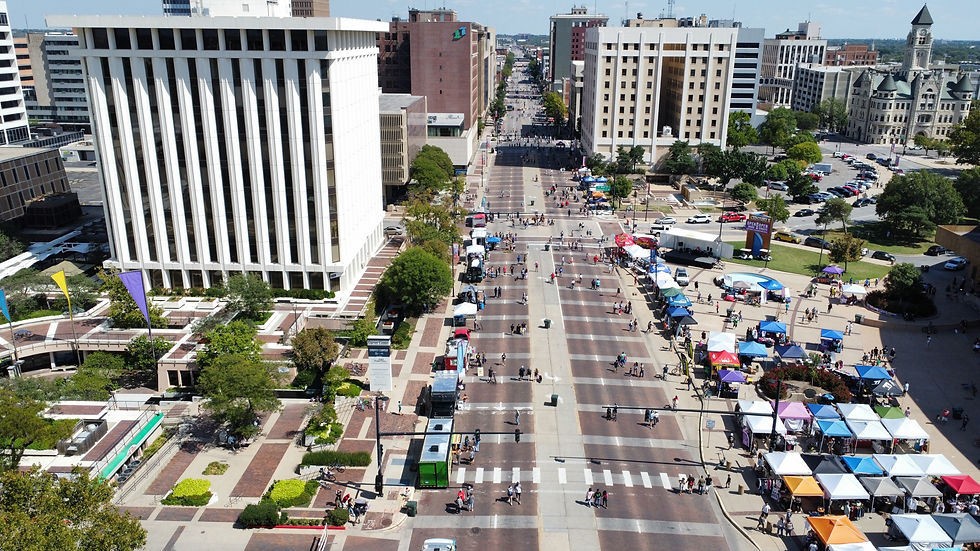
Photo: Popcorn700, CC BY-SA 4.0, via Wikimedia Commons
Douglas Avenue runs through several of Wichita's most walkable coffee pockets, and it is worth asking honestly what kind of demand actually exists there. Not a countable population figure, because no such number exists for a corridor like this, but a real mix of visitors passing through and locals who live nearby, both drawn to the same stretch of the city for different reasons.
I handle marketing strategy at Hillcane, and this is exactly the kind of question worth answering carefully rather than filling with an invented statistic. There is no census figure for the Douglas Design District specifically, no vote total that measures foot traffic along Delano or downtown Wichita. What exists instead is a real, describable pattern of who actually shows up, and why.
This distinction matters more than it might seem. A number, even an invented one, can feel more authoritative than an honest description, which is exactly why it is worth resisting the temptation to reach for one. The real, describable pattern along Douglas Avenue tells a more accurate and, ultimately, more useful story than any invented figure ever could.
Four Stops Along One Corridor
Douglas Avenue itself connects several real, named coffee stops across Wichita, each sitting at a different point along the corridor. Greater Grounds Coffee and Co operates at 922 East Douglas Avenue. Pennant Coffee sits at 930 W Douglas Ave, across the river in Delano. Reverie Coffee Roasters anchors 2202 E Douglas Ave, further east in Midtown. Local Roasters Coffee holds its own spot at 2828 E Douglas Ave, in the Douglas Design District.
Laid out together, those four addresses trace a real, walkable line through several of Wichita's distinct coffee pockets, downtown adjacent, Delano to the west, and Midtown further east. That is not a hypothetical corridor. It is a documented, real string of specific street addresses, each belonging to a specific coffee business operating today.
What that corridor does not have is a single, countable population figure attached to it. The Douglas Design District is a named visitor and commercial area, not a census tract with its own official population count, and treating it as though it had one would mean inventing a number that simply does not exist.
Visitor Plus Local, Not a Headcount
The real demand along Douglas Avenue, and through Delano and downtown Wichita more broadly, is best understood as a mix, visitor traffic layered on top of local, everyday foot traffic, rather than a single measurable population. Wichita's own tourism organization names the Historic Delano District, the Douglas Design District, Downtown Wichita, and Old Town District as distinct visitor destinations, each drawing people specifically because of what that district offers, not because they happen to live within its boundaries.
At the same time, these are not purely tourist zones either. Downtown Wichita is the civic core of the city, filled with workers who pass through daily regardless of visitor traffic. Delano and the Douglas Design District carry genuine residential and local commercial life alongside whatever visitor attention they draw. That combination, visitors layered onto a genuine local base, is the real texture of demand here, and it is a texture that holds true across every season of the year, not just during a particular festival or event weekend.
That kind of plain description, visitor plus local, is more honest and more useful than reaching for a district population figure that was never measured in the first place. A coffee shop deciding how to serve this corridor benefits far more from understanding that real mix than from a single, precise sounding number that does not exist anywhere in the record.
What the Ranking Does and Does Not Tell Us
It is worth being precise here too. Reverie Roasters, on East Douglas Avenue, was named among the top picks on USA Today's 10Best list of independent coffee shops for 2025, according to local television coverage. That recognition, reported by KAKE on November 10, 2025, says something real about reputation. It does not say anything about how many people live in or visit the Douglas Design District on a given day.
Conflating a national quality ranking with a local population or visitor count would be a mistake, mixing two entirely different kinds of measurement. One reflects a judgment about coffee quality made by a national publication. The other would require demographic or visitor tracking data that does not exist for this corridor, and none is offered here in its place.
Keeping those two things separate matters for anyone trying to understand Douglas Avenue accurately. A national 10Best ranking is a real, dated, citable fact about one specific business. It is not, and should not be treated as, a stand in for a population figure for the wider corridor.
What Actually Matters on a Busy Day
Given that real demand along Douglas Avenue is a mix of visitors and locals rather than a countable figure, the practical question becomes what helps a coffee shop serve that demand well. The honest answer has less to do with population statistics and more to do with basics done consistently right, accurate Google Business Profile hours and current, up to date photos chief among them.
A visitor discovering the Douglas Design District for the first time, or a longtime Delano local deciding where to stop for coffee that particular morning, both rely on the same practical information, is this place open right now, and does it look like the kind of place I want to walk into. Neither of those questions gets answered by a population figure. Both get answered directly by accurate hours and honest, current photos.
That is worth emphasizing precisely because it is unglamorous. It would be easier, and more dramatic sounding, to cite some impressive district population or visitor count. But the number that matters day to day, for a real customer standing on Douglas Avenue deciding where to walk next, is whether the hours listed online match the hours the shop is keeping.
The Corridor by the Clock
The practical side of this mixed demand shows up most clearly in hours. Along Douglas Avenue, Greater Grounds Coffee and Co at 922 East Douglas Avenue opens Monday through Saturday from 7 a.m. to 7 p.m. Pennant Coffee at 930 W Douglas Ave in Delano opens every day from 7 a.m. to 4 p.m. Reverie Coffee Roasters at 2202 E. Douglas Ave is listed by Visit Wichita as open weekdays from 7 a.m. to 6 p.m. and weekends from 8 a.m. to 6 p.m. Local Roasters Coffee at 2828 E Douglas Ave keeps retail hours of 10 to 6 on weekdays and 10 to 5 on Saturday.
Those schedules tell a visitor more about the corridor than any population figure could. A morning walker can start in Delano at 7 a.m. An afternoon visitor to the Douglas Design District has until early evening at the east end of the street. Someone looking for coffee after work has a 7 p.m. option near downtown. None of that needs a headcount to be useful.
It also shows why accurate hours matter so much on a street like this. Four schedules, four different closing times, and a customer who trusts the wrong one ends up at a locked door. The fix is not a statistic. It is making sure every listing, on a shop page, a tourism listing or a map profile, says the same thing the door does.
How Visitor and Local Demand Actually Interact
It helps to think through, concretely, how visitor and local demand overlap along a corridor like Douglas Avenue rather than treating them as two separate, unrelated groups. A visitor discovering the Douglas Design District for the first time is often relying on exactly the kind of local knowledge that a longtime Delano regular already carries, which shop opens earliest, which corner has the best foot traffic, which stretch of the street feels most worth a slow walk.
That overlap means a coffee shop serving this corridor well is, in effect, serving two audiences with one set of decisions. Accurate hours help a first time visitor trust that a shop is open when they arrive. The same accurate hours help a longtime local build the kind of reliable habit that turns an occasional stop into a daily one. Neither audience benefits from a shop treating the other as separate or secondary.
That is really the heart of what this mixed demand means in practice. It is not two different customer bases requiring two different strategies. It is one real, mixed audience, whose actual needs, knowing a shop is open and knowing roughly what to expect once they walk in, are the same needs regardless of whether that particular customer lives three blocks away or three states away.
Reading Demand Honestly
Put together, Douglas Avenue's real story is this. Four real, distinct coffee businesses, Greater Grounds, Pennant, Reverie, and Local Roasters, sit along or near this corridor, spread across downtown adjacent, Delano, and Midtown pockets. The corridor draws a genuine mix of visitor and local traffic, described honestly through district labels like the Douglas Design District and Historic Delano rather than an invented population count. And one business along that corridor, Reverie, has earned real national recognition, a fact worth knowing on its own terms rather than mistaken for a demographic statistic about the district it happens to sit in.
None of that requires an invented number to be interesting or useful. The corridor's real texture, four specific businesses, a genuine visitor and local mix, and one nationally recognized coffee shop among them, tells a complete, honest story without needing to reach for statistics that were never measured.
That honesty is exactly what makes this kind of account trustworthy to anyone reading it, whether a coffee shop owner trying to understand their own corridor or a visitor trying to plan a walk down Douglas Avenue for the first time.
What This Approach Avoids
Here is what this honest, descriptive approach avoids, because the alternative is a real and common temptation. A piece describing a busy commercial corridor could easily reach for an impressive sounding number, a district population, a visitor count, an economic impact figure, none of which exist for this corridor. That kind of invented precision might sound more authoritative, but it would not be true.
Avoiding that temptation matters because inaccurate statistics, once published, tend to get repeated. A single invented population figure for the Douglas Design District could easily get picked up and cited elsewhere, treated as fact simply because it appeared confidently stated somewhere first. Refusing to invent that number in the first place is a small, deliberate choice that protects against exactly that kind of accidental misinformation spreading further, whether through a future search result, an AI generated summary, or a well meaning repost.
The honest alternative, describing demand in plain words through real district labels, real addresses, and a real description of visitor and local overlap, takes a bit more explaining than a single number would. But it holds up to scrutiny in a way an invented figure never could, and that durability is worth the extra sentence or two it takes to explain.
Naming Every Stop Along the Corridor
It is worth naming the full picture of businesses along or near this corridor plainly, since the corridor's actual character comes through most clearly in the specific, real addresses that make it up rather than any single summary statement. Greater Grounds at 922 East Douglas, Pennant at 930 W Douglas in Delano, Reverie at 2202 E Douglas in Midtown, and Local Roasters at 2828 E Douglas in the Douglas Design District each represent a genuinely different stretch of the same general corridor.
Nameless Coffee Co, on the city's west side, and 11:11 Coquetry Maison, downtown on Emporia Avenue, round out the wider picture of Wichita coffee businesses beyond Douglas Avenue itself, a reminder that even a corridor as coffee dense as this one does not capture every part of the city's coffee scene on its own.
Naming each of these businesses specifically, rather than describing the corridor only in vague, general terms, is exactly what makes an account like this one useful. A reader gets real, actionable detail, actual addresses they could visit today, rather than a summary so general it could describe almost any commercial street in any city. That specificity, without the invented statistic, is the whole point of describing demand honestly.
Related Reading
More from this Hillcane city series, plus the pages on the site that sit next to the work.
Reverie Coffee Roasters Made the 10Best Independents List for 2025
Visit Wichita and 10Best Already Tour Wichita Coffee. Shop Pages Make It Last.
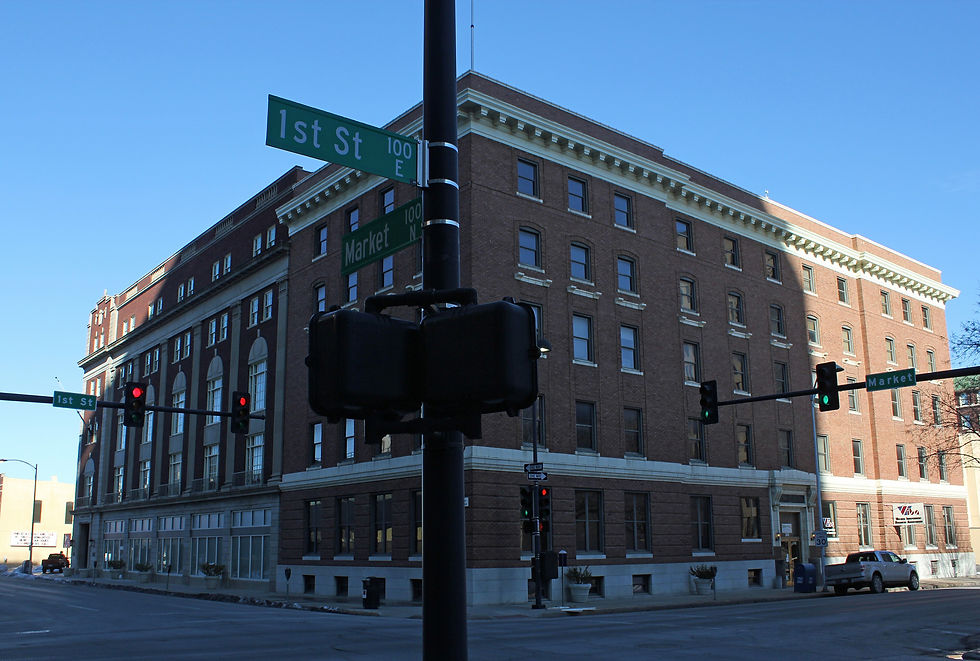
Wichita Coffee Is 1st and Market, Delano and East Douglas, Not Kansas City
The State of Specialty Coffee Visibility in North America (2026)
Google Business Profile for Coffee Shops: The Complete 2026 Checklist
Frequently Asked Questions
What kind of demand does the Douglas Design District create?
A mix of visitors and locals rather than a countable population. Visit Wichita treats the Douglas Design District, Historic Delano, Downtown Wichita and Old Town as separate visitor areas, and each carries residents, workers and visitors at once. Coffee businesses along the street, such as Greater Grounds at 922 East Douglas Avenue and Local Roasters Coffee at 2828 E Douglas Ave, serve that blended crowd every day.
Does this piece cite a population figure for Douglas Avenue?
No. The Douglas Design District, Historic Delano and the downtown visitor area are named districts, not Census tracts with their own official population counts, so no such figure exists to cite. Instead the piece describes demand through real district labels used by Visit Wichita and real addresses along the street, from 930 W Douglas Ave in Delano to 2828 E Douglas Ave in the design district.
Which coffee pockets share the Douglas Avenue traffic?
Three of Wichita's coffee pockets touch this story. Downtown centers on 1st and Market. Historic Delano sits across the Arkansas River along West Douglas Avenue, where Pennant Coffee is at 930 W Douglas Ave. Midtown runs along East Douglas toward College Hill, where Reverie Coffee Roasters is at 2202 E. Douglas Ave. Each pocket draws a different mix of locals and visitors.
What matters most for a coffee shop on a busy Douglas Avenue day?
Accurate hours and current photos on every listing, especially a Google Business Profile. Four Douglas Avenue coffee businesses keep four different schedules, from Pennant's daily 7 a.m. to 4 p.m. to Greater Grounds' 7 a.m. to 7 p.m. Monday through Saturday. A visitor who trusts an outdated listing ends up at a locked door, which no population figure can prevent.
Which coffee businesses sit along Douglas Avenue?
Four stand out along the street: Greater Grounds Coffee and Co at 922 East Douglas Avenue, Pennant Coffee at 930 W Douglas Ave in Historic Delano, Reverie Coffee Roasters at 2202 E. Douglas Ave in Midtown, and Local Roasters Coffee at 2828 E Douglas Ave in the Douglas Design District. Together those addresses trace a line from the west side of the river toward College Hill.
Does a national ranking say anything about district population?
No. KAKE reported on November 10, 2025 that Reverie Roasters, on East Douglas, was named among the top picks on USA Today's 10Best list of independent coffee shops. That is a dated recognition of one business at 2202 E. Douglas Ave. It is not a visitor count or a population figure for the Douglas Design District, and treating it as one would mix two different kinds of fact.
Is the Douglas Design District the same as downtown Wichita?
No. Visit Wichita names Historic Delano, the Douglas Design District, Downtown Wichita and Old Town as four separate visitor areas, each with its own identity. Downtown's coffee centers on 1st and Market. The design district sits further east along Douglas, where Local Roasters Coffee keeps its retail space at 2828 E Douglas Ave, open 10 to 6 on weekdays.
Where else in Wichita is there coffee off Douglas Avenue?
Plenty of the city's coffee sits elsewhere. Nameless Coffee Co is at 7130 West Maple Street on the west side, open weekdays from 7:00 to 4:00 and Saturday from 8:00 to 4:00. 11:11 Coquetry Maison is downtown at 105 South Emporia Avenue. Fairmount Coffee Co. sits at 3815 East 17th Street North, just south of Wichita State University.
Why avoid an invented population number for this corridor?
Because no such figure exists for a visitor and commercial area like the Douglas Design District, and an invented one tends to get repeated as fact by other sites and AI summaries. Real addresses, such as 922 East Douglas Avenue and 2202 E. Douglas Ave, and real district labels from Visit Wichita describe demand honestly and hold up when someone checks them.
How can a Douglas Avenue coffee shop act on its mix of visitor and local demand?
By keeping the basics right for a mixed crowd: the pocket named clearly, whether Historic Delano, the Douglas Design District or Midtown, the full street address, hours that match the door every day, and current photos. Visitors and locals rely on the same facts. Hillcane helps Wichita cafes get those basics right at hillcane.co/contact or (256) 384-2449.
Work with Hillcane
Douglas Avenue draws a real mix of visitors and locals across Wichita's coffee pockets, but there is no population figure for that demand, only an honest picture of who comes and why.
If your Wichita cafe wants its real, honest story told well online, reach Hillcane at hillcane.co/contact or call (256) 384-2449.


Comments