One Page Per Pocket: Wichita Cafes and Their Street Pages

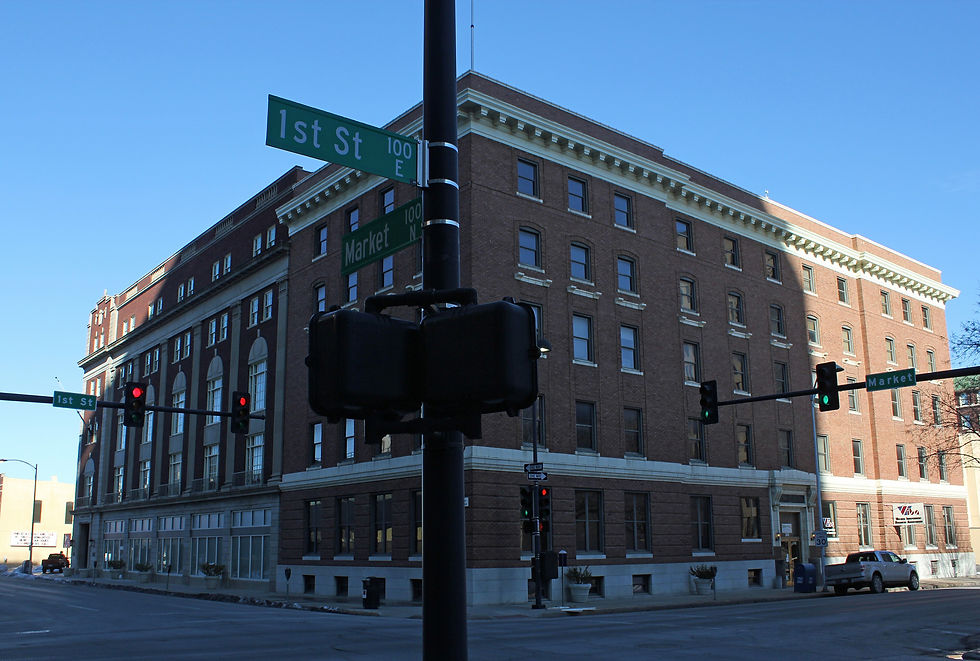
Photo: Jeffrey Beall, CC BY 3.0, via Wikimedia Commons
There is a simple idea worth closing this whole cluster with, and it applies to any coffee shop in any city, not just Wichita. A cafe page should carry its address, its hours, and structured data that tells a search engine, in a language it understands directly, exactly what kind of business it is and where it stands. In a city with three distinct coffee pockets like Wichita, that means each pocket rewards its own page, built specifically around the street it sits on.
I run marketing and SEO strategy at Hillcane, and this closing piece is meant as a plain, practical teaching moment rather than a story about any one shop. Wichita's downtown, Delano, and East Douglas pockets each deserve their own accurate page, and understanding why is worth walking through clearly.
This is also a fitting place to bring the whole cluster together. Every post before this one has described a real, specific piece of Wichita's coffee scene, an address, a story, a piece of press coverage. This final piece steps back to describe the underlying pattern connecting all of it, the foundational, unglamorous work that makes every other piece of visibility actually stick.
What Belongs on a Cafe Page
A good cafe page carries a handful of specific things, done well, rather than a long list of vague marketing language. It needs an address, stated plainly and consistently. It needs current hours, the actual hours the shop keeps, not a placeholder from whenever the site was first built. It needs a short, honest story about what is poured and what makes the shop worth a visit. And it needs structured data, the behind the scenes markup that tells a search engine, unambiguously, that this page describes a real coffee shop at a real address.
None of that is complicated in concept, but each piece matters more than it might seem. An address without current hours leaves a visitor unsure whether the shop is actually open right now. Hours without a real address leaves a visitor unsure where to go. And a page with both of those things but no structured data is still harder for a search engine to confidently identify as a real, physical coffee shop rather than just another page on the internet.
Each of these pieces reinforces the others too. A specific, honest story about what the shop pours is more trustworthy when it sits alongside a real, verifiable address, and current hours are more useful when a reader can trust the address next to them is accurate as well. None of the four pieces does its full job in isolation.
Put all four pieces together, address, hours, story, and structured data, and a cafe page becomes something a search engine can trust and confidently show to someone searching nearby, rather than something it has to guess about, no matter which pocket of the city that search starts in.
What CafeOrCoffeeShop Structured Data Actually Is
CafeOrCoffeeShop is a specific, standardized way of marking up a webpage so that a search engine understands, directly, that this page describes a coffee shop, not a blog post or a generic business page. It is written in a structured code format built for linked data, a small block embedded in a page that names the business type, its address, and its hours in a format search engines are specifically built to read and trust.
Think of it like a name tag written in a language machines understand natively, rather than making a search engine try to infer what a page is about just by reading its regular, human facing text. A page can say, in plain English, we are a coffee shop at this address, and a visitor reading it understands that immediately. Structured data says the same thing again, in a format built specifically so a search engine or an AI powered answer understands it with the same confidence.
That distinction matters more today than it used to, as AI powered search answers increasingly try to pull specific, structured facts, an address, a set of hours, directly out of a page rather than just linking to it. A page without that structured layer is asking a machine to guess. A page with it is simply telling the machine directly, in a format built specifically so nothing gets lost or misread along the way.
Why One Pocket, One Page
Wichita's coffee geography sorts into three real, distinct pockets, downtown at 1st and Market, Delano across the river along West Douglas, and Midtown along East Douglas near College Hill. Each of those pockets answers a genuinely different search. Someone typing coffee near downtown Wichita is asking a different question than someone typing coffee shop in Delano, even though both searches are, broadly speaking, about Wichita coffee.
A single, generic homepage trying to answer all three questions at once inevitably answers each one less precisely than a dedicated page built specifically around one address and one neighborhood could. A page built specifically for a 1st and Market address, naming that pocket by name, naming the actual street, answers the downtown search far more directly than a general homepage ever could.
This is exactly why one page per pocket matters as a general pattern, not just for any single Wichita cafe but for how a multi location or multi pocket coffee business should think about its own online presence generally. Each real, physical location deserves its own page, built around its own specific address and its own specific neighborhood, rather than asking one general page to speak for every location at once.
That principle holds even for a business with just one physical location, provided that location sits clearly inside one of Wichita's three pockets. Building that single page around its actual pocket, rather than describing itself only as a generic Wichita coffee shop, still gives it a sharper, more specific answer to whichever pocket specific search a customer eventually types.
The Practical Shape of a Good Page
In practice, a well built street level page for a Wichita cafe pocket would open by naming both the pocket and the street directly, downtown Wichita and 1st and Market, or Historic Delano and West Douglas Avenue, or Midtown and East Douglas near College Hill. That kind of specific, layered naming helps both a human reader and a search engine understand exactly where the page is describing, at more than one level of geography at once, from the whole city down to the exact block.
From there, the page needs the actual address stated plainly, current hours stated plainly and kept updated whenever they change, and a short, genuine account of what the shop pours and what makes it worth stopping into. None of that needs to be long or elaborate. It needs to be accurate, specific, and current, which matters far more than length or polish, no matter which of Wichita's pockets the page describes.
Underneath all of that sits the CafeOrCoffeeShop structured data, quietly doing its job in the background, confirming to any search engine or AI powered answer reading the page that everything stated above, the address, the hours, the business type, is exactly what it claims to be, for that specific pocket, at that specific address.
A Worked Example, in Plain Terms
It helps to walk through what this looks like for one pocket specifically, without naming or scoring any particular shop's current page. Imagine a downtown Wichita cafe page built around the 1st and Market pocket. It opens by naming the neighborhood plainly, downtown Wichita, 1st and Market, before ever getting to a menu or a story. It states the address clearly, in one consistent format, repeated the same way everywhere it appears on the page.
It lists current hours in a straightforward format, the actual days and times the shop is open, updated immediately whenever those hours change, rather than left as a placeholder from whenever the page was first built. It includes a short, genuine paragraph about what the shop pours and what makes a visit worthwhile, written in plain language rather than generic marketing phrases that could describe any coffee shop anywhere.
And underneath all of that, invisibly to a human reader but directly readable by a search engine, sits the structured data confirming everything the page just said in plain language, this is a coffee shop, here is its address, here are its hours. That is the complete shape of a good pocket specific cafe page, nothing more complicated than that, but every piece done accurately and kept current.
Closing the Loop
That is really the whole teaching point of this closing piece, and it applies across every coffee pocket in Wichita, downtown, Delano, and East Douglas alike. A cafe page built with a real address, real hours, an honest story, and proper structured data gives a search engine and any customer reading it exactly what they need, with nothing left to guess, whether they arrive from a search engine, an AI powered answer, or a friend's recommendation.
A city with three distinct coffee pockets, like Wichita, rewards that approach even more than a city with just one obvious coffee district would. Downtown, Delano, and East Douglas each answer a genuinely different search, and a cafe that builds a page specifically around its own pocket, rather than relying on one generic homepage to cover everything, gives itself the best possible shot at being found accurately by exactly the customer looking for it, in the exact pocket of the city they are standing in.
That is the kind of foundational, unglamorous work that makes everything else, press coverage, tourism directory listings, word of mouth, stick and last. If your Wichita coffee shop wants help building that kind of page, one for each pocket it belongs to, reach out to Hillcane at hillcane.co/contact or call (256) 384-2449.
The Pattern Beyond Wichita
None of this is unique to Wichita, even though it is worth teaching using Wichita's own three pockets as the clearest possible example. Any city with more than one distinct coffee neighborhood, downtown and a walkable secondary district, a campus area and a residential stretch, benefits from this same one pocket, one page approach. Wichita simply makes the pattern especially clear, because its three pockets, downtown at 1st and Market, Delano along West Douglas, and Midtown at East Douglas, are so distinct from one another.
A coffee shop owner reading this from outside Wichita entirely can apply the same basic logic to their own city. Identify the real, distinct neighborhoods or pockets that shape how customers search and move through a city, and build accordingly, one accurate, complete page per pocket, rather than one generic homepage trying to speak for every neighborhood a business touches at once.
That is really the lasting lesson of this whole cluster, distilled down to one closing idea. Accuracy, specificity, and structure, applied pocket by pocket, address by address, is what turns a good coffee shop into one that is also easy to find, correctly, by exactly the customer looking for it.
Related Reading
More from this Hillcane city series, plus the pages on the site that sit next to the work.
Douglas Avenue Is Qualitative Demand, Not a District Population
Reverie Coffee Roasters Made the 10Best Independents List for 2025
Visit Wichita and 10Best Already Tour Wichita Coffee. Shop Pages Make It Last.
Wichita Coffee Is 1st and Market, Delano and East Douglas, Not Kansas City
The State of Specialty Coffee Visibility in North America (2026)
Google Business Profile for Coffee Shops: The Complete 2026 Checklist
Frequently Asked Questions
What belongs on a cafe page?
Four things: a real address, current hours, a short honest story about what the shop serves and why it is worth a stop, and CafeOrCoffeeShop structured data. In Wichita, a city of 396,488 people per the 2023 American Community Survey, the address line should also name the pocket, whether downtown at 1st and Market, Historic Delano on West Douglas, or Midtown on East Douglas. Each piece makes the others more trustworthy, and none does its full job alone.
What is CafeOrCoffeeShop structured data?
It is a standardized block of linked data, usually JSON LD, embedded in a page to declare that the business is a coffee shop and to state its address and opening hours in a form search engines and AI answers read directly. It sits in the page code, out of sight of a human reader. As a plain example, 7 Brew's six Wichita stand pages each carry CafeOrCoffeeShop markup with a street address, so every stand is described to machines as its own shop.
Why does one page per pocket matter in Wichita?
Because downtown at 1st and Market, Historic Delano along West Douglas, and Midtown along East Douglas near College Hill each answer a different search. Someone typing coffee near downtown Wichita is asking something other than coffee shop in Delano. A page built around one pocket, naming its street and neighborhood, answers that search far more directly than one homepage spread across all three, in a city of 396,488 residents.
Where does Dutch Bros fit in a Wichita cafe page plan?
It sits outside it. Dutch Bros is a national drive thru chain with its own Kansas state location index, and this post is about pages for Wichita's independent cafes in three pockets: downtown at 1st and Market, Historic Delano along West Douglas, and Midtown along East Douglas. A chain's locator runs on its own national system, so the pocket page pattern described here is written for local cafes that have to build that page themselves.
Does structured data replace the need for real page content?
No. Structured data restates what the visible page already says, so it only helps when the address, hours, and story are written out plainly for human readers too. A Wichita page for a room on East Douglas, for instance, should show that street and its hours in normal text, then repeat them in CafeOrCoffeeShop markup underneath. The two layers work as a pair, and markup describing facts the page never shows gives readers nothing to trust.
What are Wichita's three coffee pockets referenced here?
Downtown Wichita at 1st and Market; Historic Delano, across the river from downtown along West Douglas Avenue; and Midtown along East Douglas Avenue near the College Hill edge of the city. Each pocket has its own walkable stretch of cafes and its own search phrasing, which is why these posts treat them as three pages rather than one. Visit Wichita's own coffee shops page covers the whole city in a single list.
Does this piece compare or score any individual Wichita cafe's current website?
No. The piece lays out a general, constructive pattern for what a good cafe page includes: address, hours, an honest story, and CafeOrCoffeeShop markup. It does not score, grade, or compare any Wichita shop's current site. The only concrete markup examples it leans on come from national chains, such as the six 7 Brew stand pages and the Dutch Bros Wichita city page listing four locations, which sit outside the independent cafe count.
Why does structured data matter more with AI powered search now?
Because AI answers now try to lift specific facts, an address or a set of hours, straight out of a page instead of just linking to it. CafeOrCoffeeShop markup hands those systems the address, hours, and business type in a fixed format, so nothing has to be inferred from prose. On September 15, 2026, a Google search for coffee shop Wichita KS already showed an AI Overview above the organic results, which is where that pull happens.
Work with Hillcane
A cafe page needs its address, its hours, and structured data that says so directly, and in a three pocket city like Wichita, each pocket deserves its own page.
If your Wichita coffee shop needs a real, accurate page for its pocket of the city, reach Hillcane at hillcane.co/contact or call (256) 384-2449.


Comments