A Downtown Cafe With the Best Reviews on the River, and a Website Google Can Barely Read in in The Shoals

Updated: 9 hours ago

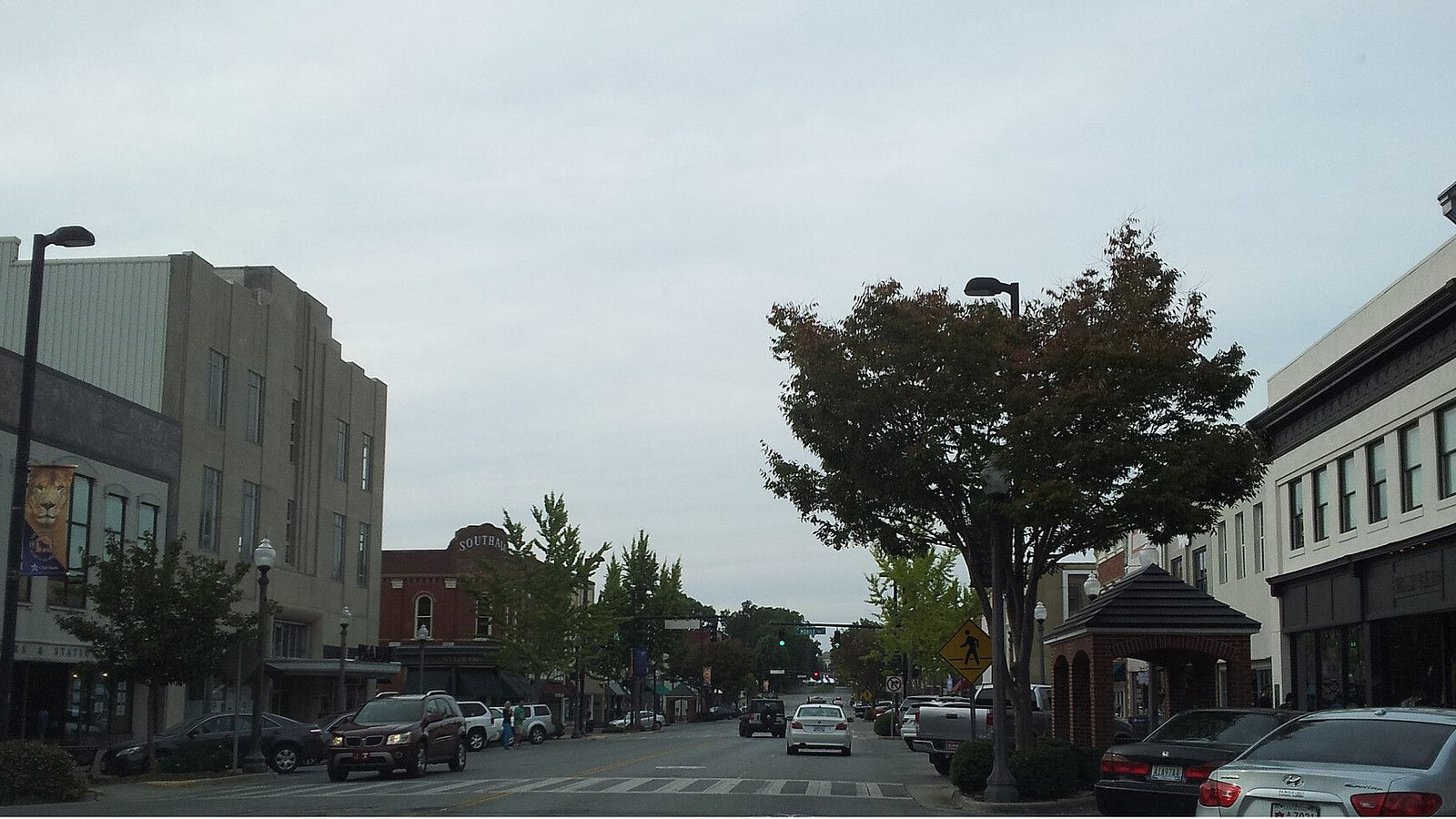
Walk down Seminary Street in downtown Florence on any given morning and you will find a coffee shop that has been part of the neighborhood's rhythm for more than twenty years. Rivertown Coffee Co. has sat here since October of 2004, owner operated by John Cartwright under a simple mission line, Coffee For Everyone. Regulars know exactly where it is, exactly what it feels like to walk in, and exactly why they keep coming back.
That kind of sustained, earned loyalty is rare, and it is worth appreciating on its own terms before getting into the harder part of this story. Two decades of continuous operation in one downtown storefront means this business has survived economic downturns, shifting downtown foot traffic patterns, and whatever competitive pressure has come and gone along the way. It has done all of that the hard way, one satisfied customer at a time.
What makes this case the standout finding across this entire Alabama research pass is not the coffee, and it is not the reputation. It is what sits underneath that reputation once you actually look at the website behind it, a gap so stark it becomes the clearest possible illustration of an argument that runs through this entire body of research.
A Reputation Earned Over Two Decades
Visit Florence's own tourism board names Rivertown directly on its public coffee guide, citing the shop's 2004 origin and its Coffee For All spirit by name. That is not a small thing. A city's own tourism board choosing to name a specific business, rather than describing coffee options generically, reflects a level of local recognition that most cafes never achieve, regardless of how good their coffee is.
CoffeePlume, a separate drinker facing aggregator with no connection to the city government, lists Rivertown first on its own Florence coffee guide. Two independent third party sources, one civic and one editorial, both point to the same shop as a defining name in this market. When two unrelated sources converge on the same conclusion without coordinating with each other, that convergence itself is a meaningful signal of genuine, widespread recognition rather than a single outlet's opinion.
A dated chapter capture recorded Rivertown holding the highest review count of any cafe in that pass, a genuinely striking number in a market this size. That figure comes from a single dated capture rather than a live recount, so it should be read as a snapshot of real, earned reputation rather than a current leaderboard position, but the underlying signal is clear either way: this is a beloved, well known local institution that has built something real over time.
What the Site Actually Shows
Here is the part that makes this case worth its own post. Rivertown's live website currently has an empty page title, meaning the small line of text that appears in a browser tab and in search results simply is not there. Anyone who has ever opened a dozen browser tabs at once knows exactly what that empty line looks like, a blank space where a business name should be, and it is exactly what greets a search engine trying to understand this page.
There is no meta description explaining what the business is, no short summary a search engine could pull into a results page to tell someone what they are about to click on. There is no structured data at all telling a search engine or an AI system whether this is a cafe, a roaster, or something else entirely, which means these systems are left working purely from unstructured page text, a far less reliable way to understand a business.
This is not a matter of the site looking dated or needing a redesign in the visual sense a customer might notice. It is a matter of the most basic technical signals a search engine relies on to understand and rank a business simply not being present on the page at all, a gap that has nothing to do with how the coffee tastes or how the space feels to sit in.
Reputation and Execution Are Two Different Things
This is the sharpest possible version of an argument that runs through this entire research project. Rivertown is not struggling to be discovered. Real customers already love this place, enough to leave hundreds of reviews and enough for the city's own tourism board to name it directly, unprompted, on its own public materials. The problem here is not discovery. It is pure technical execution sitting directly on top of the strongest reputation signal found anywhere in this market.
A search engine and an AI answer tool cannot read a customer's loyalty. They cannot sense the warmth of a regular's greeting or taste the coffee that keeps people coming back for twenty years. They can only read what is actually on the page, in a format built for machines to parse rather than for humans to feel. When that page has no title and no structured data, all of that hard earned goodwill has nowhere to land in the systems increasingly deciding who gets found first, whether that is a traditional search result or an AI generated answer summarizing local options.
Why This Matters Beyond One Shop
This case is worth naming specifically because it removes every excuse that usually complicates a story like this. This is not a new business still building a reputation, where a thin website might simply reflect a business still finding its footing. This is not a shop with mediocre coffee struggling to attract loyal customers, where a search engine correctly reflecting limited demand would at least make some intuitive sense.
This is twenty plus years of real, documented community love sitting on a technical foundation that a search engine can barely parse, which is exactly why it is the single most instructive example in this entire Alabama pass. It proves, cleanly and without any complicating variables, that reputation and search visibility are genuinely separate things, built through entirely different kinds of work.
What Closing This Gap Would Actually Look Like
None of this requires Rivertown to change anything about what it actually is. The twenty year history stays exactly as it is. The Seminary Street location stays exactly where it is. What changes is simply whether a search engine can read and understand the story that is already true, through a real page title, a real meta description, and real structured data identifying the business type.
For an owner in this exact position, reading this and recognizing a version of their own shop in it, the reassuring part is that this is a bounded, specific, and genuinely achievable fix. It does not require rebuilding a reputation that already exists. It requires giving that existing reputation a technical foundation strong enough to actually reach the people searching for it.
The Cost of Leaving This Gap Unaddressed
It is worth thinking through what this gap actually costs in practical terms, beyond the abstract idea of missed search visibility. Every day this page sits with an empty title, a new visitor searching for coffee near Seminary Street from their phone is more likely to land on a listicle, a directory page, or a tourism board description than on Rivertown's own words about itself. That visitor still might find the shop eventually, through a Maps listing or a review site, but they are learning about it secondhand rather than hearing directly from the business itself.
That secondhand discovery path also means the shop has less control over its own story. A tourism board blog post, however well intentioned, is not the same as a business describing itself in its own voice. The gap between those two things grows more important as AI answer tools increasingly summarize local options for searchers, since those tools rely even more heavily on a business's own structured, readable content than a traditional search result does.
What an AI Answer Tool Actually Sees
It helps to picture the specific moment this gap plays out. Someone asks an AI assistant for a good coffee shop near Seminary Street in downtown Florence, close to the river. That assistant looks for a page it can confidently cite, one with a clear title stating what the business is, a meta description summarizing it, and structured data confirming its category and address. Rivertown's page currently offers none of those three signals, which means the assistant either has to lean entirely on secondhand sources like the Visit Florence blog or CoffeePlume, or skip the shop's own site as a citation entirely.
That is a strange outcome for a business Visit Florence itself already named directly, unprompted, on its own public materials. The tourism board did the work of identifying Rivertown as worth naming, and CoffeePlume did the work of ranking it first on an entirely separate guide. The shop's own website simply has not yet given search engines and AI tools the same clear signal in a format they can parse and repeat with confidence, which leaves two genuine endorsements sitting unused where it matters most.
A Fix Measured in Hours, Not Months
It is worth being precise about scale here, since the size of the fix matters as much as the size of the problem. Writing a real page title naming the business, its street, and its city is a matter of a few words changed in a site's settings. Writing a meta description that accurately summarizes what Rivertown is and what makes it worth visiting is a short paragraph, not a redesign. Adding structured data identifying the business as a cafe with a real address is a well documented, standard piece of technical work most developers can complete in a single sitting.
None of that touches the twenty plus years of history, the Seminary Street location, or anything a regular walking in the door would notice differently. It is the rare kind of fix that is both genuinely high impact and genuinely low effort, which is exactly why this case deserves to be the headline example for this entire market rather than a footnote.
What This Case Teaches Every Other Shop in the Market
Rivertown's story is worth reading even for an owner running a much newer business, because it strips away every possible excuse. A newer cafe might reasonably assume a thin website reflects a still building reputation, or that a search engine correctly showing limited results simply matches limited real world demand. Neither excuse applies here. Twenty years of loyal customers, a direct naming by the city's own tourism board, and the highest review count recorded anywhere in this Alabama pass all exist at the same time as an empty page title.
That combination is exactly why this case belongs at the front of this entire cluster rather than buried somewhere in the middle. If a shop this loved, this established, and this well documented can still be nearly invisible to a search engine, then no cafe in Florence, Muscle Shoals, Tuscumbia, or Sheffield should assume their own strong local reputation is automatically translating into equivalent search and AI visibility, since the two are proven here, in this exact case, to be entirely separate things that require entirely separate work.
Related Reading
More from this Hillcane city series, plus the pages on the site that sit next to the work.
The Shoals Has a Music Tourism Story. Does Your Cafe Get to Be Part of It?
When One 7 Brew Isn't the Whole Story: Chain Coffee in The Shoals
Small Business Help at UNA's Doorstep (and the Coffee Sized Gap in It) in The Shoals
Your Google Business Profile Should Work As Hard As Your Regulars Do in The Shoals
Why Isn't My Shoals Coffee Shop Showing Up for Its Own Name?
Four Cities, One Coffee Scene: The Search Problem Nobody Talks About in The Shoals
Reviews Prove You're Loved. They Don't Prove You Exist to Google in The Shoals
What Shows Up When You Search Coffee Shop Marketing in The Shoals
Frequently Asked Questions
How long has Rivertown Coffee Co. been open?
Rivertown has operated on Seminary Street in downtown Florence continuously since October of 2004, owner operated by John Cartwright under the mission line Coffee For Everyone. That is more than two decades in one storefront, making it one of the longest running independent cafes documented anywhere in this Alabama research project, having survived multiple economic cycles and shifts in downtown foot traffic along the way.
Does Rivertown have a strong reputation?
Yes. Visit Florence's own tourism board names Rivertown directly on its public coffee guide, citing its 2004 origin, and a separate independent aggregator, CoffeePlume, lists it first on its own Florence coffee guide. A dated chapter capture also recorded Rivertown holding the highest review count of any cafe in that Alabama research pass, reflecting genuine, widely recognized local loyalty built over two decades.
What is actually wrong with Rivertown's website?
As of this research pass, the live site has an empty page title, meaning the text that should appear in a browser tab and search results is simply blank, along with no meta description and no structured data identifying the business type. That leaves a search engine or an AI tool working from raw, unstructured page text alone, regardless of how strong the underlying two decade reputation actually is.
Is this a design problem or a technical problem?
It is a technical problem specifically, not a visual one. The missing title tag, missing meta description, and absent structured data are foundational signals search engines and AI tools rely on to categorize a business, entirely separate from how the site looks to a human visitor browsing it on a laptop or phone, which is why fixing it does not require any redesign at all.
Why is this case considered the standout finding in this research pass?
Because it combines the strongest documented reputation signal found anywhere in this Alabama market, a highest review count capture plus direct naming by Visit Florence's own tourism board, with some of the weakest basic technical execution, an empty page title and no structured data. That combination makes the gap between real world love and search visibility unusually stark and easy to see without complicating variables.
Does a strong Google Business Profile make up for a weak website?
A strong profile and a high review count, like the highest count recorded in this Alabama pass, are valuable on their own and worth maintaining carefully, but they do not replace what a well built website with a proper title tag and structured data adds, particularly for how AI answer tools interpret and describe a business like Rivertown in more specific detail than a Maps listing alone provides.
Is this an isolated case or a broader pattern?
Rivertown is the sharpest single example in this Shoals market, but the same pattern of missing page titles, missing structured data, and thin blog sections shows up across the other audited cafes in Florence, Muscle Shoals, Tuscumbia, and Sheffield as well, suggesting a shared, market wide technical gap rather than one Seminary Street shop's individual oversight.
What would fixing this actually require?
Adding a real page title naming Rivertown, its Seminary Street address, and its city, a meta description summarizing the business, and correct structured data identifying it as a cafe would meaningfully close the gap between the site's current empty state and what search engines and AI tools need to understand and represent a twenty year old business accurately.
Does a review count from a past capture still apply today?
The specific highest review count figure recorded for Rivertown reflects a dated chapter capture from this research pass rather than a live, continuously updated recount, so it should be read as documented evidence of a real, earned reputation trend built since October of 2004 rather than a current, minute to minute leaderboard position on any single platform.
How can Hillcane help a cafe in this exact situation?
Hillcane can build the missing technical foundation, a real page title, meta description, and structured data, that lets an already strong reputation like Rivertown's twenty year Seminary Street history actually show up where search engines and AI tools are looking, without changing anything about what makes the business genuinely worth visiting. Reach out at hillcane.co/contact or call (256) 384-2449.
Work with Hillcane
One Florence cafe has the strongest reviews in this entire Alabama research pass. Its own website has no title tag at all.
If your coffee shop has real reputation but a website search engines cannot read, reach Hillcane at hillcane.co/contact or call (256) 384-2449.
Reach out at hillcane.co or (256) 384-2449.


Comments