There's a Downtown Renaissance Story About Dalton. It's Not About Coffee Shops, But It Should Be.


There is a genuine, positive story circulating about downtown Dalton right now: a renaissance of sorts, small businesses opening, entrepreneurs investing in the same blocks that have anchored the city's downtown for decades. That story has been covered, in real, verifiable terms, by a trade publication tied to Dalton's carpet and flooring industry, which touches on the community role gathering spots play in that renewal.
It is worth being clear about what that coverage actually is, because it is easy to conflate general positive press with something more specific. This is industry coverage of a city wide trend, written by and for a carpet and flooring readership, not a feature built around any single coffee shop, and not marketing guidance for a cafe owner trying to figure out how to be found online. Those are two very different kinds of writing, even when they touch on some of the same subject matter.
This post is about closing that gap honestly. The renaissance coverage is real and worth taking seriously as a sign of momentum. But the coffee shops that are actually part of that renaissance have not yet told their own version of the story, on their own sites, in their own words, and that is the piece still missing.
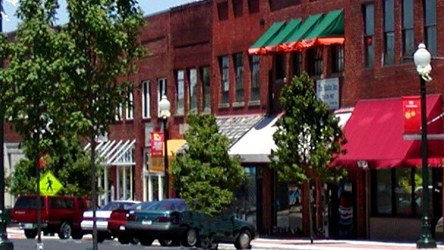
Downtown Dalton's coffee door, in this research, is The Lofi Coffee Bar at 336 South Hamilton Street, opened 2024. The civic coffee listing lives at Visit Dalton's dining directory. The Daily Citizen and CNHI have written food pieces on other shops in town. The renaissance writeup that the brief points to sits in carpet industry trade press, which is a very Dalton way for good news to travel. Gathering spots get a mention. Cafe owners do not get a playbook. That mismatch is the post.
What the Renaissance Coverage Actually Says
The coverage in question comes from a publication connected to Dalton's carpet and flooring industry, the strongest and most established piece of local trade media the city has. That a carpet industry outlet is the one covering a broader downtown small business renaissance says something about how deeply that industry runs through Dalton's institutions, its press included.
The substance of the coverage is genuinely positive: it describes real entrepreneurial energy taking hold downtown, and it touches, at least in passing, on the role local gathering spots play in that renewal. Coffee shops fall naturally into that category, even when the coverage was not written with any single cafe in mind.
That is worth taking seriously as a signal. When a trade publication with no obvious reason to cover downtown small business trends decides to do so anyway, it usually means the trend is real enough to be worth writing about, not manufactured for a press release.
A city of about 34,402 people, south of Chattanooga, does not get a constant lifestyle beat on every new espresso machine. When coverage does arrive, it arrives through the institutions the city already has, flooring trade media, the Daily Citizen, a tourism directory. Those are legitimate publishers. They are not a substitute for a shop site that says: we opened on South Hamilton in 2024, this is what the block felt like, this is what downtown Dalton asked of a cafe.
Why Industry Coverage Is Not the Same as Marketing Guidance
It would be easy for a Dalton coffee shop owner to see this coverage and assume it does some of the marketing work for them. It does not, and understanding why matters. A trade publication covering a city wide small business trend is writing for its own carpet and flooring industry readership, about a general economic story, not for a search engine trying to answer a specific question about where to find coffee downtown.
That distinction has real, practical consequences. The coverage does not include the kind of specific, structured, locally detailed content, a business's address, hours, category, or answers to the exact questions a customer might ask, that helps a search engine or an AI tool actually surface a specific coffee shop. It was never built to do that job, and it should not be expected to.
General renaissance coverage and specific local business marketing content can absolutely coexist and reinforce each other. Right now in Dalton, only the first one exists in any real depth.
Industry press will not add LocalBusiness markup to your domain. It will not create a Hamilton Street URL. It will not fix a /blog path that returns a fake 200. It will not explain your hours to an AI answer. Expecting a carpet trade feature to do cafe SEO is how an owner stays politely proud and quietly unfindable. Take the pride. Still write the page.
The Actual Coffee Shops Are the Ones Missing From Their Own Story
Here is the real gap this coverage leaves open: the individual coffee shops that are presumably part of this downtown renaissance, businesses like The Lofi Coffee Bar, which opened downtown on South Hamilton Street in 2024, have not yet published their own detailed version of what that renaissance looks like from the inside, on their own websites, in their own words.
That is a missed opportunity, not because the trade coverage did anything wrong, but because a general industry feature can only ever describe a trend from the outside. It cannot capture what it actually felt like to open a coffee shop downtown in the middle of that renewal, what specific changes a shop has seen on its own block, what role the shop itself sees itself playing in that larger civic story.
Only the shop itself can tell that version of the story, and telling it, in detail, on the shop's own site, is exactly the kind of content that helps both search engines and actual customers understand not just that a downtown renaissance is happening, but that this specific coffee shop is part of it.
Lofi is the downtown example because the address matches the renaissance geography. Cowboy at Dalton Village and Common Ground on South Tibbs are part of the wider city story, and they belong in a full coffee map, but they are not downtown storefronts. If the renaissance is a downtown claim, the downtown cafe has to be the one that publishes the inside version. Right now the inside version is still mostly missing.
Why This Distinction Matters for Search Visibility
A search engine or an AI tool answering a question like what's new downtown in Dalton or coffee shops in downtown Dalton Georgia is looking for specific, current, locally grounded content. A general trade industry feature about small business momentum, however genuine, is not built to answer that kind of specific query directly, because it was not written from any one business's point of view.
A coffee shop's own page, describing its own place in that same downtown renewal, its own opening story, its own block, its own specific role, is exactly the kind of content built to answer that query well. It has the local specificity the trade coverage lacks and the direct business relevance a general industry feature was never trying to provide.
This is not a criticism of the existing coverage. It is simply a reminder that general positive press about a place and specific, searchable content about a business are two different tools, and a coffee shop needs the second one regardless of how much of the first one exists.
Search queries like coffee shops in downtown Dalton Georgia want a noun and a street. A trend piece about entrepreneurs wants a mood. Mood does not rank a menu. A page titled around South Hamilton, with 336 on it, with 2024 on it, with downtown Dalton in the first paragraph, is built for the query. The trade feature is built for a flooring reader who likes the town. Serve both audiences. Do not confuse them.
What It Would Look Like for a Cafe to Tell Its Own Version
A coffee shop telling its own downtown renaissance story does not need to be complicated or self congratulatory. It can be as straightforward as a page or a post describing when the shop opened, what downtown Dalton looked like at that time, what has changed on that block since, and what the shop's own role in the neighborhood has been, written honestly and specifically rather than as generic boosterism.
That kind of content does double duty. It gives a human reader a genuine, grounded sense of the shop's place in the city, the exact kind of local color that makes a business feel real rather than templated. And it gives a search engine or an AI tool the specific, structured local content it needs to connect a real query, like a search for what's happening in downtown Dalton, back to a specific, findable business.
None of Dalton's three researched independent cafes has published this kind of content yet, which means the opportunity is still completely open for whichever one gets there first.
What the page can sound like: we opened in 2024 on South Hamilton. Downtown was already talking about new businesses. Here is the room, the game lounge, the live music, the delivery option, the nearby towns we actually serve. Here is what has changed on the block since the door opened. No invented awards. No ranking. Just the shop as a witness to its own street. That is the renaissance told from inside.
Why Waiting for Someone Else to Tell the Story Does Not Work
It might be tempting for a coffee shop owner to assume that if the downtown renaissance is real and getting covered, their own visibility will improve naturally as the general story gains more attention. That assumption does not hold up. General coverage of a trend lifts the visibility of the trend itself, not of any individual business within it, unless that business has also published something specific enough to be found on its own.
This is the same pattern that shows up across a lot of small business marketing gaps: real, positive underlying momentum exists, but nobody has translated it into content that a search engine or an AI tool can actually connect to a specific, searchable business. The momentum and the visibility are not the same thing, and one does not automatically produce the other.
A coffee shop that wants to benefit from the downtown renaissance story has to do the work of connecting itself to it explicitly, in its own words, rather than assuming the connection will be made for it.
Waiting for a second trade feature is not a strategy. Directories will keep listing. Food writers will keep reviewing plates. None of them will build CafeOrCoffeeShop schema on theloficoffeebar.com or a journal that is a real journal. Those tasks only happen on the shop's own domain. The renaissance is the weather. The website is still the building.
Turning General Momentum Into a Specific, Findable Story
The downtown Dalton renaissance is real, and it is genuinely good news for any coffee shop operating in that part of the city. But good news covered by industry press about a city wide trend and a specific, searchable story about one coffee shop's actual place in that trend are two different things, and only the shop itself can produce the second one.
This is the exact kind of work Hillcane specializes in: taking a real, true, locally grounded story, one a business already has every right to tell, and building it into content that search engines and AI tools can actually find and use. If your Dalton coffee shop is part of this renaissance and has not told its own version of that story yet, reach out at hillcane.co/contact or call (256) 384-2449.
Hillcane's offer here is not to ghostwrite a press release for the carpet industry. It is to help a downtown cafe take a true civic moment and turn it into pages a search engine can file under Dalton, Georgia, not under generic small business optimism. hillcane.co/contact or (256) 384-2449 if that is the page you have not written yet.
Related Reading
More from this Hillcane city series, plus the pages on the site that sit next to the work.
What a Dalton Coffee Shop With Beer Teaches About Being a Third Place
Dalton's Coffee Scene Is Denser Than You'd Expect From the Carpet Capital of the World
What Shows Up When You Search for Coffee Shop Marketing Help in Dalton
One Dalton Cafe Is Already Ahead on the Technical Basics. Here's What That Actually Means.
What It Means to Sell Coffee in Dalton, the Carpet Capital of the World
7 Brew and Starbucks Are Both in Dalton. Here's the Independents' Actual Advantage.
Frequently Asked Questions
Has there been positive press coverage of downtown Dalton's small business scene?
Yes. A trade publication connected to Dalton's carpet and flooring industry has covered a broader downtown entrepreneur renaissance, touching on the community role of local gathering spots, reflecting genuine momentum in the city's small business landscape.
Is this downtown renaissance coverage specifically about coffee shops?
No. It is industry coverage of a city wide small business trend, written from a carpet and flooring trade perspective, not a feature built around any single coffee shop or written as marketing guidance for a cafe owner.
Why doesn't general positive press automatically help a specific coffee shop get found online?
Search engines and AI tools need specific, locally detailed content connected directly to a business to surface it for relevant searches. A general trend story, even a genuinely positive one, is not built to answer a specific query about one particular coffee shop.
Which Dalton coffee shops are part of the downtown renaissance?
The Lofi Coffee Bar, which opened downtown on South Hamilton Street in 2024, is the most directly relevant example, situated in the same downtown area the renaissance coverage describes, though it has not yet published its own detailed version of that story.
What should a Dalton coffee shop do to benefit from this renaissance story?
Publish its own specific, honest account of its place in the downtown renewal, its opening story, its block, the changes it has seen, in a form detailed enough for search engines and AI tools to connect a relevant local search directly to that business.
Does general industry press coverage count as marketing for a coffee shop?
Not in a direct, searchable sense. It provides valuable context and a sign of genuine momentum, but it does not substitute for a business publishing its own specific, locally grounded content connected to that broader story.
Why does the coverage of Dalton's renaissance come from a carpet industry publication?
Dalton's identity as the Carpet Capital of the World means its strongest and most established local trade media presence comes from the carpet and flooring industry, which is why even a broader downtown small business story ended up covered from that angle.
What happens if a coffee shop just waits for its visibility to improve as the renaissance gets more attention?
General coverage of a trend increases visibility for the trend itself, not for individual businesses within it, unless those businesses also publish content specific enough to be found on their own. Waiting alone does not close that gap.
Is this renaissance story a one time event or an ongoing trend?
The trade coverage describes ongoing entrepreneurial momentum in downtown Dalton, suggesting a continuing trend rather than a single isolated event, though the specific pace and scope of that trend beyond what has been reported is not detailed further here.
How can a coffee shop turn general downtown momentum into specific search visibility?
By publishing its own detailed, honest content connecting itself directly to that momentum, its opening, its neighborhood, its specific role, rather than relying on general industry coverage to do that connecting work on its behalf.
Work with Hillcane
Downtown Dalton has a real small business renaissance story getting covered right now, and almost none of its coffee shops have told their own version of it yet.
If your cafe is part of that renewal and has not told its own story online, reach out at hillcane.co/contact or call (256) 384-2449.
Reach out at hillcane.co or (256) 384-2449.

Comments