Coffee After the James River Walk: What Richmond's Cafes Are Actually Competing For

Updated: 10 hours ago

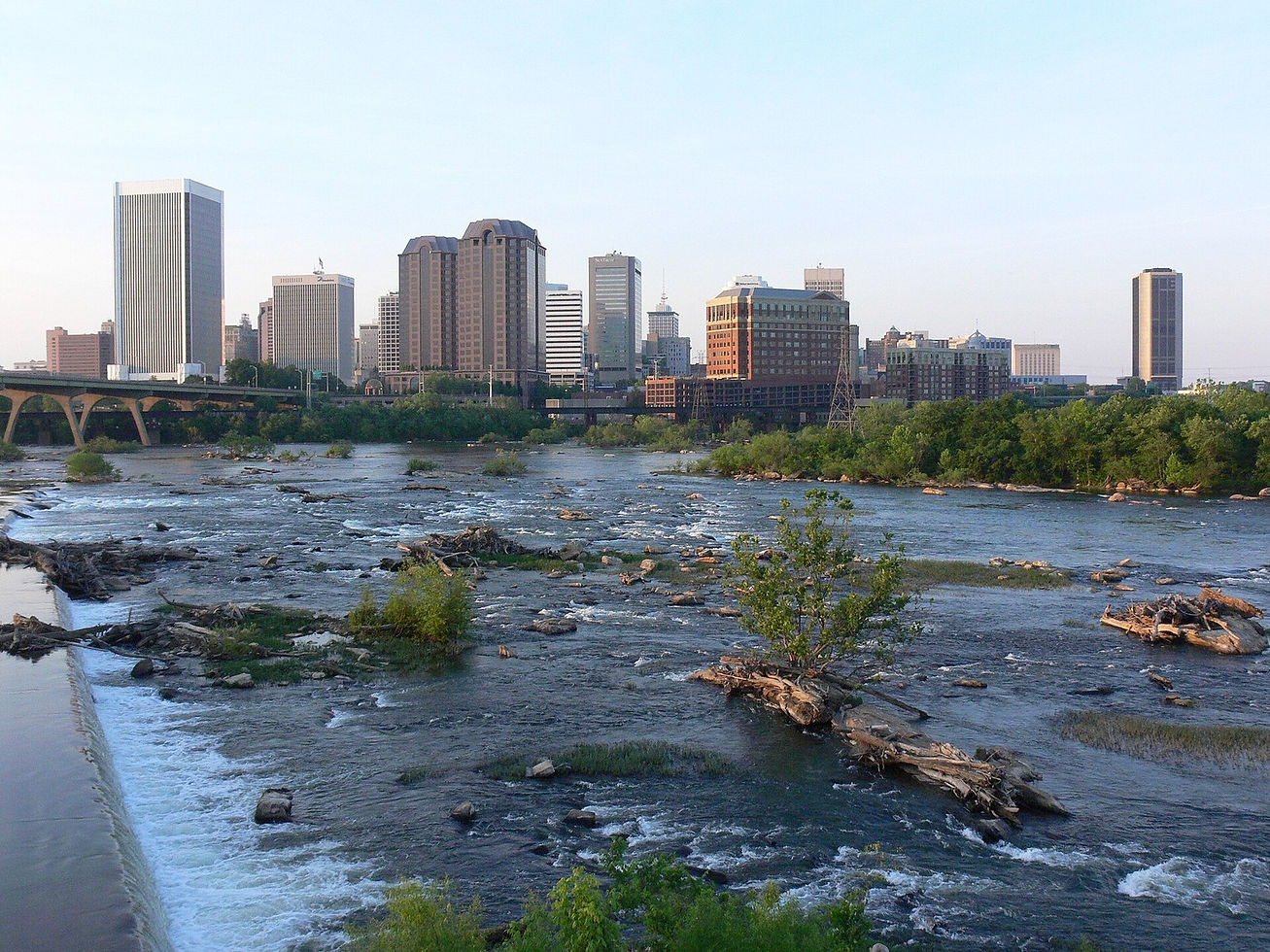
Richmond's outdoor culture, the James River Park System, the walkable Fan District, and Scott's Addition's brewery corridor, shapes coffee search behavior in a way that is easy to overlook. This is a walk and then coffee city as much as it is a campus lunch city or a tourist listicle city.
The city proper holds 227,595 people, not a metro of river towns added together, and that number still leaves room for a river that cuts through daily life rather than sitting off to one side as scenery. People walk the James, they bike the banks, they cross into the Fan, they end up in Scott's Addition for a pint, and then they want coffee. The order of that day is the point. Coffee here often arrives after the body has already been outside.
That rhythm is different from a campus town where the lunch hour is the whole plot, and different again from a tourist city where the listicle is the whole plot. Richmond has a campus, and it has visitors, and it has listicles. It also has a river people actually use. A cafe competing only for the lunch search is competing for one slice of a day that has several.
This post stays with that texture. It does not recap other cluster posts' shop scorecards or origin stories. It does not invent a count of walkers who become latte drinkers. It asks a simpler question: when Richmond people search for coffee, what kind of day are they actually in, and do any cafe homepages bother to speak to that day.
A River and Trail City
The James River Park System gives Richmond a real, active outdoor culture, trails and river access that draw people out before they ever think about where to grab coffee afterward. That rhythm, activity first, coffee after, shapes a different kind of search than a straightforward campus lunch break or a tourist checking a guidebook.
The park system is not a slogan. It is water, rocks, bridges, and miles of public land inside the city, used on weekdays and weekends by people who live here. Belle Isle, the banks, the paths that follow the water: those are geography. They are not a keyword a cafe owns. No shop in this research has a verified hold on a query like coffee after Belle Isle, and this post will not pretend one does. The honest version is smaller and more useful. People finish a walk. They are hot, or cold, or hungry, or simply done. Then they search.
What they search for in that moment is not a roasting manifesto. It is a place that is open, close enough, and willing to let a slightly tired body sit down. Hours matter. A room that can handle muddy shoes or a bike helmet in the corner matters. A page that even mentions the river as a neighbor would matter, if one existed. Most of what a walker finds instead is a media guide to the best coffee in Richmond VA, written for a different mood: the visitor collecting rooms, not the person who just came off the water.
It is tempting, from a marketing desk, to treat the river as a market. That is the wrong shape. There is no honest number in this research for how many trail users become coffee customers, and inventing one would be dressing a guess in a spreadsheet. The useful fact is qualitative. Richmond's outdoor life is real, it is local, and it produces a search that happens after movement rather than instead of it. A cafe that only describes itself as a lunch stop is describing a different city.
The river also keeps the city from collapsing into a single commercial strip in the mind of a searcher. Downtown, the Fan, Scott's Addition, the Museum District, Shockoe Bottom: they do not sit on one sidewalk. A walker can finish near one of them and not the others. That is why neighborhood texture belongs on a cafe's own site. A generic Richmond coffee line does not tell a tired person whether the room is actually on their way home from the water.
The Fan District's Own Pace
The Fan District carries its own walkable, residential character, a neighborhood where coffee fits into a slower daily rhythm rather than a single rushed stop. That texture is part of what makes Richmond's coffee search behavior different from a city built primarily around one dominant commercial corridor.
The Fan is streets you can walk without a plan. Porches, brick, a grid that invites a loop rather than a destination sprint. Coffee in that kind of neighborhood is often a second or third errand, not the reason someone left the house. It sits next to a walk, a museum visit a little farther over, a student moving between the Fan and VCU. The search that comes out of that day is closer to coffee near me after I am already out than it is to find the one famous shop and go there.
A cafe that wants to be part of that pace has to sound like it knows the pace. Not with filler about a vibrant scene. With ordinary specifics: that the room is a place to sit after walking, that the hours match a Saturday morning, that the neighborhood is the Fan and not a vague downtown. Those sentences belong on a stable page. They do not belong only in a caption that will be replaced tomorrow.
The Fan also sits close enough to campus and to the museum district that the same walker, on a different day, is a different kind of searcher. That overlap is easy to flatten into one Richmond customer. It is more honest to keep the textures separate. A student between classes is not the same person as a neighbor on a long loop, even if both end up with a cup. A homepage that speaks only to one of them leaves the other to Maps and to whoever wrote this week's list.
None of this requires a cafe to become a walking club. It requires the site to admit the neighborhood has a pace, and that coffee here is often what happens in the middle of a day that started outside. That is a real editorial job. It is also one the current audited sites have not taken up. The Fan's texture lives in the streets. It does not yet live, in any dedicated way, on the shops' own URLs.
Scott's Addition's Brewery Corridor
Scott's Addition adds yet another layer, a warehouse district turned brewery and coffee corridor where a coffee stop might come before or after visiting one of the neighborhood's breweries, a genuinely different context than either the riverfront or the Fan.
The neighborhood used to be industrial. It still looks like it. Brick, loading docks, streets that were not drawn for strolling, now filled with people who came for beer and stayed for the afternoon. Coffee in that setting is not a quiet residential ritual. It is a start, a reset, or a way to keep the day going after a pint. The search that comes out of it has a different clock. Late morning. Late afternoon. Sometimes later than a museum cafe would expect.
Afterglow Coffee Cooperative sits at 1719 Summit Ave in Scott's Addition as Richmond's first worker owned roastery and cafe, a real civic fact and a positive one, with full local business structured data on its site. That is worth naming as presence, not as a score. It is also not the whole neighborhood, and this post is not the place to retell a cooperative's bylaws or another shop's origin. The corridor is the point. Two real roasters share the district with a brewery row, and the people moving through that district are not searching the way a Fan walker searches, or the way a river walker searches.
A page built for Scott's Addition would say so. It would mention the warehouses, the walk to the breweries, the kind of stop the room is. None of the audited Richmond sites currently keeps a unique neighborhood URL of that kind. The corridor's story, like the river's, gets told by outside guides if it gets told in search at all. RICtoday, Axios, Sprudge, My Coffee Explorer: those are the names that currently answer best coffee in Richmond VA. Cafe homepages do not.
Leaving that story on Instagram or on a beer blog is a choice with a cost. A searcher who is already in Scott's Addition, already on foot, already deciding between a second stop and a ride home, is exactly the person a neighborhood page could catch. Without it, the profile and the listicle split the job, and the cafe's own site stays a bag shop for people who already know the name.
What This Means for Search
Search for the best coffee in Richmond VA and the results are still fought over by media guides and city publications, not by any cafe's own homepage. That pattern holds true across this river and trail driven search behavior just as it does everywhere else in this research. A city with this much real outdoor texture deserves cafes whose own websites reflect that texture directly, rather than leaving the story to outside guides.
The missing pages are not mysterious. A James River afternoon page. A Fan walking page. A Scott's Addition brewery corridor page. Written in ordinary language, tied to a real address, kept at a URL that does not change when the latest caption does. Those pages would give a search engine something specific to attach to a specific kind of day. Right now the engine has listicles, and it has homepages that could be almost any city's homepages.
This is not a claim that a cafe should rank for the river. Maps positions were not verified this pass, and no shop should be described as owning a trail query it has not been shown to own. The claim is smaller. Richmond's outdoor life is a real reason people look for coffee. If the only sentences about that life live in city magazines, then the magazines will keep owning the search, and the cafes will keep owning the cups for people who already knew where to go.
The Museum District belongs in this picture too, as a walkable pocket already covered elsewhere in the cluster, without dragging those posts' shop details back onto the page. A museum afternoon is another after the outing search. River, Fan, museum, Scott's Addition: four different endings to a day spent outside or on foot, all of them coffee shaped, none of them currently hosted on a shop owned neighborhood URL.
The job of a post like this is to say what the cups are competing for, not to pretend a website is the drink. The drink is still the drink. The walk is still the walk. What the sites are missing is the sentence that connects them, written once, in a place a search engine can keep. Richmond already has the days. The cafes already have the rooms. The pages that should introduce those rooms to a person coming off the James are the part that has not been built. That page belongs on the cafe's own site, told in its own words, not left for a tourism guide to summarize secondhand.
If a Richmond cafe wants a page that sounds like this city instead of a generic shop theme, that is buildable work. Hillcane does that work. Reach Hillcane at hillcane.co/contact or call (256) 384-2449.
Related Reading
More from this Hillcane city series, plus the pages on the site that sit next to the work.
Richmond's Coffee Scene Is Deeper Than Most Cities Twice Its Size
We Searched Coffee Shop Marketing in Richmond. Here's What Came Up.
Scott's Addition Has Two Real Roasters. Neither One Owns the Search in Richmond
The Museum District's Coffee Shop Started as a Cart in Richmond
Richmond's First Worker Owned Coffee Roastery Is a Genuinely Rare Story
What Richmond Actually Offers a Small Business Owner Looking for Marketing Help
Your Google Business Profile Matters More When VCU Students Are Deciding Where to Study
Social Media Isn't a Substitute for a Website, Richmond Edition
Reviews Are Doing More Work in Richmond Than a Homepage Usually Gets Credit For
Frequently Asked Questions
How does the James River Park System change when people search for coffee?
Visit Richmond sells class III and IV urban rapids, Belle Isle, and the James River Park System as a real outdoor day inside the city. The park listing sits at 4001 Riverside Drive, Richmond, VA 23225, with more than 550 acres. People walk first and search for coffee after. This research does not invent how many trail users become latte drinkers. The rhythm is qualitative, not a keyword planner market.
How do you reach Belle Isle, and does any cafe own that query?
Visit Richmond's Belle Isle listing says main access is the pedestrian footbridge from Tredegar Street on the north shore, with an alternate wooden bridge near 22nd Street. Address texture is Lee Bridge, Richmond, VA 23225. Hollywood Rapids are not for swimming. No audited cafe owns a coffee after Belle Isle URL in this research. Live search for that phrase was not verified.
What loop does Visit Richmond describe on North Bank and Buttermilk?
Visit Richmond says it is possible to hike or bike an 8 or more mile loop on the North Bank and Buttermilk trails using the Arthur Ashe Boulevard and Belle Isle pedestrian bridges. The James River Park System phone listed with that park is (804) 646-8911. That is geography. It is not a cafe owned trail page. A generic Richmond coffee line does not tell a tired walker whether the room is on the way home from the water.
How does the Fan sit between campus and the museum for coffee search?
Fan District texture sits between the Virginia Museum of Fine Arts at 200 North Arthur Ashe Boulevard, open 365 days with free general admission, and VCU's Monroe Park campus with 29,288 students. Paix at 407 Cleveland Street is the Museum District room. Lamplighter's remaining cafe at 116 South Addison Street is Fan retail, and Afterglow now toll roasts for that room. It is not a first call still roasting in house shop.
What brewery pins sit in Scott's Addition next to the coffee rooms?
Visit Richmond calls Scott's Addition the Richmond Region's Craft Beverage Central and names The Veil, Ardent, Strangeways, Vasen, Brambly Park, and the Richmond Beer Trail. The Veil listing is 1509B Belleville Street. Ardent Craft Ales is 3200 West Leigh Street. Afterglow is at 1719 Summit Avenue. Roastology is at 3015 West Clay Street. Those brewery pins are not coffee volume math.
Are Afterglow and Roastology both on West Clay Street?
No. Afterglow Coffee Cooperative is at 1719 Summit Avenue in Scott's Addition. Roastology's cafe and micro roastery is at 3015 West Clay Street in the same warehouse district. Two rooms. The cluster brief line that both sit on West Clay is dropped. A page built for Scott's Addition would say so. None of the audited sites currently keeps a unique neighborhood URL of that kind.
Is Ironclad's Shockoe Bottom cafe the same market as Henrico or Lynchburg?
Ironclad's Richmond city cafe is 1805 East Grace Street in Shockoe Bottom, closer to the downtown river and Belle Isle side than Summit or West Clay. The West End room at 2100 John Rolfe Parkway is Henrico. Lynchburg at 3700 Candlers Mountain Road is not the river walk city. Do not blend those three name, address, and phone sets into one Richmond paragraph.
Who currently answers best coffee in Richmond VA for a river day searcher?
Media guides still fight that query: Axios, RICtoday, Sprudge on 16 September 2019, and My Coffee Explorer. Shop official is not among them. Visit Richmond already says you can run the rapids then walk to a downtown brewery, bar, or restaurant. That is convention and visitors bureau drinker copy. No audited cafe owns the coffee after Belle Isle sentence on its own URL.
Should river towns in Chesterfield be added to Richmond's latte market?
No. City proper remains ACS 2023 227,595. Do not sum Chesterfield put in towns into the latte market, and do not treat the river as a keyword planner spreadsheet. Richmond is a walk and then coffee city as much as a campus lunch city. The missing pages are a James River afternoon page, a Fan walking page, and a Scott's Addition brewery corridor page.
How can Hillcane help a Richmond cafe speak to a walk then coffee day?
Hillcane can write the neighborhood pages shops do not currently host, tied to 4001 Riverside Drive texture, 1719 Summit Avenue, 3015 West Clay Street, or 1805 East Grace Street, in ordinary language a search engine can keep. Visit Richmond will keep selling rapids and Belle Isle. Cafe homepages still do not. Reach out at hillcane.co/contact or call (256) 384-2449.
Work with Hillcane
Richmond is a walk and then coffee city, shaped by the James River, the Fan, and Scott's Addition's breweries. No cafe homepage tells that story yet.
If your Richmond coffee shop wants a page that reflects the city's real outdoor culture, reach Hillcane at hillcane.co/contact or call (256) 384-2449.
Reach out at hillcane.co or (256) 384-2449.


Comments