
How Rêve Coffee Ended Up Inside a UL Lafayette Dining Hall


Some of the most interesting distribution stories in a local coffee scene do not happen at the flagship cafe. They happen somewhere quieter, somewhere the brand's name is not even the main thing on the sign. At the University of Louisiana at Lafayette, that quieter story belongs to a dining hall counter called Campus Grounds.
Campus Grounds sits at 501 East St Mary Boulevard, in the heart of the UL Lafayette campus, and according to Rêve's own official locations page, it proudly serves Rêve coffee to students moving through breakfast, lunch, and everything in between. That single sentence, proudly serves Rêve coffee, is worth unpacking carefully, because it describes a real and meaningful relationship without making Campus Grounds a fourth Rêve owned cafe, a distinction this piece keeps carefully throughout.
What Campus Grounds actually is
Rêve's live locations page describes Campus Grounds as sitting in the heart of the University of Louisiana at Lafayette campus, serving coffee, tea, pastries, breakfast, and lunch to students throughout the day. The specific phrase used is that it proudly serves Rêve coffee for students on the go, language that describes a supply and service relationship rather than direct ownership.
That distinction, serves versus owns, matters for anyone trying to accurately count Rêve's actual footprint. Rêve's two confirmed, fully owned Lafayette cafes are its downtown Jefferson Street flagship and its River Ranch Coffee Lab. Campus Grounds is a separate operation, most likely run by the university's own dining services, that has chosen to serve Rêve's coffee rather than a national food service default.
Treating Campus Grounds as a fourth Rêve owned cafe would overstate the brand's actual physical footprint. Treating it as simply another coffee option with no connection to Rêve at all would understate a genuinely interesting distribution relationship. The accurate description sits between those two extremes: a real partnership, not an ownership stake, and worth naming precisely rather than rounding in either direction.
Why a campus choosing local coffee is a genuinely interesting story
University dining services, across the country, often default to large national food service contracts and standardized coffee offerings, the kind of arrangement that prioritizes consistency and supply chain simplicity over local character. A campus specifically choosing to serve a local specialty roaster's coffee, rather than a generic default, represents a deliberate decision worth noting.
That decision puts Rêve's coffee directly in front of an audience that might otherwise never encounter the brand at all. A student grabbing coffee between classes at a dining hall counter is a fundamentally different kind of customer than someone who specifically sought out a downtown coffee shop on Jefferson Street. Campus Grounds gives Rêve access to that first kind of customer, the casual, convenience driven one, without requiring the brand to open and staff its own campus location.
For a growing local roaster, that kind of low overhead, high exposure distribution channel is genuinely valuable, arguably more valuable per dollar spent than opening a third fully owned Lafayette cafe would be, since it reaches students who are already walking past the counter anyway rather than requiring them to make a special trip, a meaningfully different kind of customer acquisition than any of the brand's owned locations can offer on their own.
What this relationship does not tell us
This research did not confirm enrollment figures for UL Lafayette, cups served per day at Campus Grounds, or the specific terms of whatever dining contract or supply agreement connects the university's dining services to Rêve. None of those numbers should be invented to make this story sound more impressive than the confirmed facts already support.
It is also worth being clear about what campus counts as a named place. Cities_ground_truth data confirms UL Lafayette as a genuine campus location tied to Lafayette city, which supports treating this as a real, in city partnership rather than something happening in a neighboring town. Beyond that basic geographic confirmation, this piece stays within what Rêve's own locations page states plainly.
That restraint matters more than it might seem. A story this specific, a local roaster reaching students through a campus dining partnership, does not need invented statistics to be interesting. The plain fact of the relationship itself carries the story.
How this fits into Rêve's broader Lafayette presence
Campus Grounds joins Rêve's downtown Jefferson Street flagship and its River Ranch Coffee Lab as the third distinct way the brand touches Lafayette, even though only the first two represent direct ownership. Together, the three describe a brand reaching customers through three genuinely different contexts: a historic downtown flagship, a newer neighborhood satellite, and now a university dining hall partnership.
That variety is worth appreciating on its own terms, separate from any single location's individual visibility gaps. A brand present in three such different settings has built real depth into its local presence, spreading its identity across customer types, downtown visitors, River Ranch neighbors, UL Lafayette students, that a single flagship location alone could never reach on its own.
None of that changes the accurate count of Rêve's directly owned Lafayette cafes, which remains two. It does mean that a fuller picture of the brand's actual reach in the city includes this third, service based touchpoint, described honestly for what it actually is rather than inflated into something it is not, and worth naming as its own distinct chapter in the brand's Lafayette story.
Why this partnership currently has no schema of its own
Campus Grounds, as a UL Lafayette dining service operation, likely maintains its own web presence separate from Rêve's brand domain entirely, and this research did not evaluate that separate presence directly. What can be said is that Rêve's own brand domain does not currently carry any unique CafeOrCoffeeShop structured data specifically identifying Campus Grounds as a distinct served location, the same structured data gap affecting Rêve's other Lafayette rooms.
That absence means a search engine looking specifically for where to find Rêve coffee on the UL Lafayette campus has no direct, structured confirmation from Rêve's own site pointing to Campus Grounds by name and address. The relationship exists in descriptive text on the locations page, but not in the kind of machine readable markup that would let a search engine confidently surface it for a campus specific query, leaving that specific search underserved despite the underlying facts being readily available.
Fixing that would not require Rêve to take over or rebrand Campus Grounds in any way. It would simply require a clear, accurately described reference on Rêve's own site, marked up so a search engine understands exactly what the relationship is: a university dining counter, at a specific address, that serves this brand's coffee.
What this story says about small roasters and unexpected distribution
Rêve's Campus Grounds partnership is a useful reminder that a local roaster's most valuable reach does not always come from opening more of its own flagship style locations. Sometimes it comes from a quieter, lower profile relationship, a university dining counter, a grocery kiosk, a hotel lobby, that puts the brand's coffee in front of people who were never going to seek it out on their own.
That kind of distribution deserves its own place in how a brand tells its story, distinct from but connected to its owned locations. A customer who first tries Rêve at a UL Lafayette dining hall counter, and later seeks out the downtown flagship because of that first exposure, represents exactly the kind of conversion this partnership makes possible, even if it happens quietly and without much fanfare.
Telling that story clearly and accurately, without either erasing the partnership entirely or inflating it into an ownership claim it does not represent, is the honest version of what Campus Grounds means to Rêve's presence in Lafayette.
How Campus Grounds compares to Rêve's other Lafayette touchpoints
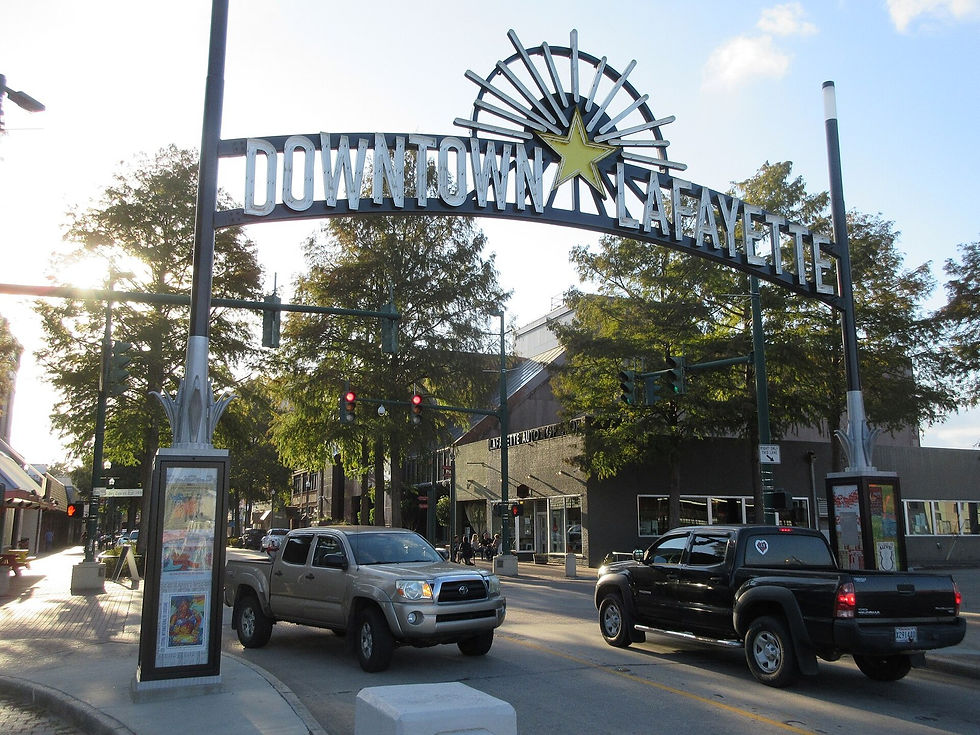
The downtown Jefferson Street flagship is the brand's most complete expression: a cafe and a roastery in one building, under the historic arch that anchors Lafayette's downtown identity. The River Ranch Coffee Lab is a quieter, newer neighborhood satellite serving a different part of the city entirely. Campus Grounds is different again, a served partnership inside another organization's dining operation rather than a Rêve branded space at all.
Comparing all three side by side shows a brand reaching Lafayette through three genuinely distinct channels: a flagship built around production and identity, a satellite built around neighborhood convenience, and a campus partnership built around reach into an audience the brand does not have to build its own space to access. Each channel serves a different purpose in the brand's overall Lafayette presence.
That range is worth appreciating specifically because it shows a level of strategic thinking beyond simply opening more identical cafes. A brand could have chosen to expand only through additional flagship style locations. Rêve instead built a mix of ownership models, which likely serves the brand better than a uniform approach would, reaching different customer types through the channel best suited to each one.
What a fuller Campus Grounds page could add for Rêve
A dedicated section on Rêve's own site, specifically describing the Campus Grounds partnership in more detail than the current single sentence on the locations page, could accomplish several things at once. It could clearly and accurately describe the nature of the relationship, avoiding the ambiguity that currently requires careful reading to correctly interpret as a served partnership rather than ownership.
It could also give the partnership its own citable, structured presence, marked up so a search engine or an AI system asked specifically about coffee options on the UL Lafayette campus could confidently surface Rêve's connection to Campus Grounds as a sourced, confirmed fact rather than something buried in a single sentence on a broader locations page.
None of that requires renegotiating the underlying partnership or adding new claims beyond what is already true. It requires giving an already interesting, already confirmed relationship the kind of clear, dedicated, structured description that would let it do more work for the brand's overall visibility than a single sentence currently can.
The quiet advantage of being genuinely useful before being visible
There is something worth noticing in the order these things happened. Rêve built a real, working partnership with Campus Grounds, presumably supplying coffee reliably and consistently, well before this piece or any comparable analysis existed to describe that partnership clearly online. The substance came first. The visibility gap is a separate, later problem, not evidence that the underlying relationship itself is weak or unproven.
That ordering matters because it means fixing the visibility gap is a relatively low risk project for the brand. Rêve is not trying to manufacture a partnership that does not really exist in order to look good online; it is trying to accurately describe a partnership that has, by all available evidence, been functioning for some time already. Describing something true clearly is a much easier task than building the underlying substance from nothing.
For any brand in a similar position, a real distribution relationship that predates its own online description of that relationship, the lesson is the same: the hard work of building the actual partnership is usually the harder half of the job. Describing it clearly, accurately, and with proper structure for search engines to find is the easier half, and it is the half currently left undone here.
Related Reading
More from this Hillcane city series, plus the pages on the site that sit next to the work.
The Real Lafayette Coffee Map, and Why Google Still Cannot Draw It
Coffee Shop Marketing in Lafayette Has No Real Home Online Yet
Rêve Coffee's Different Rooms Across Lafayette, and What Ties Them Together
Inside The Hangar, Jet Coffee's Roasting Home Base in Lafayette
Black Cat Coffee House Has No Website, and Lafayette's Northside Deserves Better
What the Lafayette Coffee Festival's Classes Say About This City's Coffee Culture
Lafayette Journalism Tracks the Next Drive Thru, Not How to Market the Cafes Already Open
The Chain Drive Thru Lane Now Running Through Lafayette, Louisiana
What SCA Certification Actually Means, Explained Through Rêve in Lafayette
Jet Coffee's Four Lafayette Rooms and the Structured Data Opportunity Sitting in Front of Them
A Coffee Tour of Lafayette, Louisiana: Moss Street, Camino Real, and Jefferson Street
The Floor and the Ceiling of Having No Website, Seen Through a Lafayette Cafe
Frequently Asked Questions
Is Campus Grounds owned by Rêve Coffee Roasters?
No. According to Rêve's own locations page, Campus Grounds proudly serves Rêve coffee, describing a supply and service relationship rather than direct ownership. Rêve's two fully owned Lafayette cafes are its downtown Jefferson Street flagship and its River Ranch Coffee Lab.
Where is Campus Grounds located?
Campus Grounds sits at 501 East St Mary Boulevard, in the heart of the University of Louisiana at Lafayette campus.
What does Campus Grounds serve besides Rêve coffee?
According to Rêve's locations page, Campus Grounds serves tea, pastries, breakfast, and lunch in addition to coffee, functioning as a broader dining hall counter rather than a coffee focused cafe alone.
Why did UL Lafayette choose to serve Rêve coffee instead of a national brand?
This research did not confirm the specific reasoning or contract terms behind that decision. What is confirmed is that Campus Grounds serves Rêve coffee rather than a generic national food service default, a deliberate choice worth noting even without the underlying contract details.
How many Rêve Coffee locations does this bring the total to in Lafayette?
Rêve's directly owned Lafayette cafe count remains two: the downtown Jefferson Street flagship and the River Ranch Coffee Lab. Campus Grounds is a separate, served partnership rather than a third or fourth owned cafe.
Does Rêve's website have structured data identifying Campus Grounds as a location?
No. As of this research, Rêve's brand domain does not carry unique CafeOrCoffeeShop structured data specifically identifying Campus Grounds by name and address, the same structured data gap affecting the brand's other Lafayette rooms.
How many students attend UL Lafayette?
This research did not confirm current UL Lafayette enrollment figures, and no specific number should be assumed or cited from this piece. Cities_ground_truth data confirms UL Lafayette as a genuine campus location tied to Lafayette city.
Is Campus Grounds run by Rêve staff?
This research did not confirm the specific staffing arrangement at Campus Grounds. It is most likely operated by the university's own dining services, given the described serves Rêve coffee relationship rather than a stated Rêve ownership or staffing role.
Why does this campus partnership matter for Rêve's brand reach?
It puts Rêve's coffee in front of students who might never seek out the brand's downtown flagship on their own, giving the brand exposure to a casual, convenience driven customer base without requiring Rêve to open and staff its own campus location.
Could Campus Grounds ever become an officially Rêve owned location?
This research found no evidence suggesting that is planned or underway. The current, confirmed relationship is a served partnership, and any future change in that structure would need to be confirmed directly rather than assumed.
Work with Hillcane
A local Lafayette roaster reaches thousands of students it might never see downtown, through one quiet dining hall counter on the UL Lafayette campus.
We help growing local food and beverage brands describe unexpected distribution partnerships as clearly and accurately as their own flagship locations.
Reach out at hillcane.co or (256) 384-2449.

Comments