
St. Augustine's Coffee Scene Is Small, Real, and Easy to Miss Behind the Tourism

Updated: 10 hours ago
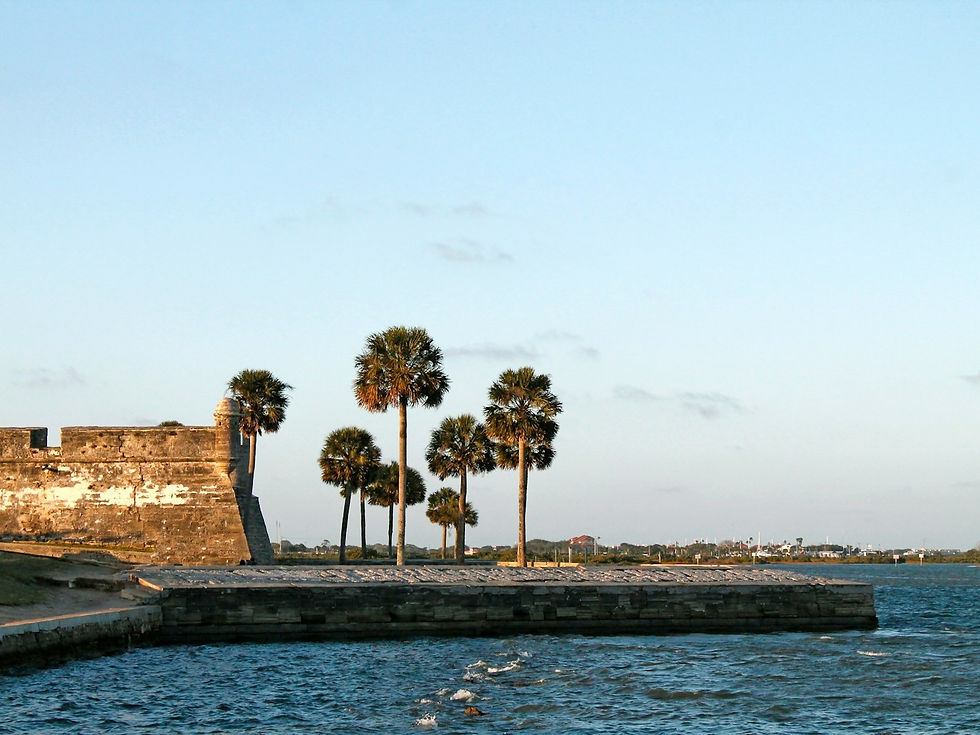
Walk down Spanish Street on any given morning and it is easy to lose track of who actually lives in St. Augustine. The sidewalks fill with visitors comparing brochures for the Castillo de San Marcos, students cutting through on their way to Flagler College, and somewhere in that mix, a resident who has lived three blocks away for twenty years and is just trying to get a cup of coffee before work. That collision of people, the tourist who arrived an hour ago and the local who has never left, is the actual texture of this city, and it shapes everything about how its coffee scene works.
St. Augustine's own resident population sits at 14,979, a genuinely small number for a place that pulls in visitors from around the world every single day of the year to walk its Historic District. That contrast is not a footnote. It is the organizing fact behind nearly every decision a specialty coffee business in this city has to make, from where it locates to how it writes its own website copy.
This is a walk through the real geography behind that scene, not a single ranked list. Three specialty rooms anchor it, each in its own pocket of the city, each worth understanding on its own terms rather than folded into one generic best of St. Augustine roundup that treats a downtown walking cafe, an uptown roastery, and a two day a week tasting room as interchangeable entries on the same list.
A Small, Specific Resident Base
It is worth naming the population figure plainly and precisely: 14,979 residents, counted for the named place of St. Augustine itself, not the surrounding county, not St. Augustine Beach, and not the broader Jacksonville metro area that sometimes gets loosely folded in when people talk about the region. That precision matters here more than in most cities, because so much of what happens on the city's streets, and so much of what a coffee shop actually experiences in a given week, is driven by people who do not live there at all.
For a business owner, that number is worth sitting with for a moment. A shop built around fourteen thousand and change residents cannot realistically survive on repeat local business alone, at least not in the Historic District proper. That is not a criticism of the city. It is simply the shape of the market, and it explains why so much of what actually works here, signage, Maps visibility, first impression photography, leans toward serving a stranger rather than a regular.
Directory counts for the specialty scene vary depending on who is counting and how broadly. Some local guides put the number of coffee related businesses in the mid teens across the wider area, counting roasters, cafes, and coffee adjacent stops together. Those broader counts are useful context for understanding the general density of the scene, but they are not a precise census of who is actually running a specialty coffee operation inside the Historic District itself, which is a narrower and more specific question.
Spanish Street, in the Heart of the Historic District
Relámpago Coffee Lab sits at 74 Spanish Street, deep inside the Historic District, an easy walk from Flagler College and from the Castillo de San Marcos itself. This is about as central a location as a specialty cafe can hold in this city, surrounded on every side by the exact kind of foot traffic that defines St. Augustine's daily rhythm, tourists moving between landmarks, students cutting across campus, and a smaller but steady trickle of locals who have made this particular stretch of street part of their routine.
What that location actually means in practice is worth spelling out. A cafe on Spanish Street does not need to advertise its way into visibility the way a shop on a quieter side street might. The walking traffic alone brings a constant stream of potential customers past the door, people already primed to stop somewhere for coffee between one historic stop and the next. That is a genuine structural advantage, one most small businesses would pay heavily to manufacture, and it exists here simply because of geography.
Relámpago functions as the roasting brand's public facing cafe, the room where a visitor or a local actually walks in and orders a cup, rather than the production side of the operation, which happens elsewhere in the city. That distinction matters for how the business should think about its own online presence: this is the room built for discovery, for the stranger walking by, which means its website ought to be doing more work to capture and convert that specific kind of foot traffic than it currently does.
San Marco Avenue, Uptown and North City
A short distance from the density of the Historic District sits DOS Coffee and Wine, at 300 San Marco Avenue in the Uptown and North City area. This is where the actual roasting for the Relámpago brand takes place, meaning the two businesses share more than a name. They share a physical supply chain, with beans roasted at San Marco Avenue and served both there and downtown on Spanish Street, a genuinely interesting operational detail that most visitors walking into either room would never guess just from looking at the menu.
The character of this location is different from Spanish Street in a way worth naming directly. Uptown and North City carry less of the dense, landmark adjacent tourist traffic that defines the Historic District core. A visitor here is more likely to have made a deliberate choice to come, rather than stumbling in mid walk between attractions. That makes San Marco Avenue a location built more around destination visits and repeat local patronage than pure passive discovery.
DOS also lists a second address at 2375 State Road 16, extending its footprint further beyond the immediate historic core. That combination, a roastery, a cafe, and a second listed location, makes DOS Coffee and Wine one of the more physically spread out specialty operations in this small city, and it raises a real question worth asking: does the business's current website actually distinguish between these different rooms clearly enough for a visitor or a search engine to understand which address is which?
West King Street, Open Two Days a Week
3rd Wave Coffee Roasters holds a tasting room at 215 West King Street, Suite 3, and it operates on a genuinely different rhythm than the other two rooms in this map. Rather than functioning as a daily cafe, it is open to the public on a limited schedule built around tastings, pickup, and direct conversation with the people doing the roasting, a model that looks and feels completely different from either Spanish Street or San Marco Avenue.
That is not a lesser version of a coffee shop. It is a different, smaller scale model entirely, one built around a micro roasting operation rather than daily walk in traffic. For a visitor unfamiliar with this kind of business, the distinction can be genuinely confusing if the website does not explain it clearly. Someone expecting a normal cafe experience and arriving on the wrong day would understandably walk away frustrated, which is exactly why honesty about scheduling matters so much here.
Understanding that distinction matters for anyone trying to make sense of why West King Street does not behave like Spanish Street or San Marco Avenue on a map. A citywide search that lumps all three together as equivalent coffee stops, without distinguishing their very different operating models, sets up a visitor for a mismatched expectation, and that mismatch is exactly the kind of gap a well built, honest website exists to close.
Who This Map Does Not Include
It is worth being honest about who sits outside the frame of this specific coffee map. Visitor facing listicles frequently point toward The Kookaburra, a well known multi location cafe brand with several public rooms across the city plus additional outposts. That kind of scale sits well beyond the one to six room size of business this research and this company are built to serve, and including it here would muddy an otherwise clear picture of the smaller, independently rooted scene.
Southern Grounds, with a location on King Street, is a Jacksonville based multi city coffeehouse rather than a St. Augustine grown specialty operation. Both names are real, both are genuinely part of what a visitor sees while walking through downtown, and neither one is the focus of this particular map, which is built around the city's smaller, independently rooted specialty rooms rather than regional or multi city brands with a much larger operational footprint.
Naming who is excluded, and why, is not a minor housekeeping detail. It matters because a St. Augustine coffee business owner reading this should understand exactly where their business sits in the broader landscape, and should not mistake a comparison to a seven room regional brand for a fair benchmark against their own one or two room operation.
Three Rooms, One Small City, Very Different Rhythms
What ties Spanish Street, San Marco Avenue, and West King Street together is not similarity. It is proximity within a genuinely small city that happens to carry an outsized amount of visitor traffic. A downtown walking cafe, an uptown roastery with wine on the menu, and a two day a week tasting room are three very different businesses, sitting close enough together to be confused for one undifferentiated scene by anyone glancing at a single citywide search result.
That is precisely the trap worth avoiding, both for a visitor trying to find the right room for what they actually want, and for a search engine trying to make sense of three very different businesses sitting inside one small geographic area. Treating them as interchangeable does a disservice to all three, since each one is answering a genuinely different question a customer might be asking.
Search results built around best coffee in St. Augustine currently skew toward tourism guides and directory sites rather than any of these three businesses speaking for themselves. A map like this one, built around real streets and real distinctions, is a more honest starting point than a single flattened ranking, and it points toward the practical fix each of these businesses could pursue on its own site: a page that actually explains what makes its specific room, its specific street, and its specific rhythm worth knowing about.
What a Search Engine Sees Right Now
Type coffee shop in St. Augustine into a search bar today and the results lean heavily toward tourism board pages and third party visitor guides rather than any of the three rooms described here speaking in their own voice. That gap is not because Relámpago, DOS, or 3rd Wave lack a real story worth telling. It is because none of their own websites currently carry the kind of specific, street level detail, an actual address, an actual roasting story, an actual schedule, that a search engine or an AI answer tool needs in order to confidently point a stranger toward one of these three doors instead of a generic listicle.
That gap is fixable, and fixable in a very specific way. A page for 74 Spanish Street that actually says 74 Spanish Street, names Flagler College and the Castillo de San Marcos as walking landmarks, and explains what makes Relámpago's own roasting story worth knowing, gives a search engine something concrete to work with. The same logic applies to San Marco Avenue and West King Street. None of this requires new branding or a different business model. It requires the specific facts already true about each room, published plainly, in each room's own words.
Related Reading
More from this Hillcane city series, plus the pages on the site that sit next to the work.
We Searched Coffee Shop Marketing in St. Augustine. Here's What Came Up.
Spanish Street's Coffee Lab Is a Two Minute Walk From the Castillo
San Marco Avenue Has Coffee, Wine, and a Roastery in One Room
One Family, Two Coffee Businesses: The Story Behind Relampago and DOS in St. Augustine
What St. Augustine Actually Offers a Small Business Owner Looking for Marketing Help
The Two Person Coffee Roaster Working Two Days a Week in St. Augustine
Reviews Are Doing More Work in St. Augustine Than a Homepage Usually Gets Credit For
Why Isn't My St. Augustine Coffee Shop Showing Up on Google?
The Historic District Serves Two Very Different Customers at Once in St. Augustine
Frequently Asked Questions
How many residents does St. Augustine have, and why does that matter for its coffee scene?
The named place of St. Augustine itself has 14,979 residents according to ACS 2023, separate from St. Johns County, St. Augustine Beach, or the Jacksonville metro. That genuinely small number means specialty coffee shops here, including Relámpago at 74 Spanish Street and DOS at 300 San Marco Avenue, cannot survive on repeat local business alone in the Historic District. Tourist driven Maps visibility and first impression signage matter more here than in cities where most customers are returning neighbors.
Where is Relámpago Coffee Lab located, and what is nearby?
Relámpago sits at 74 Spanish Street in the Historic District, an easy walk from Flagler College at 74 King Street, where fall 2024 enrollment stands at 2,407 students, and from the Castillo de San Marcos at 1 South Castillo Drive. That central placement brings constant tourist foot traffic past the door, giving Spanish Street a passive discovery advantage that a quieter side street like West King Street, where 3rd Wave's tasting room operates, simply does not share.
Are Relámpago Coffee Lab and DOS Coffee and Wine connected?
Yes, they are sister businesses under shared ownership. The actual roasting for the Relámpago brand happens at DOS Coffee and Wine on San Marco Avenue in the Uptown and North City area, and the resulting coffee is served both there and at Relámpago's Spanish Street cafe. That means the two rooms share one physical supply chain even though they operate under two different names in two different parts of the city.
Where does DOS Coffee and Wine operate, and how many addresses does it have?
DOS Coffee and Wine's main cafe and roastery sits at 300 San Marco Avenue, with a second address at 2375 State Road 16. That combination makes it one of the more physically spread out specialty operations in a city of 14,979 residents, which raises the question whether its current website distinguishes those addresses clearly enough for a visitor or a search engine to tell them apart without confusion.
Is 3rd Wave Coffee Roasters open daily like a normal cafe?
No. Its tasting room at 215 West King Street, Suite 3, operates on a limited public schedule built around tastings and pickup, not daily cafe hours. According to its own tastings page, it is open Thursdays from 9 am to 4 pm and Saturdays from 9 am to 1 pm. Anyone planning a visit should confirm those specific days directly rather than assuming it keeps the same hours as Spanish Street or San Marco Avenue.
Are The Kookaburra and Southern Grounds part of the same specialty coffee map as the three rooms you named?
Both are real, visible coffee businesses in St. Augustine, but they sit outside the frame of this specific map. The Kookaburra runs seven cafes plus additional outposts as a larger multi location brand, and Southern Grounds at 124 King Street is a Jacksonville based multi city coffeehouse. Both operate at a scale beyond the one to six room independent focus of this map, which centers on Relámpago, DOS, and 3rd Wave as smaller, independently rooted operations.
Why does St. Augustine's tourist to resident ratio matter so much for coffee shop visibility?
Because the city's 14,979 residents are dwarfed by daily visitor volume walking between the Castillo de San Marcos and Flagler College, most customers at Relámpago, DOS, or 3rd Wave are encountering these businesses for the first time. That means Google Business Profile photos, accurate hours, and street specific website content matter far more here than in a city where most customers are returning locals who already know the name.
Is there a single best coffee shop in St. Augustine?
Not in a way that holds up across genuinely different rooms. Relámpago Coffee Lab on Spanish Street, DOS Coffee and Wine on San Marco Avenue, and 3rd Wave Coffee Roasters on West King Street each represent a distinct kind of visit: a walking district cafe, a roastery with wine service, and a two day a week tasting room. A single flattened ranking treats three very different businesses as interchangeable, which does a disservice to all three.
Do St. Augustine's specialty coffee businesses show up well in search results right now?
Not especially. Citywide coffee search results currently favor tourism directories and third party visitor guides rather than Relámpago, DOS, or 3rd Wave speaking for themselves. That means a visitor searching from a phone near the Castillo de San Marcos is more likely to land on a generic guide than on any of these three businesses' own websites, which currently lack the street specific detail a search engine needs to cite them directly.
How can Hillcane help a St. Augustine coffee business with neighborhood specific visibility?
Hillcane can build pages that speak directly to each real address, whether that is 74 Spanish Street, 300 San Marco Avenue, or 215 West King Street, rather than relying on one vague citywide page. That means naming Flagler College at 74 King Street as a walking landmark, stating the two day tasting schedule clearly, and giving a search engine something concrete to work with. Reach out at hillcane.co/contact or call (256) 384-2449.
Work with Hillcane
St. Augustine's tourist flood dwarfs its 14,979 residents. Its specialty coffee scene underneath that noise is tiny, real, and worth mapping street by street.
If your St. Augustine coffee business needs a page built for its real street, reach Hillcane at hillcane.co/contact or call (256) 384-2449.
Reach out at hillcane.co or (256) 384-2449.


Comments