BYU's Edge Is Not UVU, and Joaquin Is Not Center Street


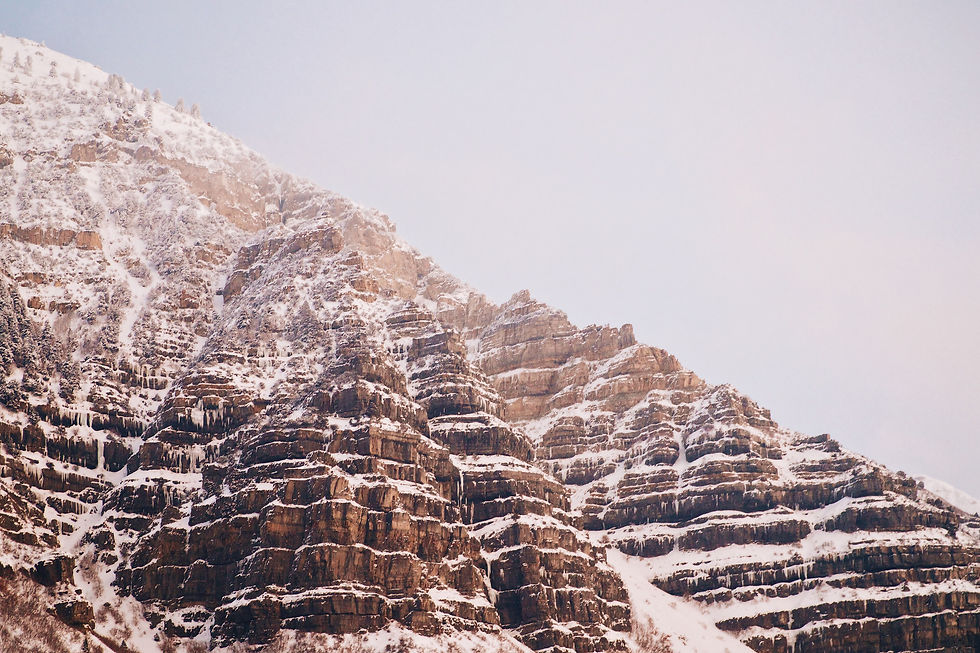
Photo: Tony Webster, CC BY 2.0, via Wikimedia Commons
Coffee near BYU and coffee near UVU sound like they could be the same search. They are not. Utah County's coffee geography splits into distinct poles, each with its own texture, its own crowd, and its own reason a cafe there feels different from a cafe a few miles away, even inside the same general metro area.
I write about coffee for a living, and one of the more interesting things about Utah County is how sharply these poles separate from each other despite sitting so close together on a map. Downtown Center Street and 100 West. Joaquin, on 200 North. Orem State Street and Midtown 360. University Place, near UVU. And 800 North, further into Orem. Five distinct poles, five genuinely different feels, none of them a stand in for the others.
It would be easy to write Utah County's coffee scene as one single story, BYU town, dirty soda, done. That version is not wrong exactly, but it misses almost everything interesting about how this county actually works. Provo and Orem sit side by side, but they are not the same place, and even within each city, one street can feel like a different world from a street two miles away. This post is a walk through that texture, pole by pole, without pretending any two of them are interchangeable.
Downtown Center Street and 100 West
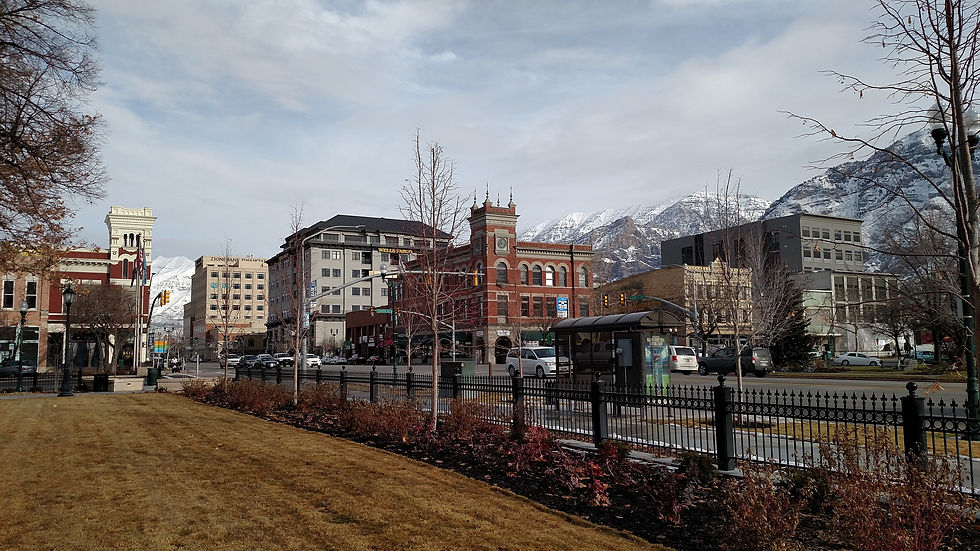
This is the pole most people mean by default when they say downtown Provo. It carries real foot traffic, people walking between shops and restaurants on their way somewhere else, which gives a cafe here a different kind of exposure than a cafe tucked into a quieter residential pocket.
There is also a genuine texture to this pole worth naming: it draws BYU faculty and staff, downtown workers, and longtime Provo residents who have nothing to do with the university at all, layered together on the same short stretch of street. A downtown Provo cafe is not purely a college crowd. It is a mixed crowd, and that mix is part of what gives this pole its particular energy.
That layering shows up in small, real ways once you start paying attention to it. A morning rush here mixes someone grabbing coffee before a downtown shift with a BYU staff member heading to campus and a longtime Provo resident who has walked this same block for years, all inside the same short window. Few other poles in this county carry quite that same mix of overlapping daily patterns in one place.
Joaquin on 200 North
A few blocks east, Joaquin has a different rhythm than Center Street, even though the two poles are close enough to walk between. It reads more like a neighborhood, less like a downtown commercial strip, with a slower, more residential pace to the foot traffic that passes through.
That distinction is not academic. A cafe on 200 North is not competing with Center Street for the same walk in customer, because the two poles pull from different daily patterns. Someone stopping at a Joaquin cafe is more likely already near home or already on a familiar local route, not passing through on the way to a downtown errand.
There is also a kind of intimacy to a neighborhood pole like this one that a busier downtown strip cannot easily replicate. A cafe that becomes part of a resident's actual daily routine, rather than one option among several passed on a commercial walk, tends to build a different, steadier kind of loyalty over time. It is a slower build than a high foot traffic corner, but often a more durable one.
Orem State Street and Midtown 360
Cross into Orem and the whole feel shifts again. State Street is Orem's commercial spine, wide, heavily trafficked, lined with shopping centers and larger developments like Midtown 360. A cafe here serves a different kind of moment than a downtown Provo stop, more errand adjacent, more likely to be one stop among several on a longer drive rather than a destination walked to on its own.
This pole also carries less of a university texture than the others on this list and more of a general Orem commercial identity, drawing residents running errands along the corridor rather than students or faculty specifically. It is Utah County coffee at its most ordinary, everyday rhythm, which is its own kind of value.
A pole like this one is easy to underrate precisely because it lacks a single obvious anchor, no campus, no historic downtown block, just a long, practical commercial corridor doing what long practical commercial corridors do. But ordinary, everyday rhythm is exactly what a lot of coffee drinkers actually want most days, a reliable stop folded into an existing errand run rather than a destination requiring its own separate trip. A pole built around routine, rather than novelty, tends to keep its customers longer than one that only ever draws a curious one time visit.
University Place Near UVU
Utah Valley University sits at the center of its own distinct pole, University Place, and the texture here is different from BYU's edge a few miles away. UVU draws a notably different student population than BYU, more commuter students, more working adults balancing school with a job, more non traditional students generally, plus a real Utah County population, including a meaningful non LDS minority, who used to have to drive to Salt Lake for a lot of what they can now find closer to home.
None of that texture comes with hard numbers attached. The point is not to quantify the difference between BYU's edge and UVU's edge. It is to name that the difference is real and worth a coffee shop understanding before assuming the same approach that works near one campus will automatically work near the other.
Think about what that texture means for a cafe sitting inside University Place. A commuter student juggling work and class is thinking about a different kind of visit than a traditional residential student would, maybe a faster stop between a shift and a lecture rather than a long afternoon spent studying at a table. A cafe built around UVU's actual crowd looks different from a cafe built assuming a BYU style student population, even though both sit inside the same general county.
800 North, Further Into Orem
Keep moving north through Orem and the geography shifts once more, into a corridor near the interstate and the entrance to Provo Canyon. This pole pulls commuters and canyon bound traffic rather than campus adjacent foot traffic or a State Street errand crowd, a third kind of Orem customer distinct from both of the other Orem poles already described.
It is worth sitting with how many different kinds of Orem customers exist within a few miles of each other. State Street pulls errand runners. University Place pulls a campus adjacent crowd. 800 North pulls commuters and canyon traffic. Same city, three distinct rhythms.
A canyon adjacent pole like this one also tends to see a different seasonal pattern than the other poles on this list. Traffic headed toward Provo Canyon shifts with the seasons, hiking and outdoor recreation in warmer months, a different rhythm in winter, and a cafe sitting right at that entry point feels those shifts more directly than a cafe further from the canyon mouth would.
Why Treating These as One Search Fails Everyone
Fold all five of these poles into one generic Utah County coffee search and the result flattens something that is quite rich. A cafe built for the University Place crowd near UVU is not competing for the same customer as a cafe built for BYU's downtown edge, and pretending otherwise does a disservice to both.
This matters for how any of these poles should be described, marketed, or simply understood by someone new to the area. Coffee near BYU is its own search, shaped by BYU's own particular texture and downtown Provo's mixed crowd. Coffee near UVU is its own separate search, shaped by University Place's different student population and its own local rhythm. They deserve to be treated as what they are: related but distinct parts of the same county, not one interchangeable search.
A new resident, a visiting family member, or anyone simply unfamiliar with this county benefits from understanding this distinction early, before they judge one pole by an expectation formed somewhere else. Someone who assumes University Place feels like BYU's edge, or that 800 North feels like Center Street, is going to be surprised by what they find, and that surprise is entirely avoidable with a little honest orientation.
None of this is a comparison to Salt Lake City, and it should not be read as one. This is entirely a Utah County conversation, about how Provo and Orem's own internal geography breaks apart into real, distinct poles worth understanding on their own terms.
It is worth being deliberate about that boundary too. Utah County has its own coffee identity, one built out of its own campuses, its own commercial corridors, and its own neighborhoods, and it does not need to be measured against a larger metro area to be understood on its own terms. Five poles inside one county is already a rich enough picture without reaching outside it. None of that requires inventing a single new fact about either campus. It simply requires paying attention to the texture that is already there, plainly visible to anyone who spends real time on both sides of this county rather than assuming one campus edge explains the other.
A visitor spending a single afternoon downtown near Center Street would come away with a different impression of Provo than one spending that same afternoon near University Place, and both impressions would be accurate. That is the real texture of a county with more than one distinct pole running through it, and it is worth understanding rather than flattening into a single generic idea of what Utah County coffee feels like.
A County Worth Knowing Street by Street
Put the five poles side by side and Utah County's coffee geography starts to look less like a single blob on a map and more like what it is: a handful of different neighborhoods, each pulling a different crowd, each with a different daily rhythm, each deserving its own understanding rather than a single flattened description.
That is the whole point of separating them out this clearly. Downtown Center Street and 100 West, Joaquin on 200 North, Orem State Street and Midtown 360, University Place near UVU, and 800 North further into Orem are not five names for the same thing. They are five real, distinct places, and Utah County's coffee scene is better understood one pole at a time than compressed into a single citywide idea.
That is the frame the rest of this series builds on. Rather than one flattened idea of what Utah County coffee looks like, this whole project treats each pole on its own terms, with its own texture, its own crowd, and its own reason for existing exactly where it does.
Related Reading
More from this Hillcane city series, plus the pages on the site that sit next to the work.
Incidental Coffee Roasters Opened a Downtown Provo Cafe in March 2025
Java Junkie Serves Downtown Provo and Springville From Two Rooms
JJ's Coffee Is a Cozy Orem Stop Near University Place and UVU
Pueblo Coffee Has Rooms in Orem and Springville. Apothecoffee Is in Midtown 360.
The State of Specialty Coffee Visibility in North America (2026)
Frequently Asked Questions
Are BYU's edge and UVU's edge the same search pole?
No. BYU's edge falls in the Downtown Center Street and 100 West pole of Provo, a city of 114,303 people, where faculty, staff, downtown workers and longtime residents share the same few blocks. UVU's edge is the separate University Place pole in Orem, a city of 97,048, around addresses like 570 E Park Ave. That crowd leans toward commuter students and working adults, so a cafe near one campus is answering a different search than a cafe near the other.
Is Joaquin the same pole as Downtown Center Street?
No. Joaquin centers on 200 North, a few blocks east of Center Street in East Provo, where the blocks read as homes and side streets rather than a commercial strip. Its pace is slower and more residential, so the people stopping in are usually already near home or on a familiar local route. Center Street and 100 West draw walk in traffic bound for downtown errands, even though the two poles are close enough to walk between.
Does this post cite enrollment numbers for BYU or UVU?
No. The post leaves enrollment figures out on purpose, and the two campus homepages, byu.edu and uvu.edu, carry no enrollment counts in their titles either. The numbers it does use are city populations from the 2023 American Community Survey: 114,303 for Provo and 97,048 for Orem, kept separate and never added together. The campus comparison is described rather than counted, focused on the texture of each crowd, such as commuter students and working adults near UVU.
Is this framed as a comparison to Salt Lake City?
No. This is a Utah County conversation about how Provo and Orem break into distinct coffee poles, and Salt Lake City, a separate city of 203,888 people per the 2023 American Community Survey, stays outside it. The only nod north is that some Utah County residents once drove to Salt Lake for a serious cup and can now find one closer to home. Provo, at 114,303, and Orem, at 97,048, are described on their own terms.
How many distinct coffee poles does this post describe?
Five: Downtown Center Street and 100 West in Provo; Joaquin on 200 North, a few blocks east; Orem State Street and Midtown 360, near 360 S State St; University Place near UVU, around 570 E Park Ave; and 800 North, farther into Orem between I 15 and the Provo Canyon entrance. Each pulls its own crowd on its own daily rhythm, across Provo, with 114,303 residents, and Orem, with 97,048, which are never counted as one.
What kind of crowd does the Orem State Street pole draw?
Orem State Street and Midtown 360 draw a general Orem crowd running errands along the city's commercial spine, a wide, busy road lined with shopping centers. Midtown 360 sits around 360 S State St, and other cafe addresses along the corridor run as far south as 1680 S State St. A stop here tends to be one errand among several on a longer drive, with less university texture than the campus poles and a steadier, everyday rhythm.
What makes the 800 North pole different from the rest of Orem?
800 North runs through north Orem between I 15 and the Provo Canyon entrance, so it pulls commuters and canyon bound traffic instead of the errand runners on State Street or the campus crowd at University Place. A cafe address such as 43 W 800 N sits right in that flow. Canyon traffic also shifts with the seasons, busier with hikers in warmer months, and a cafe at the canyon approach feels those swings more directly than others do.
Does UVU draw the same kind of student as BYU?
No, and the difference shows in who each campus draws. UVU, whose campus anchors University Place in Orem, draws more commuter students, more working adults fitting class around a job, and more non traditional students generally. The wider Utah County crowd around it includes a meaningful non LDS minority. BYU's edge sits in downtown Provo and mixes students with faculty, staff, and longtime residents. The post uses no enrollment figures for either school, only the texture of each crowd.
Why does separating these poles matter for a coffee shop?
Because folding Utah County into one search flattens real differences in crowd and daily rhythm. A cafe on Center Street serves walkers heading downtown, one on 200 North serves neighbors, one on State Street serves errand drives, one near 570 E Park Ave serves UVU commuters, and one on 800 North serves canyon traffic. Chains already publish address level pages here, such as the 7 Brew stand at 2298 N University Pkwy, so independents benefit from naming their own pole.
Does this post name specific coffee shops in each pole?
No. This post looks at Utah County's geography itself, the five poles across Provo and Orem, rather than listing businesses. It uses a few street addresses, such as 27 N 100 W downtown or 43 W 800 N in north Orem, only to pin each pole to real blocks. Other Hillcane posts cover individual cafes and their exact addresses within these poles, in Provo at 114,303 residents and Orem at 97,048.
Work with Hillcane
Coffee near BYU and coffee near UVU sound like the same search. They are not. Utah County splits into at least five genuinely different coffee poles.
If you run a cafe on one of these poles and want your page written for the customer actually near you, reach Hillcane at hillcane.co/contact or call (256) 384-2449.

Comments