Visit Reno Tahoe Covers the Region. Reno Cafes Can Own Their Streets

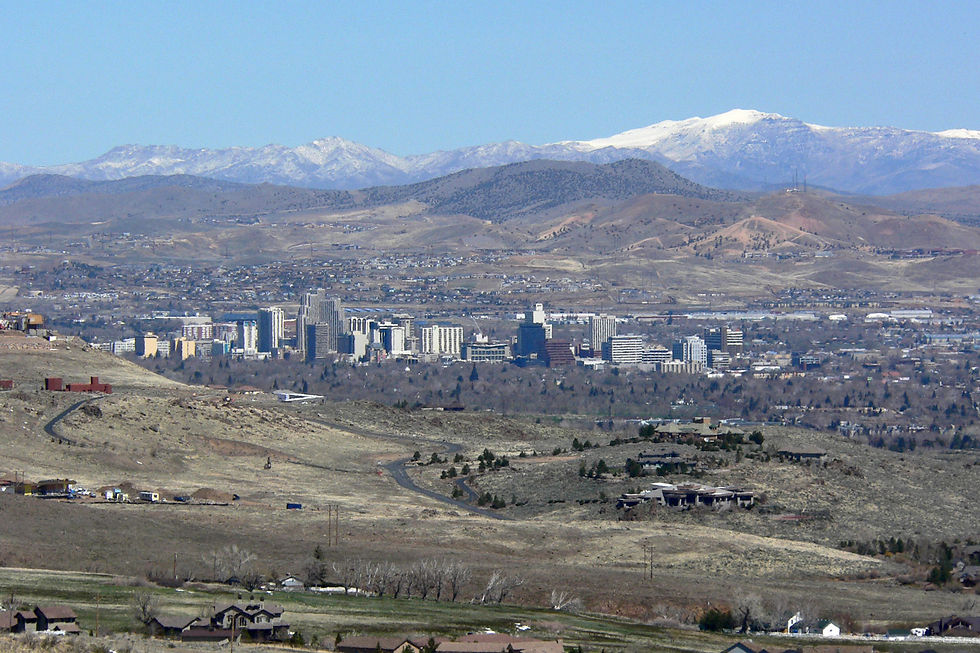
Photo: Stan Shebs, CC BY-SA 3.0, via Wikimedia Commons
Visit Reno Tahoe's coffee page is titled Coffee Shops in Reno and Lake Tahoe, and its main heading calls coffee The Fuel for Adventures. The first entry on it is a coffee bar brand whose roots and current locations sit in Truckee and North Lake Tahoe, California, not inside Reno city limits. None of that is a mistake. It is a clear signal of what a regional visitor bureau page is built to do, and of what it is not built to do for a cafe on a Reno side street.
I want to be precise about what I am and am not saying here. A visitor bureau covering both Reno and Lake Tahoe under one umbrella has every reason to open with a business that serves that broader region well. That is its job. The issue for a Reno independent is assuming that page is meant to be the answer to the question best coffee shop near me in Reno. It was never built to be, and understanding that difference is the whole point of this post.
This is a pattern I see across every market Hillcane works in, not just Reno. Regional tourism boards and visitor bureaus almost always default to a regional frame, because their audience genuinely is regional, a traveler deciding between a dozen possible stops across a wide area. Local independents, on the other hand, are almost never competing for that traveler's attention first. They are competing for the person already three blocks away who just wants to know where to turn.
What the Region's Own Page Is Built to Do
Visit Reno Tahoe's coffee shops hub reads like what it is, a travel guide for a two state region. Its entries mix Reno cafes with Tahoe side names, it carries its own short FAQ for visitors, and it describes its lead entry as inspired by the coffee bars found on every street corner in Italy. A traveler planning a night in Reno and three days at the lake gets a tidy, useful list from it.
A separate article from the same visitor bureau, titled Favorite Local Coffee Shops to Try, runs under the heading Fuel Up at These Local Coffee Shops, with a short section of Reno cafes. Look at how both pages are organized: by shop name, one heading per business. No heading on either page is a street or a pocket of the city. Wells Avenue, the RED district and the Airway and Longley stretch of South Reno are never headings of their own, because the page is built around a regional trip rather than the streets inside Reno.
That is not an oversight on the tourism site's part either. A regional guide naming every pocket of every city it covers would stop being a readable guide and start being an exhaustive directory, which is a different product entirely. The page is doing its job by staying broad, readable, and useful to someone planning a short regional trip rather than someone already parked three blocks from a specific cafe. The gap that leaves behind, for anyone searching a specific Reno street rather than the region as a whole, is exactly the space an independent shop's own page can fill.
Why a Regional Bureau Leads This Way
None of this is a criticism of Visit Reno Tahoe. A regional tourism site is built to serve visitors across an entire area that includes both Reno and the Lake Tahoe basin, and a brand with a footprint across that wider region is a reasonable choice to lead with for that audience. A tourist planning a trip that includes both a Reno stopover and a few days at the lake benefits from exactly that kind of regional framing.
But a regional framing, by definition, is not a street level framing. The page exists to answer where should I get coffee somewhere in this broad area, not where should I get coffee on Wells Avenue in Reno specifically. Those are different questions, and expecting one page to answer both well is asking more of it than its own structure allows. Even the Reno cafes it does feature appear as names with a paragraph each, not as answers to a question about a particular block.
Think about the traveler this page is actually written for. They are likely planning several days across the region, maybe a night or two in Reno and a few more up at the lake, and they want a handful of reliable options they can drop into wherever their day takes them. A brand with locations on both sides of the state line solves that traveler's problem. It does not solve the problem of a Reno resident who already knows which street they are on and just wants the closest good cup.
Where the Coverage That Names Reno Directly Lives
It is not that nobody writes about Reno's coffee scene with real specificity. Reno This Week ran a local coffee roundup on April 29, 2025. Roast Local covered Reno's roasters in May 2026. Barista Magazine published a feature on five amazing coffee drinks in Reno. Sprudge, the specialty coffee publication, featured Hub Coffee Roasters' RED cafe and the 2024 build out of Laughing Cat Coffee on Airway Drive in its Build Outs series, the kind of coverage that names a specific room rather than folding it into a regional list. That coverage exists. It simply is not the same page as Visit Reno Tahoe's regional hub, and it does not carry the built in traffic an official tourism site does.
That gap, between coverage that names Reno's specific pockets and coverage that treats Reno as one stop inside a bigger regional trip, is exactly where an independent shop's own homepage has room to do work no outside page will ever do for it. Nobody outside the business itself is going to build a page specifically about coffee on Wells Avenue, or coffee near RED, with the same care an owner can put into their own site.
It is worth naming why that specific gap persists rather than assuming it will close on its own. Reno This Week, Roast Local and Sprudge are all covering the city because coffee is genuinely newsworthy here, not because any of them owe a particular shop coverage. That coverage will keep happening in whatever shape those outlets choose. A shop waiting for outside coverage to eventually mention its own street by name is waiting on something outside its control, when a page answering that exact question is something it can simply build today.
Cafe Homepages Already Show Up Beside the Listicles
It would be easy to assume, looking at how thoroughly the tourism site and coffee media cover the region, that cafe homepages cannot compete for visibility at all. That is not what the results show. In a September 2026 search for coffee shop Reno NV, three cafe homepages and a cafe Instagram profile appeared in the organic results, sitting on the same page as Barista Magazine, Yelp, Reddit and Sprudge rather than being crowded out by them.
That is worth sitting with. Cafe pages already earn visibility next to some of the biggest names covering Reno coffee. The opportunity is not proving that an owned page can compete, that part is already happening. The opportunity is the specific, street level version of that page, the one that answers a Wells Avenue search or a RED search directly, since that is the kind of page a regional tourism site, by its own design, is never going to build.
It helps to separate two different jobs a cafe website is doing at once. One job is existing clearly enough to be found at all on a broad query. The second job is answering the specific, local version of the question once someone arrives, the coffee near this street question rather than the coffee somewhere in Reno question. A shop can do the first job well and still have room to grow on the second, and that second job is where the street level page comes in.
What a Street Page Actually Looks Like
A street page is not complicated. It names the actual pocket of the city a shop sits in, Wells Avenue, Midtown, RED, South Reno, whichever is true, and it puts the real street address near the top rather than burying it behind a contact form or a Maps embed alone. It answers the question a nearby customer is actually asking, coffee near this specific street, rather than the broader regional question a tourism page is built to answer.
None of that requires competing with a regional brand's reach or with Sprudge's specialty coffee authority. It requires building the one page nobody else has any reason to build: the specific, honest, street named answer to where a Reno independent is. That page does not exist on Visit Reno Tahoe's site, and it does not exist on a coffee magazine's roundup. It only exists if the shop itself builds it.
This is not an argument for abandoning the region entirely either. A shop can still welcome the visitor who found them through Visit Reno Tahoe or a Sprudge feature, and those readers matter. The argument is simply that a shop should not rely on that regional page to do the work of a street level one, because the two pages are built for two different readers asking two different questions, and only one of those readers is something the shop itself fully controls how it answers.
The Honest Version of This Comparison
The visitor bureau versus shop page comparison here is not really a competition, and treating it as one misses the point. Visit Reno Tahoe is doing exactly what a regional tourism site should do, giving visitors a broad, useful sense of where to find coffee across a large area that spans two states. Leading with a brand that serves both sides of the state line is a reasonable outcome of that regional mission, not a mistake anyone needs to correct.
What Reno's independents have, that the regional page cannot offer, is the ability to speak directly and specifically about their own street, their own hours, their own story, in a way no aggregated regional list will ever manage. That is not a consolation prize. It is the more useful answer for the much larger number of people who are not planning a two state road trip, they are simply standing somewhere in Reno wondering where the nearest good cup of coffee is.
That is also the version of this comparison worth remembering the next time a Reno owner pulls up Visit Reno Tahoe's coffee page and sees Tahoe side names mixed in with Reno ones. It is not a snub. It is a regional page doing a regional job, and it leaves a real, buildable opening for every Reno independent willing to answer the narrower, more common question themselves: not where should I go somewhere in this region, but where exactly should I go on this street, right now.
Related Reading
More from this Hillcane city series, plus the pages on the site that sit next to the work.
Frequently Asked Questions
What is Visit Reno Tahoe's coffee page built for?
Visit Reno Tahoe's page, titled Coffee Shops in Reno and Lake Tahoe, is built for a traveler covering both Reno and the lake in one trip. It mixes Reno cafes with Tahoe side names, carries a short visitor FAQ, and leads with a coffee bar brand rooted in Truckee and North Lake Tahoe, California. It answers a regional question, not a Reno street question.
Is the Truckee and North Lake Tahoe brand treated as a Reno independent here?
No. Its origin and current locations are in Truckee and North Lake Tahoe, California, across the state line from Reno, so this post does not fold those locations into Reno's own coffee scene. Reno's pockets here are Midtown and S Virginia Street, Wells Avenue, California Avenue, Vesta and Holcomb, downtown and the Truckee Riverwalk, the RED district and South Reno.
What other coverage names Reno coffee directly?
Reno This Week ran a local coffee roundup on April 29, 2025, and Roast Local covered Reno's roasters in May 2026. Barista Magazine published a feature on five amazing coffee drinks in Reno, and Sprudge's Build Outs series featured Hub Coffee Roasters' RED cafe and Laughing Cat Coffee's 2024 build out on Airway Drive. That coverage names specific cafes rather than a region.
Do cafe homepages appear beside listicles and coffee media?
Yes. In a September 2026 search for coffee shop Reno NV, three cafe homepages and a cafe Instagram profile appeared in the organic results beside Barista Magazine, Yelp, a Reddit r/Reno thread and Sprudge. A cafe page can hold a slot on a broad Reno query. The bigger opening is the street level search, which neither a tourism site nor a magazine is trying to answer.
Why does Visit Reno Tahoe open with a business outside city limits?
Because it is a regional tourism site covering Reno and the Lake Tahoe basin, and a brand with locations in Truckee and North Lake Tahoe serves that wider audience. The page's heading, The Fuel for Adventures, says as much. It is not built to answer a question about coffee on Wells Avenue or in the RED district inside Reno, about 268,959 residents strong.
Does this mean Reno independents cannot compete for visibility?
No. Cafe pages already appear in Reno search results next to Barista Magazine, Sprudge, Yelp and Reddit. The opportunity is building the street level page a regional tourism site will never build: one that names Midtown, Wells Avenue, RED or South Reno, prints the street address near the top, and gives current hours. That page answers the nearby customer directly.
What should a Reno cafe's own street page include?
The pocket of the city it sits in, whether Midtown along S Virginia Street, Wells Avenue, the RED district or South Reno near Airway and Longley. Then the street address as plain text near the top, current hours, and a sentence on what the room is like. Add a map link, but never let a map embed be the only place the address appears.
How is the tourism site's second coffee article organized?
Visit Reno Tahoe's article Favorite Local Coffee Shops to Try runs under the heading Fuel Up at These Local Coffee Shops and gives each featured cafe its own heading and paragraph. It is organized by business name, not by street. That makes it a good visitor list and a poor answer for someone asking about coffee near Vesta and Holcomb or near 2020 RED Dr.
Is this post a criticism of Visit Reno Tahoe?
No. Visit Reno Tahoe is doing its job well by giving visitors a broad sense of coffee options across a large, two state area that runs from Reno to Lake Tahoe. The point is that a regional page and a street page answer different questions. Reno independents, from Midtown to South Reno, are better served building the street page themselves.
Where does a Reno cafe's street page fit next to the tourism page?
Alongside it, not against it. A visitor who finds a cafe through Visit Reno Tahoe, Reno This Week or a Sprudge feature still needs to know where to park and when the room opens. A street page with the address, hours and the pocket of the city, such as downtown near the Truckee Riverwalk, closes that gap for both visitors and locals.
Work with Hillcane
Visit Reno Tahoe's coffee page is built for a traveler covering Reno and the lake in one trip. Here is what a Reno independent can build that no regional tourism site ever will.
If your Reno cafe needs its own street level page built the tourism site will never make for you, reach Hillcane at hillcane.co/contact or call (256) 384-2449.


Comments