
Bossier City Is Not Shreveport, and Neither Is Your Search Radius

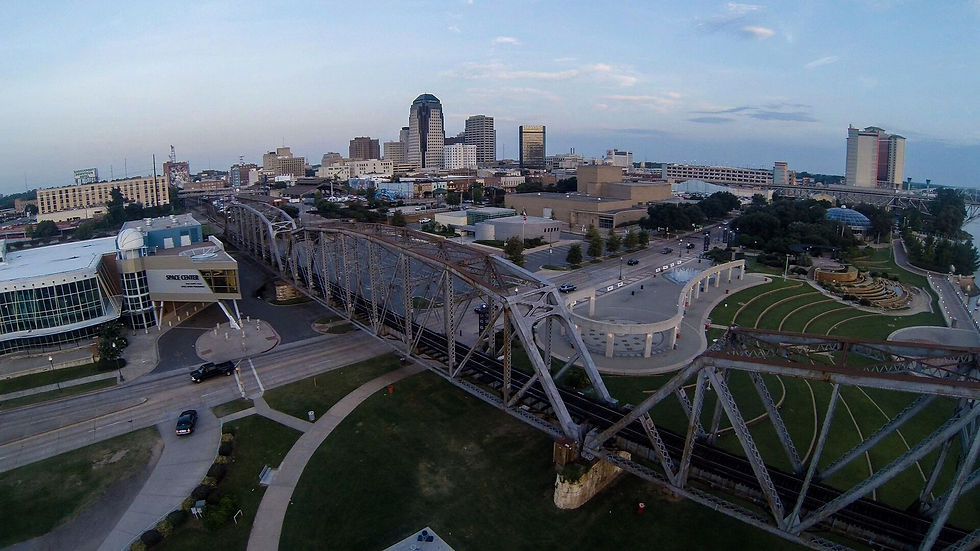
I want to start with a basic geography lesson, because it is the single most important thing to get right before any coffee shop in this region builds a content or search strategy. Bossier City is not Shreveport. It is not a neighborhood of Shreveport, not an extension of Shreveport, not close enough to treat as functionally the same search radius. It is its own separately incorporated Louisiana city, across the Red River, with its own cafes, its own local coverage, and its own population figures entirely distinct from Shreveport's.
This distinction sounds almost too obvious to need saying, and yet it is exactly the kind of basic fact that gets blurred in casual branding, regional marketing language, and, more importantly, in how a coffee shop's own website talks about where it is and who it serves. Getting this right is not a minor technical detail. It is the first step in any local search strategy for either city, and getting it wrong quietly undermines everything built on top of it.
Two Separate Places, Two Separate Governments
Shreveport sits in Caddo Parish. Bossier City sits in Bossier Parish, across the river. These are two separately incorporated places with their own city governments, their own population data tracked separately by the Census Bureau, and their own distinct identities, even while sharing a metro area and a regional tourism brand that names both cities together. Shreveport's own city population, from the most recent five year census estimate, stands at 183,483. Bossier City's figure is genuinely separate, tracked under its own distinct geographic identifier, and this research does not have a verified, current figure for it to report here.
That distinction matters practically, not just administratively. A coffee shop's Google Business Profile, its schema markup, and its website copy all need to reflect which specific city a business actually sits in, because that is the geographic signal search engines and map based results rely on to match a searcher to the right nearby options. A business that muddies this by describing itself vaguely as Shreveport Bossier coffee, without being precise about which side of the river it actually sits on, makes that matching job harder rather than easier.
None of this is an argument against acknowledging the real, close relationship between these two cities. They share a metro identity, a regional tourism board, and plenty of cross river traffic. The argument is narrower and more practical: a business's core local search identity, its Google Business Profile category and address, its website's primary geographic language, should be precise about which specific city it is actually in, even while a shared regional identity gets acknowledged elsewhere.
The Cleanest Proof Sits in a Coffee Chain's Own Locator
Here is a concrete, verifiable example of how real this line actually is. 7 Brew's own official locator currently shows exactly one open stand in this entire metro area, and it sits at 1980 Airline Drive in Bossier City, not in Shreveport. Shreveport's own planned 7 Brew locations, covered elsewhere in this cluster, remain in the pipeline, approved but not yet open. A national chain's own real estate and expansion decisions are treating these as genuinely separate markets, opening on one side of the river well before the other.
That is not a coincidence or an oversight on the chain's part. It reflects the same underlying reality this entire post is about: these are two distinct markets with their own site selection dynamics, their own traffic patterns, and their own local demand, even though they sit close enough together that a casual visitor might assume the two cities function as one interchangeable coffee scene. They do not, and a national chain's own locator data is about as clean a piece of evidence for that as exists.
A local coffee shop does not have the same national real estate research a chain like 7 Brew can draw on, but it does not need it. It simply needs to be honest and precise about which specific city it operates in, and to build its local search presence around that specific city first, rather than assuming a shared regional identity does that precision work for it. If a national chain with far more data than any single cafe is willing to treat these as two separate markets when deciding where to open its next stand, a local coffee shop has every reason to treat them as two separate markets when deciding how to describe itself online.
Bossier City Has Its Own Real Coffee Scene
Bossier City is not a market without its own coffee identity waiting to be claimed by Shreveport businesses. It has its own real, independently identified cafes and its own local coverage documenting them. Reporting has profiled cafes operating specifically in Bossier City, run by their own local owners, and Bossier's cafes have been covered separately in local food and business coverage, distinct from how Shreveport's own cafes get covered.
An inclusive cafe near Barksdale Air Force Base, covered elsewhere in this cluster, sits in this same Bossier side geography, serving a base community that is its own specific, real audience distinct from Shreveport city proper. That is one more example of how Bossier's coffee identity is not a smaller, secondary version of Shreveport's. It is its own scene, with its own specific pockets of demand, deserving its own specific attention rather than being treated as an afterthought to Shreveport coverage.
That base community adds a further layer worth naming directly. Barksdale Air Force Base brings its own steady population turnover, families arriving and relocating on a schedule shaped by military assignments rather than the slower, more organic population shifts a typical neighborhood sees. A cafe serving that specific community benefits from search visibility that speaks directly to Bossier City and to the base itself, since a newly arrived family searching for coffee near Barksdale is asking a different question than someone searching broadly for coffee in the regional Shreveport Bossier area.
A visitor bureau brand naming both cities together for tourism purposes is a genuinely useful, positive thing for regional visibility, encouraging visitors to think of the area as one destination worth exploring. It is a different thing entirely from a coffee shop's own Google Business Profile category or website copy, which needs to be precise about a specific city rather than borrowing the visitor bureau's broader, intentionally inclusive framing. A tourism board's job is to make a region sound unified and worth visiting. A single cafe's job is to make sure it is the one found when someone searches from exactly where they already are, and those two jobs pull in genuinely different directions.
Why Optimizing for the Wrong Bank Wastes Real Effort
A Shreveport cafe that spends real content effort chasing Bossier City coffee traffic, hoping to capture searchers on the other side of the river, is generally optimizing for a search radius that does not match where its actual, walk in or drive in customer base lives. The reverse is equally true for a Bossier cafe chasing best coffee Shreveport traffic. In both cases, that effort would be better spent building out real, specific pages and search visibility around the city where the business's actual door sits.
This does not mean cross river traffic never happens. People absolutely do cross the Red River for a specific cafe worth the trip, the way people cross any river or highway divide for a place genuinely worth visiting. The point is narrower: a business's core local search strategy, its Google Business Profile, its primary neighborhood language, its most important pages, should be built around precise geography first. Chasing a broader regional search radius before nailing the precise, local one is optimizing for the wrong side of the river before optimizing for the side the business is actually standing on.
Getting this basic geography right costs nothing extra. It simply means writing Shreveport when a business means Shreveport, writing Bossier City when a business means Bossier City, and resisting the pull toward vaguer, broader regional language that feels inclusive but actually makes a business harder for a search engine to place precisely. It is one of the cheapest, most consequential edits available to any cafe on either side of the river, and it requires nothing more than careful, honest word choice.
Naming Bossier City's Own Cafes Specifically
It helps to make Bossier's coffee scene concrete rather than abstract. The Advocate has profiled B&T Coffee, at 2091 Stockwell Road and owned by Brian Burress, as a real, locally run cafe operating in Bossier City. Coffee on the Red, at 100 Greenacres Boulevard, got its own separate Advocate coverage tied to National Coffee Day, another example of Bossier's coffee scene generating its own local news coverage rather than borrowing Shreveport's. Roast Local's own coverage of the area places Black Bayou Coffee Roasters' roasting house in Bossier City as well, not in Shreveport proper. None of these are Shreveport businesses wearing a Bossier label. They are Bossier City cafes, run by Bossier City owners, at Bossier City addresses, serving Bossier City customers.
Naming them specifically matters for the same reason naming Shreveport's own cafes specifically matters throughout the rest of this cluster. A vague reference to Bossier area coffee does less work, for a search engine and for a reader, than a plain sentence naming B&T Coffee on Stockwell Road, Coffee on the Red on Greenacres Boulevard, and Black Bayou Coffee Roasters as real, distinct rooms operating on their own side of the river. Each of those names and addresses, stated plainly, is exactly the kind of specific, quotable detail an AI assistant or a search engine can use directly, in a way a generic reference to the Shreveport Bossier area never could.
Getting the Foundation Right Before Anything Else
This is, deliberately, the most basic post in this entire cluster, and that is exactly the point. Every other piece of strategy covered elsewhere here, neighborhood pages, schema markup, chain competition, mission driven storytelling, sits on top of this foundational fact: which specific city, on which specific side of the river, a business actually operates in. Get that wrong, or leave it vague, and every more sophisticated piece of strategy built on top of it inherits that same imprecision.
For a Shreveport cafe, that means leading with Shreveport, Louisiana, Caddo Parish, and the specific neighborhood within the city, rather than a broader Shreveport Bossier framing on the pages and profiles that matter most for local search. For a Bossier City cafe, the same logic runs in reverse, leading with Bossier City and Bossier Parish specifically.
This is the first step in any local search strategy for either city, stated as plainly as possible: know which side of the river you are actually standing on, say so clearly and specifically in the places search engines look first, and let a shared regional identity do its own separate, secondary job elsewhere, rather than letting it blur the one piece of geography that actually needs to be precise.
Every other post in this cluster, whether it is about Rhino's combined locations page, Overflow's partnership story, or Carpenter's ministry roots, assumes this basic geographic foundation is solid underneath it. It rarely is yet, for any cafe on either side of the river, which makes this the most overlooked and most consequential fix available to any Shreveport or Bossier City coffee shop willing to actually make it.
A Simple Test Any Cafe Can Run Today
There is a quick, honest test any cafe owner on either side of the river can run right now without hiring anyone. Pull up your own Google Business Profile and your own homepage side by side, and ask plainly which city each one names first, and how clearly. If the answer is a blended regional phrase rather than a specific city, that is the fix to make before anything else on this cluster's list, since every neighborhood page, every schema addition, and every piece of mission driven storytelling covered elsewhere here only works as well as the basic geographic foundation underneath it.
This test costs nothing and takes only a few minutes, and it applies equally to a long established roaster like Rhino, a mission driven room like Carpenter, and any of the independently run cafes on the Bossier side of the river. Getting the specific city right first is the one piece of this entire cluster's advice that has no real barrier to fixing today, which is exactly why it deserves to be the very first thing any cafe on either bank actually does.
Related Reading
More from this Hillcane city series, plus the pages on the site that sit next to the work.
What Shows Up When You Search for Coffee Shop Marketing Help in Shreveport
Southfield Road and Uptown: Where Shreveport's Coffee Concentrates
7 Brew Is Coming to Shreveport. Here's What That Actually Means for Independents.
The Ministry Cafe and the Inclusive Cafe: Shreveport's Coffee Spaces With a Second Purpose
Shreveport's Small Business Coverage Is Real Journalism, Not a Marketing Resource
Overflow Coffee and the Social Enterprise Behind the Counter in Shreveport
Shreveport's Geography Is a Content Strategy Nobody's Built Yet
What a Church Run Cafe Teaches About Building Real Community Roots in Shreveport
Frequently Asked Questions
Is Bossier City part of Shreveport?
No. Bossier City is its own separately incorporated Louisiana city in Bossier Parish, across the Red River from Shreveport, which sits in Caddo Parish. They are two distinct places sharing a metro area, not one city with two names.
What is Shreveport's city population?
Shreveport's city population, from the most recent five year census estimate, is 183,483. This figure applies to Shreveport specifically and should not be combined with Bossier City's separate population figure.
Is there a combined Shreveport Bossier population figure used in this research?
No. This research reports Shreveport's own city figure specifically and does not sum it with Bossier City's separate population, since the two are distinct census places rather than one combined figure.
Is 7 Brew currently open in Bossier City or Shreveport?
7 Brew's official locator currently shows one open stand at 1980 Airline Drive in Bossier City. Shreveport's own planned 7 Brew locations remain in the pipeline as of this research, illustrating how the two markets are being treated separately.
Does Bossier City have its own independent coffee shops?
Yes. Bossier City has its own real, independently identified cafes with their own local coverage, distinct from Shreveport's coffee scene, rather than being an extension of it.
Should a Shreveport coffee shop market itself as Shreveport Bossier coffee?
For core local search purposes like a Google Business Profile category or primary website language, no. Precise city specific language serves search matching better than a broader regional label, even though the regional identity has its own legitimate uses elsewhere.
Why does it matter which side of the river a coffee shop's website emphasizes?
Because search engines and map based results rely on precise geographic signals to match a searcher to nearby options. Vague or combined city language makes that matching job harder, not easier, for both the search engine and the business.
Is the Visit Shreveport Bossier tourism brand a problem?
No. A regional visitor bureau brand naming both cities together is a legitimate, useful tool for regional tourism visibility. It serves a different purpose than a specific coffee shop's own local search identity, which needs to be precise about one specific city.
Does this mean customers never cross the river for coffee?
No. People do cross the Red River for a specific cafe worth the trip. The point is that a business's core local search strategy should be built around its own precise city first, not around chasing traffic from the opposite side of the river before that foundation is solid.
How can Hillcane help a Shreveport or Bossier City cafe get its core geography right?
Hillcane helps build local search foundations, from Google Business Profile categories to website language, that are precise about which specific city a cafe actually operates in. Reach out at hillcane.co/contact or call (256) 384-2449.
Work with Hillcane
Bossier City sits across the Red River as its own genuinely separate market, and a coffee shop that blurs that line is optimizing its search strategy for the wrong bank entirely.
If your cafe needs its core local geography built correctly before anything else, reach Hillcane at hillcane.co/contact or call (256) 384-2449.
Reach out at hillcane.co or (256) 384-2449.


Comments