Shreveport's Geography Is a Content Strategy Nobody's Built Yet

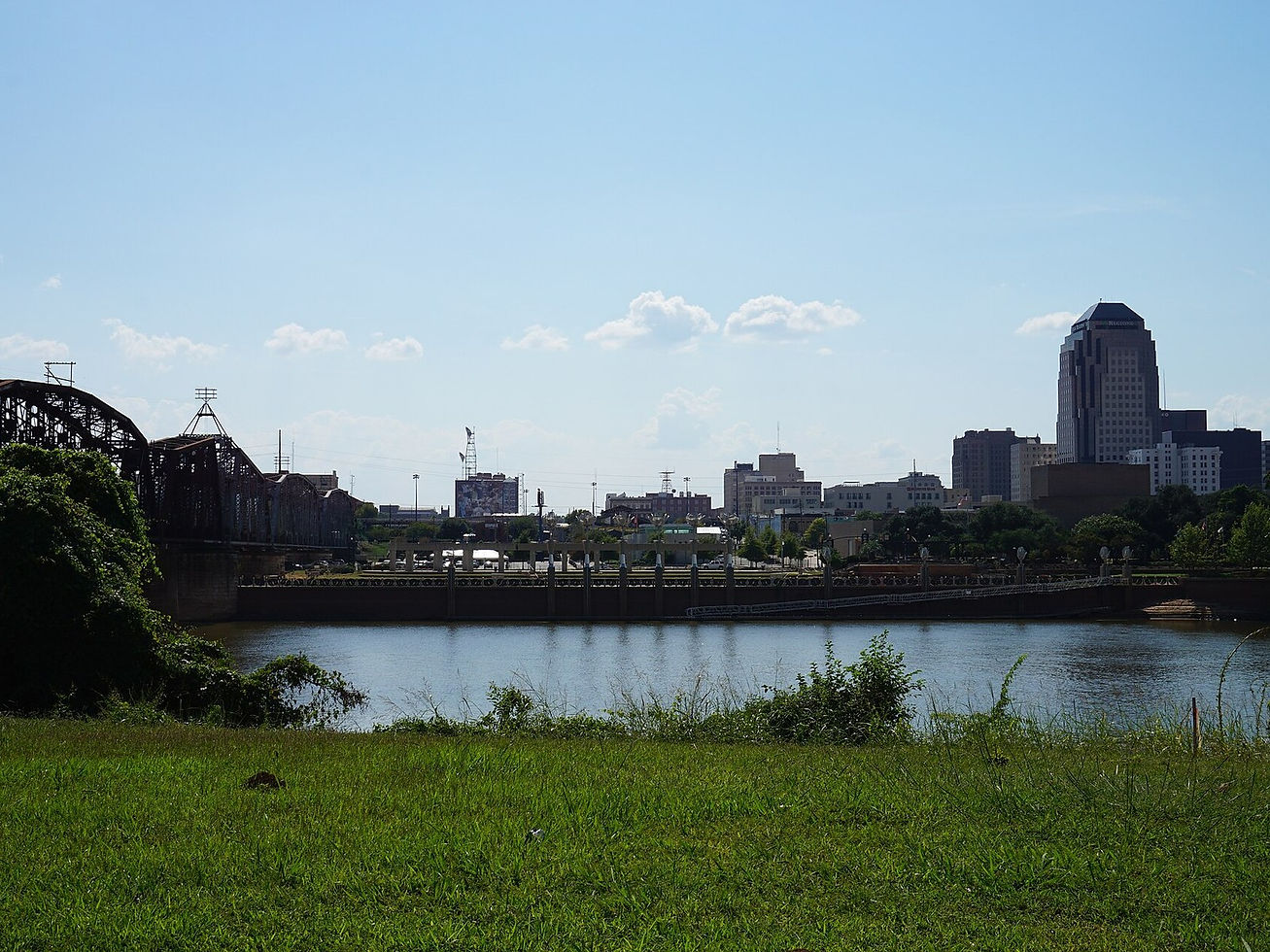
Here is a simple test I like to run on any local business website: does the site's structure match the actual geography of the city it serves, or does it pretend the city is smaller and more uniform than it actually is. In Shreveport, the honest answer right now is the second one. This is a real, spread out city with genuinely separate car trip destinations inside it, and not a single audited coffee website on the roster this research covers is currently structured to reflect that.
That gap is not a small technical detail. It is the difference between a website that matches how people actually search, neighborhood by neighborhood, and a website that assumes everyone searching for coffee in Shreveport is asking the same undifferentiated question. They are not, and the geography itself, downtown Texas Street, Uptown Southfield, Broadmoor, and, just across the river, an entirely separate market in Bossier City, makes that case plainly if anyone bothers to look at it directly.
Four Real, Separate Places Inside One Metro
Start with what is actually true about Shreveport's layout. Downtown, anchored around Texas Street, is a distinct working corridor. Uptown, centered on Southfield Road and nearby Idema Street in the South Highlands area, is a separate residential and commercial pocket. Broadmoor, home to Patton Avenue and nearby Youree Drive, is its own neighborhood entirely, with its own character and its own specific cafes. And Bossier City, sitting across the Red River, is not a neighborhood of Shreveport at all. It is a separately incorporated place with its own market, its own cafes, and its own local coverage.
These are not marketing labels invented to make a website sound more sophisticated. They are real, physical destinations that require a real drive to get between, inside a city that covers real distance. Someone in Uptown searching for coffee nearby is not casually cross referencing downtown options the way someone might in a dense, walkable city where everything sits a few blocks apart. The car trip itself is part of the decision, which means the geography itself is part of the search behavior, whether a website acknowledges that or not.
Rhino Coffee's own two operating rooms sit in two of these distinct places, downtown on Texas Street and Uptown on Southfield Road, which makes Rhino the clearest single example of this exact pattern: one business, genuinely present in two separate geographies, currently represented online as if those two geographies were interchangeable parts of the same generic Shreveport. Rhino also operated a third room near Provenance in south Shreveport until it closed on April 5, 2026, a reminder that this geography has already been a live, moving target for at least one Shreveport cafe, not a static map that only needs to be built once and left alone.
What a Combined Homepage Actually Costs
A homepage trying to represent every one of these geographies at once, using general Shreveport language rather than specific neighborhood language, is working against the way people actually search. A search engine trying to match a query like coffee near downtown Shreveport to the right, most relevant page has an easier job when a page exists that is specifically, unmistakably about downtown, rather than a page that mentions downtown as one detail buried inside a broader citywide description.
This is not a subtle SEO trick. It is closer to a matter of basic relevance. Search engines, and increasingly AI powered answer engines pulling from the same underlying web content, are built to connect a specific query to the most specific, most relevant available answer. A page that speaks generally about a whole city is structurally less specific, and therefore less likely to be the best match, than a page built to speak directly about one part of that city, even when both pages ultimately describe the same underlying business.
The cost compounds as a business grows. A single cafe with one room can get away with a general homepage, because there is only one geography to represent. The moment a business operates in more than one of Shreveport's real, separate destinations, that general homepage approach starts leaving real search opportunity unclaimed in every neighborhood beyond the one getting the most attention.
Broadmoor and the Neighborhoods Beyond the Big Two
It would be easy to focus only on downtown and Uptown, since that is where Rhino's two currently operating rooms sit, but Broadmoor deserves its own place in this picture. Carpenter Coffee House anchors Patton Avenue in Broadmoor, a ministry cafe with its own real, rooted identity covered in more depth elsewhere in this cluster, and nearby Youree Drive carries its own coffee presence as well. Broadmoor is not a smaller, secondary version of downtown or Uptown. It is its own real destination, with its own real search demand from people who live and work there.
Treating Broadmoor as an afterthought, the way a generic citywide description often does, misses an entire pocket of Shreveport's actual coffee geography. Someone searching for coffee near Broadmoor or coffee near Patton Avenue is asking just as specific a question as someone searching near downtown or Uptown, and that question deserves just as specific an answer, built around what is actually true about that neighborhood rather than folded into a general description of the whole city.
This is the broader point worth making plainly: Shreveport's coffee geography is not two neighborhoods and an afterthought. It is several genuinely distinct pockets, each with its own real cafes and its own real search behavior, and a content strategy built around that reality has simply not been built yet by anyone on the audited roster.
Bossier City Is a Different Market Entirely
Across the Red River sits Bossier City, and it is worth being precise about what that actually means. Bossier City is not a Shreveport neighborhood. It is its own separately incorporated Louisiana place, with its own cafes, its own local coverage, and, notably, the only currently open 7 Brew stand in this entire metro area, while Shreveport's own planned 7 Brew stands remain in the pipeline. That is a clean, concrete illustration of how genuinely separate these two markets actually are, even while sitting close enough together that a casual observer might assume they function as one. Bossier's own cafes, B&T Coffee and Coffee on the Red among them, have their own real identity and their own real local coverage, entirely separate from anything happening on the Shreveport side of the bridge.
A Shreveport cafe that describes itself loosely as Shreveport Bossier coffee, without a genuine, separate presence or page addressing Bossier specifically, is muddying its own geography rather than clarifying it. That kind of vague regional branding might sound inclusive, but it does not actually help a search engine, or a real customer, understand precisely where a business sits or which side of the river they should be driving toward.
This distinction gets its own full treatment elsewhere in this cluster, because it deserves one. The short version here is that Bossier City is simply one more example, the clearest one, of the same underlying pattern running through this entire post: Shreveport's real geography is more specific and more separated than most current websites acknowledge, and that gap is a real, unclaimed opportunity.
Naming MOOR on Youree Drive Specifically
The Youree Drive coffee presence mentioned earlier has a name worth stating plainly: MOOR, at 4110 Youree Drive, sitting in the same broader Broadmoor area as Carpenter Coffee House on Patton Avenue but with its own distinct address and its own distinct identity. Naming it specifically, rather than leaving it as a vague reference to nearby coffee presence, is exactly the kind of concrete detail this whole post is arguing for. A vague gesture toward a neighborhood does less work than a real name and a real address.
That specificity matters just as much for how Broadmoor's own coffee geography gets described as it does for downtown or Uptown. Broadmoor is not one homogenous area with a single coffee shop. It has at least two distinct rooms with two distinct addresses, Patton Avenue and Youree Drive, and a content strategy that actually reflects Shreveport's geography needs to be precise about that internal detail too, not just about the boundary between Broadmoor and the rest of the city. A page for MOOR on Youree Drive and a page for Carpenter on Patton Avenue would each do more specific work than a single combined description of Broadmoor coffee trying to speak for both at once.
The same logic scales down to Uptown as well, where Rhino's Southfield Road address and Overflow's Idema Street address sit close enough to share a broad neighborhood name but far enough apart to need their own separate street level description. A content strategy built around Shreveport's real geography is not just about drawing four or five big boundaries around downtown, Uptown, Broadmoor, and Bossier. It is about being precise at the street level inside each of those boundaries too, since that is the level of detail an actual searcher, standing somewhere specific in the city, is usually operating at.
What an AI Assistant Would Need to Sort These Neighborhoods Out
An AI powered assistant asked to recommend coffee in a specific part of Shreveport, downtown, Uptown, or Broadmoor specifically, can only sort that request correctly if the underlying web content actually distinguishes between those places in plain language. Right now, much of what exists blurs those distinctions, which means an assistant answering a neighborhood specific question is working with less precise material than the actual geography would support.
Building pages that state their neighborhood plainly, downtown Texas Street, Uptown Southfield and Idema, Broadmoor's Patton Avenue and Youree Drive, gives both a search engine and an AI assistant exactly the kind of unambiguous, quotable geography they need to answer a specific question correctly, rather than defaulting to a generic citywide answer that could apply to any part of Shreveport at once.
What Actually Building This Content Strategy Would Look Like
None of this requires an elaborate rebuild. It requires a specific, deliberate decision: for every real, separate neighborhood a business genuinely serves, build a page that speaks directly and specifically to that neighborhood, rather than relying on one general page to represent all of them at once. For a business with rooms in two or three of these places, that might mean two or three dedicated pages. For a single room business, it might mean simply making sure the one page that exists speaks with real, specific neighborhood language rather than generic citywide language.
The content itself does not need to be invented from nothing. The specific address, the specific hours, the specific character of a neighborhood corridor like downtown's working rhythm or Uptown's residential pace, these are all things a business already knows about itself. The work is in organizing that existing knowledge into the structure that search engines and AI powered answers are actually built to reward, rather than leaving it scattered across one undifferentiated homepage.
This is the honest, buildable version of a content strategy for Shreveport's coffee scene: not more content for its own sake, but content organized around the real geography that already exists, matched to the way people in this specific, spread out city actually search for coffee near wherever they actually are.
The businesses that build this first will have a real, if quiet, advantage over the ones that wait, simply because a search engine already trusts a page that has existed longer and stayed consistent about a specific neighborhood over a page that adopts that structure later. There is no penalty for being early here, and there is a real, compounding cost to being last. In a market as thin as Shreveport's specialty coffee scene, the first business to actually build this structure well may end up owning several of these neighborhood searches almost by default, simply because nobody else got there first.
Related Reading
More from this Hillcane city series, plus the pages on the site that sit next to the work.
What a Church Run Cafe Teaches About Building Real Community Roots in Shreveport
Bossier City Is Not Shreveport, and Neither Is Your Search Radius
What Shows Up When You Search for Coffee Shop Marketing Help in Shreveport
Southfield Road and Uptown: Where Shreveport's Coffee Concentrates
7 Brew Is Coming to Shreveport. Here's What That Actually Means for Independents.
The Ministry Cafe and the Inclusive Cafe: Shreveport's Coffee Spaces With a Second Purpose
Shreveport's Small Business Coverage Is Real Journalism, Not a Marketing Resource
Overflow Coffee and the Social Enterprise Behind the Counter in Shreveport
Frequently Asked Questions
What are the main coffee geographies inside Shreveport?
Downtown, anchored around Texas Street, Uptown centered on Southfield Road and Idema Street in South Highlands, and Broadmoor around Patton Avenue and nearby Youree Drive are three genuinely separate destinations inside Shreveport city proper.
Is Bossier City a neighborhood of Shreveport?
No. Bossier City is its own separately incorporated Louisiana place across the Red River, with its own cafes and its own local coverage, and it should not be treated as a Shreveport neighborhood or folded into the same search radius.
Why does it matter if a coffee website treats these neighborhoods as interchangeable?
Because people actually search based on where they are, and Shreveport is a spread out city where a real car trip separates these destinations. A website that speaks generally about the whole city is less specific, and therefore less relevant, than one built around each real neighborhood.
Does Rhino Coffee currently have separate pages for its downtown and Uptown rooms?
No. Both currently operating rooms, downtown on Texas Street and Uptown on Southfield Road, are described together on a single combined locations page rather than on neighborhood specific dedicated pages.
What coffee shop anchors the Broadmoor neighborhood?
Carpenter Coffee House anchors Patton Avenue in Broadmoor, a ministry cafe with its own rooted identity, alongside other coffee presence nearby on Youree Drive, making Broadmoor its own distinct part of Shreveport's coffee geography.
How is Bossier City's coffee scene different from Shreveport's right now?
Bossier City already has an open 7 Brew stand on its official locator, while Shreveport's own planned 7 Brew stands remain in the pipeline, a concrete example of how genuinely separate these two markets currently are.
Does building neighborhood specific pages require inventing new content?
No. It requires organizing information a business already knows, its specific address, hours, and neighborhood character, into a structure that speaks directly to each real destination rather than folding everything into one general homepage.
Why would a search engine favor a neighborhood specific page over a general citywide homepage?
Search engines and AI powered answers are built to match a specific query to the most specific, most relevant available page. A page built around one neighborhood is structurally more specific than a page trying to represent an entire city at once.
Is this geography focused approach only useful for businesses with multiple locations?
No. Even a single room cafe benefits from using specific, real neighborhood language on its one page rather than generic citywide language, since that specificity helps match the page to the exact way nearby searchers are actually asking.
How can Hillcane help a Shreveport cafe build pages around its real geography?
Hillcane builds neighborhood specific pages that match a website's structure to the real geography a business actually serves. Reach out at hillcane.co/contact or call (256) 384-2449.
Work with Hillcane
Shreveport's real geography, downtown, Uptown, Broadmoor, and a genuinely separate Bossier City, is already a content strategy that nobody on the current roster has actually built.
If your Shreveport cafe wants pages that match the real geography you actually serve, reach Hillcane at hillcane.co/contact or call (256) 384-2449.
Reach out at hillcane.co or (256) 384-2449.


Comments