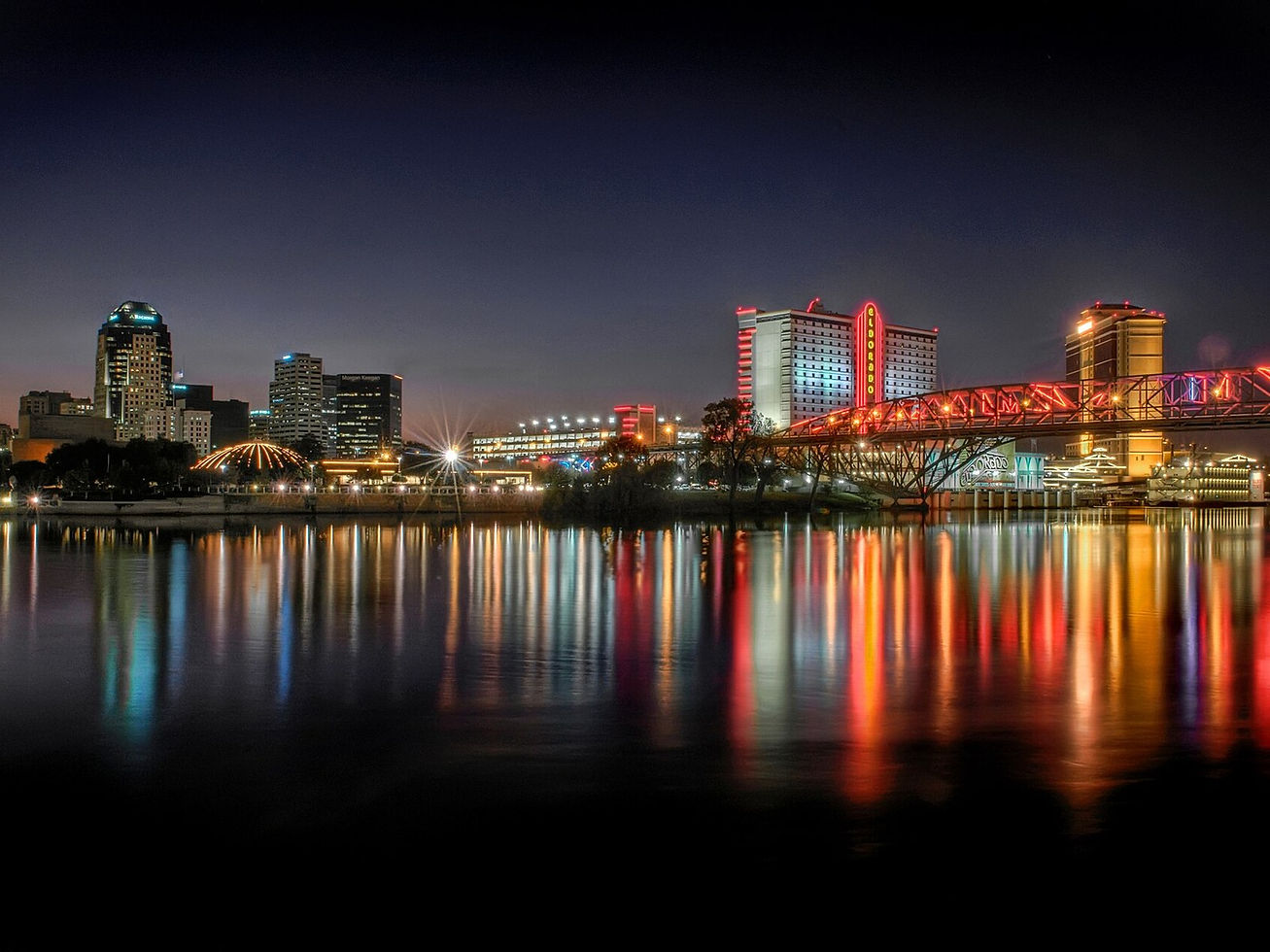
Texas Street: Downtown Shreveport's Coffee Anchor


Downtown Shreveport is its own place. That sounds like an obvious thing to say, but it is worth saying anyway, because it is easy for a cafe's website, or a directory description, to flatten a spread out city into one undifferentiated blob called Shreveport, as though downtown, Uptown, and Broadmoor were all functionally the same drive from wherever someone happens to be starting. They are not, and downtown's coffee identity deserves to be understood on its own terms rather than as a smaller extension of the rest of the city.
At the center of that identity sits Rhino Coffee's room on Texas Street, the downtown anchor for a cafe whose flagship actually sits across town on Southfield Road. That is worth pausing on, because it means the same business is answering two genuinely different local questions in two genuinely different parts of the city, and downtown's version of that answer has its own character, its own daily rhythm, and its own reasons for existing separately from its Uptown sibling.
The Room on Texas Street
Rhino's downtown room sits at 624 Texas Street, in the 624Lofts building, open daily from 7 in the morning until 5 in the evening according to the cafe's own live site. Texas Street itself is a real, recognizable downtown corridor, and it also carries a second identity worth knowing: it becomes the Texas Street Bridge crossing the Red River toward Bossier City, a genuinely separate market covered elsewhere in this cluster. That bridge is a useful reminder that downtown sits at a literal crossing point in the city's geography, not just a metaphorical one.
A room in the middle of a downtown corridor lives a different daily life than a neighborhood cafe tucked into a residential pocket like Southfield Road. Downtown coffee traffic tends to run on a different clock, shaped by office workers, courthouse business, and whatever foot traffic downtown Shreveport generates on a given weekday, rather than the more residential, weekend heavy rhythm a neighborhood cafe might see. That is not a claim this research can quantify with a specific number, but it is a real, structural difference in what kind of customer a downtown room is built to serve.
The daily hours themselves, 7 in the morning to 5 in the evening, tell part of that story. That is a schedule built around a workday, closing well before evening foot traffic would matter the way it might in a neighborhood built around dinner and later hangouts. Downtown Shreveport's coffee identity is, in that sense, a working identity first.
One Combined Page, Two Different Neighborhoods
Right now, the downtown Texas Street room and the Uptown Southfield Road room both live on the same combined locations page on Rhino's website, described in the same block of copy rather than on separate pages built around each specific address. That is a structural choice worth naming plainly, not a criticism of the coffee itself, and it means a search specifically rooted in downtown Shreveport is not being met with a page built to answer that exact search.
Consider what that actually costs. Someone working downtown, searching for coffee near Texas Street or coffee near downtown Shreveport on a weekday morning, is not thinking about Southfield Road or South Highlands at all. They want the closest good answer to where they already are. A combined page that describes both rooms together, without clearly distinguishing which one is actually nearby, asks that searcher to do work that a well built page should be doing for them instead.
This is the same structural pattern that shows up across this cluster in different forms: real, distinct geography inside one city, answered by a single shared page that cannot specifically claim any one part of it. Downtown Texas Street is a clean, concrete example of exactly what that costs, because the two neighborhoods in question, downtown and Uptown, are genuinely different destinations requiring a genuinely different drive.
What Downtown's Coffee Scene Actually Looks Like Day to Day
Downtown Shreveport, at the level this research can honestly speak to, is a working corridor with a coffee anchor built around a working schedule. That is a real, distinct identity, different from a neighborhood cafe built around lingering mornings or weekend crowds. A downtown room earns its keep on weekday mornings and midday breaks, not on the kind of slow Saturday crowd a residential neighborhood cafe might depend on.
That distinct rhythm is exactly the kind of detail that belongs in a page built specifically for downtown, rather than folded into a generic description shared with a neighborhood room across town. A downtown specific page could speak directly to the office worker on a coffee break, the person heading toward the courthouse, or the visitor staying near downtown for a night, in a way a shared page inevitably waters down.
None of that requires inventing detail this research cannot verify. It requires simply being honest and specific about what is already true: that this is a downtown room, on a downtown street, serving a downtown rhythm, and that the page representing it should say so plainly rather than treating downtown as an interchangeable stand in for the rest of the city.
A reviewer who mentions grabbing coffee on Texas Street before a shift downtown, or before heading to the courthouse, is doing more useful work for that page than a reviewer who just says the coffee was good. Encouraging that kind of specific, place naming language in reviews costs nothing and adds up over time into exactly the sort of detail a search engine and a future searcher both benefit from.
Downtown's Position at the City's Edge
There is something worth noting about downtown Shreveport's position specifically, beyond its role as a working corridor. Texas Street runs toward the river and becomes the bridge into Bossier City, which means downtown Shreveport sits at the literal edge of one market and the literal beginning of a genuinely separate one, covered in its own right elsewhere in this cluster. A downtown cafe is, in a real sense, the last stop on the Shreveport side before that geography changes entirely.
That positioning matters for how a downtown page should think about who it is actually trying to reach. A downtown Shreveport search is not the same search as a Bossier City search, even though the two sit close enough together that a driver could cross between them in a few minutes. A downtown cafe's own page should speak clearly to downtown Shreveport specifically, not blur itself into a vaguer regional identity that tries to claim both sides of the river at once.
None of this requires downtown Shreveport to define itself in opposition to Bossier City or to ignore the genuine, close relationship between the two. It simply means that a downtown coffee page does its best work when it is precise about exactly where it sits, rather than leaning on a broader description that a search engine has to work harder to interpret correctly. Precision here costs nothing and pays off every time someone on either side of the river runs a search that a vaguer page would have answered ambiguously.
What an AI Answer Engine Can Actually Quote From a Downtown Page
An AI powered assistant answering where to get coffee near downtown Shreveport is not making a judgment call the way a person familiar with the city might. It is pulling from whatever plain, factual language already exists on a business's own pages. An address like 624 Texas Street, a building name like 624Lofts, and hours like daily from 7 in the morning until 5 in the evening are exactly the kind of specific, quotable facts an assistant can lift directly and hand back to whoever asked.
A combined page describing two rooms, one downtown and one in Uptown, in the same shared paragraph gives an assistant a harder job than a page built specifically around Texas Street alone. The assistant either has to guess which details belong to which room, or it quotes the whole block indiscriminately, which is a worse outcome for a downtown searcher than a page that simply states its own address and hours plainly, on its own.
A Downtown Google Business Profile Needs Its Own Category and Photos
A Google Business Profile built around a downtown identity should look and read differently than one built around a residential neighborhood, since the two are answering different searcher intents. Photos that show the 624Lofts building, the Texas Street corridor, or the kind of quick counter service a working lunch break demands say something specific that a generic interior shot does not. None of that requires new construction or new branding, just an honest, specific representation of what downtown actually looks like day to day.
The same goes for keeping the category and the described hours consistent everywhere the business appears online, since a mismatch between what a directory says and what the cafe's own site says is one more small signal working against a downtown searcher trying to confirm the room is actually open before making the trip. A courthouse worker on a short break does not have time to cross check three different listings that disagree about whether a room closes at 5 or later, and getting that basic detail consistent everywhere is a small fix with an outsized payoff for a room built around exactly that kind of quick, time pressured visit.
Why Downtown Deserves Its Own Front Door
The case for a dedicated downtown page is not really about competing with Rhino's own Uptown room. It is about matching the structure of a website to the structure of the city it is trying to serve. Downtown Shreveport is a genuinely separate driving distance destination from Uptown, and a search engine, an AI powered answer, or a person glancing at a map all benefit from a page that says so directly rather than leaving them to infer it from a combined listing.
This matters more, not less, in a city with a thin overall specialty bench. With only a handful of real shops across the whole city, downtown does not have several competing cafes to choose from the way a bigger city's downtown might. The one true anchor downtown has is doing that job somewhat by default, which makes it even more worthwhile for that specific room to claim its specific territory clearly online, rather than leaving that claim implicit.
A downtown Shreveport coffee page, done honestly and specifically, would not need to invent anything. It would need to say what is already true, in the right place, with the right words, so that the people actually asking that specific question find the specific answer waiting for them.
That kind of page also compounds over time in a way a combined listing cannot. A page built specifically around Texas Street and downtown Shreveport becomes more valuable the longer it exists, as it accumulates reviews mentioning the corridor by name, links from other downtown minded pages, and a stronger, clearer signal to search engines about exactly what it is and where it sits. A shared page, by contrast, stays permanently ambiguous about which room a given detail actually belongs to, no matter how long it has been online.
Getting the Downtown Address Right, Down to the Zip Code
The Texas Street room sits in the 71101 zip code, and that specific detail matters more than it might seem, because it is exactly the kind of fact a combined locations page can blur or drop when it is describing more than one room at once. A downtown zip code and an Uptown zip code are not interchangeable, and a search engine trying to match a searcher's location to the nearest real option benefits from having that number stated plainly and correctly for each individual room, not folded into one shared block of address text.
This is a small detail with an outsized effect precisely because it is so easy to get right. Unlike a walking time or a review count this research has not verified, a zip code is a fact that already exists and simply needs to be stated clearly, consistently, and specifically for the Texas Street room alone. That is the kind of correction that costs an afternoon, not a redesign, and it is exactly the sort of groundwork that should happen before a dedicated downtown page gets built on top of it.
Downtown Feels Chain Growth From More Than One Direction
Texas Street is not the only place downtown Shreveport is feeling chain pressure build. The Advocate has also covered CC's Coffee House, a separate Louisiana chain from 7 Brew, actively hunting for more Shreveport and Bossier locations, with an existing store already open on Ellerbe Road. That is worth naming specifically here, because it means downtown's one true specialty anchor is not just watching a single competitor's highway visibility grow. It is watching more than one chain's footprint expand around it at the same time, from more than one direction.
None of that changes what Rhino's Texas Street room already has going for it: a decade plus of brand history, a genuine downtown identity, and a building people already know by name in 624Lofts. What it does mean is that the cost of leaving that identity described only in a shared, combined block of copy keeps rising the longer chain growth continues elsewhere in the market. A downtown anchor with a clear, specific, well built page is in a stronger position to hold its ground than one leaning on brand recognition alone while chains with fresh marketing budgets add visibility nearby.
Related Reading
More from this Hillcane city series, plus the pages on the site that sit next to the work.
7 Brew Is Coming to Shreveport. Here's What That Actually Means for Independents.
The Ministry Cafe and the Inclusive Cafe: Shreveport's Coffee Spaces With a Second Purpose
Shreveport's Small Business Coverage Is Real Journalism, Not a Marketing Resource
Overflow Coffee and the Social Enterprise Behind the Counter in Shreveport
Shreveport's Geography Is a Content Strategy Nobody's Built Yet
What a Church Run Cafe Teaches About Building Real Community Roots in Shreveport
Bossier City Is Not Shreveport, and Neither Is Your Search Radius
What Shows Up When You Search for Coffee Shop Marketing Help in Shreveport
Southfield Road and Uptown: Where Shreveport's Coffee Concentrates
Frequently Asked Questions
Where is Rhino Coffee's downtown Shreveport location?
Rhino Coffee's downtown room is at 624 Texas Street in the 624Lofts building, open daily from 7 in the morning until 5 in the evening according to the cafe's own live site.
Is downtown Shreveport's coffee scene the same as Uptown's?
No. Downtown and Uptown are separate, real driving distance destinations inside a spread out city, each with its own rhythm and character, and they should not be treated as interchangeable parts of one general Shreveport coffee scene.
What does Texas Street lead to besides downtown coffee shops?
Texas Street also becomes the Texas Street Bridge, crossing the Red River toward Bossier City, a separately covered market in this research. Downtown Shreveport sits near that literal crossing point in the city's geography.
Does Rhino Coffee have a page built specifically for its downtown room?
Not currently. The downtown Texas Street room appears on the same combined locations page as Rhino's Uptown Southfield Road room, rather than on a page built specifically around downtown Shreveport alone.
What kind of customer does a downtown Shreveport coffee room typically serve?
A downtown room built around a 7 to 5 daily schedule is structured around a working weekday rhythm rather than the more residential, weekend heavy pattern a neighborhood cafe elsewhere in the city might see.
Why would a dedicated downtown Shreveport coffee page matter for search?
Someone searching for coffee near downtown Shreveport is asking a specific question rooted in a specific location. A page built to answer that exact question directly serves that searcher better than a combined page describing multiple neighborhoods at once.
Is Rhino Coffee's downtown room the only specialty coffee anchor there?
On the roster covered by this research, it functions as the clear downtown anchor. That makes claiming downtown Shreveport clearly and specifically online even more valuable, since there is not a crowded field of competing downtown cafes to share that search with.
How far is downtown Shreveport from the Uptown coffee scene?
This research does not report a specific drive time between the two areas. What it does establish is that they are genuinely separate destinations within the city, not neighborhoods someone would casually treat as interchangeable.
Does downtown Shreveport coffee search currently show a dominant local pack ranking?
This research does not verify a live local map pack ranking for downtown Shreveport coffee searches, and no specific ranking claim is made here.
How can Hillcane help a downtown Shreveport cafe build its own dedicated page?
Hillcane builds neighborhood specific pages that speak directly to a downtown audience rather than folding that identity into a citywide description. Reach out at hillcane.co/contact or call (256) 384-2449.
Work with Hillcane
Downtown Shreveport's coffee anchor sits on Texas Street, answering to a genuinely different part of the city than its own Uptown sibling.
If your downtown Shreveport cafe needs a page that actually claims this specific corridor, reach Hillcane at hillcane.co/contact or call (256) 384-2449.
Reach out at hillcane.co or (256) 384-2449.

Comments